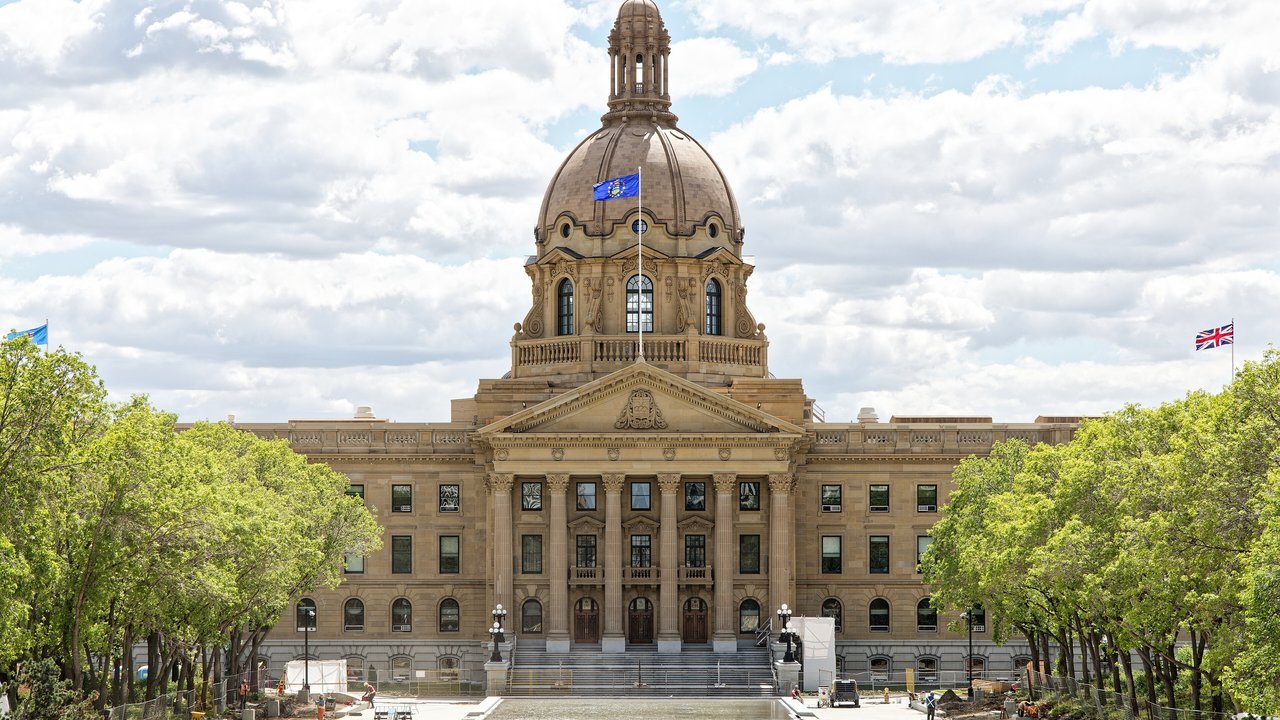
Albertans cast ballots on Monday, Oct. 19, in a provincial referendum whose 10th question asks whether Alberta should remain a province of Canada or whether the Government of Alberta should begin the legal process required under the Canadian Constitution for a binding referendum on separation, according to the question text on Elections Alberta’s results page. The other nine questions deal with immigration and the Constitution, The Canadian Press reports. The count looks set to run late: Elections Alberta says its results website cannot go live until every voting location in the province has confirmed it has closed, and that “With delays earlier in the day, the earliest the last voting location will close is 10:00pm.” That works out to 9:00 PM PT. Regular polls closed at 8:00 PM local time (7:00 PM PT).
The delay traces back to the morning. CityNews, in a story by Hiba Kamal-Choufi posted at 4:24 PM local time, reports that 106 polling stations across Alberta had their closing times extended to make up for late openings, with new closing times from 8:10 PM to 10:00 PM. CBC News, in a story by Andrew Jeffrey and Elise Stolte, also counts more than 100 stations that failed to open on time and names Edmonton’s Westminster School as the last to close, at 10:00 PM. Elections Alberta’s release lists the affected locations and says Chief Electoral Officer Gordon McClure authorized the extensions under section 4(3)(a) of the Election Act so electors get the full advertised hours. The agency says: “Late openings were due to various issues that have been resolved.”
Voters at Westminster School described a long wait. CityNews says Elections Alberta confirmed the station opened at 9:00 AM but that the team there needed to “reconfigure the voting station,” so it closed and reopened at noon. Voter Lisa Sankeralli told CityNews: “They came and told us that they had to shut down because everything was set up wrong.” Another voter, Justina Paradis, told CityNews: “I’m glad I had the time to wait but a lot of people came in, heard about the situation, and left because they could not wait.” CBC News says voters in line there told it the station closed shortly after 9:00 AM and still had not reopened at 11:30 AM.
Calgary saw delays too. CBC News says Steve Koristka arrived 10 minutes early in the Rocky Ridge neighbourhood and waited more than an hour before his station opened: “You could see people getting frustrated, and coming up and banging on the door and shaking the handles,” he told CBC. Elections Alberta spokesperson Michelle Gurney told CityNews that most of the 1,400 locations opened on time, and that 35 of the 106 extended locations sit in Calgary and 28 in Edmonton.
Ballots ran short in at least one First Nations community. CBC News reports polling stations running out of ballots in Maskwacis, which comprises four First Nations south of Edmonton, and says Elections Alberta told it by email that it saw strong turnout there and had couriers delivering ballots. Chief Desmond Bull of the Louis Bull Tribe told CBC: “Our people came out in droves, and them running out of ballots shows that.” The BBC’s live page, citing the Edmonton Journal, also reports that the Louis Bull Tribe’s polling site ran out of ballots. This desk did not read the Edmonton Journal report.
Many other polls ran quietly. CBC News says voters at many stations reported steady traffic but few lines, and quotes Calgary voter Joanne Madden at 5:30 PM: “Usually, there’s bigger crowds at this time.” CBC also says Elections Alberta spokesperson Maia Hanrahan put the number of election officers hired at 47,000, against the 60,000 the agency had hoped for, and told CBC Radio that “This is enough people for us to run the voting places and the count.” A day earlier, Elections Alberta said both Election Day voting locations in Wainwright would open as planned and sent condolences to the Canadian Armed Forces and the Wainwright community after the fire near the base, according to its news releases page.
A large share of ballots came in before Monday. Elections Alberta puts advance and special-ballot turnout at 43.1%: 837,791 votes during five days of in-person advance voting and 519,082 special ballots. The Canadian Press and CityNews say more than 1.3 million Albertans had already voted by mail or in advance polls, and the BBC says more than a million people voted early, over 43% of the electorate.
Counting happens by hand. Elections Alberta says workers hand-count every ballot, count question 10 first and then questions 1 to 9 in order, and must finish the count and publish unofficial results within 48 hours of the confirmed close of all voting locations; its referendum page schedules the official announcement of results for Oct. 29 at 10:00 AM. The BBC says each voting station has four teams of two counters, each able to count around 400 ballots an hour, and expects question 10 results in the early hours of Tuesday, local time, between 09:00 and 11:00 BST (1:00 AM to 3:00 AM PT). The BBC’s own updates differ on the last closing time: an entry at 01:59 BST says some sites could stay open until 22:00 local time, while a later entry at 02:51 BST says the last polls close at 21:00 local time. Elections Alberta, CBC and CityNews all give 10:00 PM.
The vote caps months of rallies and speeches from both sides, The Canadian Press reports. The Canadian Press says Premier Danielle Smith called the referendum, says she voted to stay in Canada, and says she needs a yes on the other nine questions for a mandate to bargain with Prime Minister Mark Carney, who urged Albertans to reject those nine. The BBC quotes Smith: “I think this is an important time for us to be looking at the benefits that come from being part of Canada. That’s what I’ve been advocating. It’s why I’m voting remain.” The BBC also reports that First Nations leaders spent months trying to block a vote on independence through the courts, and that Smith says the province could risk paying C$400bn in transition costs, while a report her government commissioned put separation costs at C$50bn to C$170bn over five years.
If a majority chooses the second option, the BBC says, it would kick-start the process of holding a binding referendum on separation. The BBC’s Canada digital editor, Jessica Murphy, writes that support for actual independence in Alberta and Quebec hovers around 30%, without naming a poll in that entry; this desk did not check that figure against any named survey. No results had appeared on Elections Alberta’s results page when this story went up.
