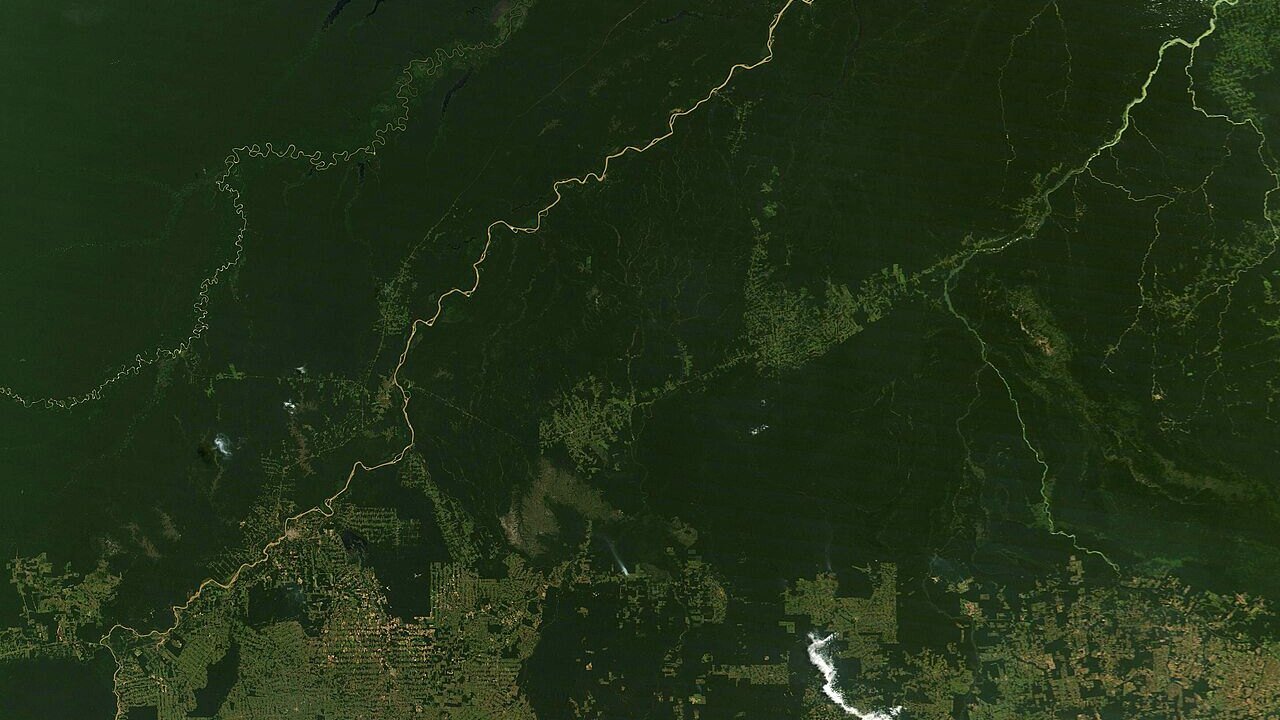
Deforestation in Brazil’s Amazon fell to the lowest level since satellite records began in 1988, according to figures the federal government released on Friday, Oct. 16. The release, posted by the National Institute for Space Research (INPE), says its Prodes monitoring recorded 3,335 square kilometers of clearing between August 2025 and July 2026, a 41.8% drop from the 5,731 sq km recorded in the previous 12-month period. This desk translated the figures from the Portuguese release; no direct quotes from it appear here.
The Guardian, which describes the Prodes series as “considered the most accurate measure of deforestation”, reports the same 3,335 sq km and 41.8% figures. According to the government release, the previous low in the series came in 2012, at 4,571 sq km; the Guardian says the new total “beats the previous record low by 1,236 sq km, equivalent to an area the size of Rio de Janeiro.” The BBC reports the 41.8% fall and describes it as “the biggest drop since records began in 1988”; the government release, as this desk read it, calls the rate the lowest in the series but does not rank the size of the drop, so that framing rests with the BBC.
The Cerrado, the savanna biome next to the Amazon, also posted a record low, according to the release: 5,516.69 sq km of clearing, down 23.8% from 7,235.27 sq km the year before and the lowest since the Cerrado series began in 2001. The release puts the previous Cerrado low at 6,319 sq km in 2019. The Guardian rounds the figure to 5,516 sq km and says Cerrado deforestation has fallen by 48.4% over the past four years; the BBC gives the 23.8% fall.
The government release names the states with the most clearing. In the Amazon, it lists Pará with 1,130 sq km, Mato Grosso with 849 sq km and Amazonas with 525 sq km. The Guardian gives those states’ shares as 33.9%, 25.5% and 15.7% of the Amazon total, says the figures in each fell by more than 45% on the previous year, and reports that clearing grew by 0.4% in Roraima, which the paper calls “a Bolsonaro stronghold.” In the Cerrado, the release lists Maranhão, Tocantins and Piauí as the largest, and says those three plus Bahia, a region known as Matopiba, accounted for 74.3% of the biome’s total.
A caveat sits inside the release itself. The government says the Amazon rate it publishes at this time of year stays an estimate based on priority satellite images, and that INPE releases the consolidated rate, based on all images of the Amazon, in the first half of the following year. The Cerrado rate counts as consolidated, the release says, because mapping covered the whole biome. The release also says the Prodes year runs from August to July, so wildfires in October fall outside the 2026 figures, and that burned areas do not automatically count as deforestation.
Officials and campaigners welcomed the numbers. The BBC reports that Environment Minister João Paulo Capobianco described the Amazon decline as “absolutely stratospheric” and quotes Lula’s post on X on Friday: “Our goal is to achieve zero illegal deforestation by 2030.” The BBC says Lula pledged, on taking office three years ago, to end Amazon deforestation by 2030.
Marcio Astrini, executive secretary of the Climate Observatory (Observatório do Clima), appears in both outlets in different English renderings. The BBC quotes him calling the result an “historic achievement” that showed “with political will, it is possible to curb deforestation and greenhouse gas emissions”. The Guardian quotes him saying: “The figure makes it clear that putting an end to forest destruction in Brazil is entirely possible.” In the Guardian’s version he adds: “However, everything depends on the election result. The country will decide whether we move toward the end of deforestation or toward the end of the forest.”
Both outlets tie the figures to the Oct. 25 runoff. The BBC says Lula faces Flávio Bolsonaro, son of Lula’s right-wing predecessor Jair Bolsonaro, “with polls suggesting a neck-and-neck race”, and that Flávio “is expected to continue his father's policies if he wins, though he has pledged to fight organised crime in the Amazon.” The Guardian says Lula fell behind in the first round of voting; this desk covered that first round in an earlier story. Neither outlet names a pollster for the runoff race.
The comparison with the previous government comes from the outlets and their sources. The BBC, citing AFP’s reading of official data, says the Amazon lost nearly 60% more forest during Jair Bolsonaro’s 2019–2022 presidency than in the previous four years. The Guardian puts the increase at 59.5% and describes his term as running from 2019 to 2023, a different end year from the BBC’s, while elsewhere calling 2022 “the year before the start of the Lula administration”. The Guardian also says that since 2022 the deforestation rate has slowed by 71.2%, according to INPE data, and attributes that largely to stronger enforcement and state investment in environmental agencies.
The government release lists the enforcement behind its strategy: it says the environmental agency Ibama carried out 76,095 inspection actions between 2023 and 2026 and issued 25,101 infraction notices against flora offences, with fines totalling R$11.8 billion. It also announces R$147.6 million, approved by BNDES, the development bank that manages the Amazon Fund, for a new monitoring system, SIM-Biomas, which it says will use artificial intelligence to combine the Prodes and Deter satellite systems. Reading note: this desk read the government release, the BBC and the Guardian; it did not open the INPE technical notes or the TerraBrasilis data files the release links.
