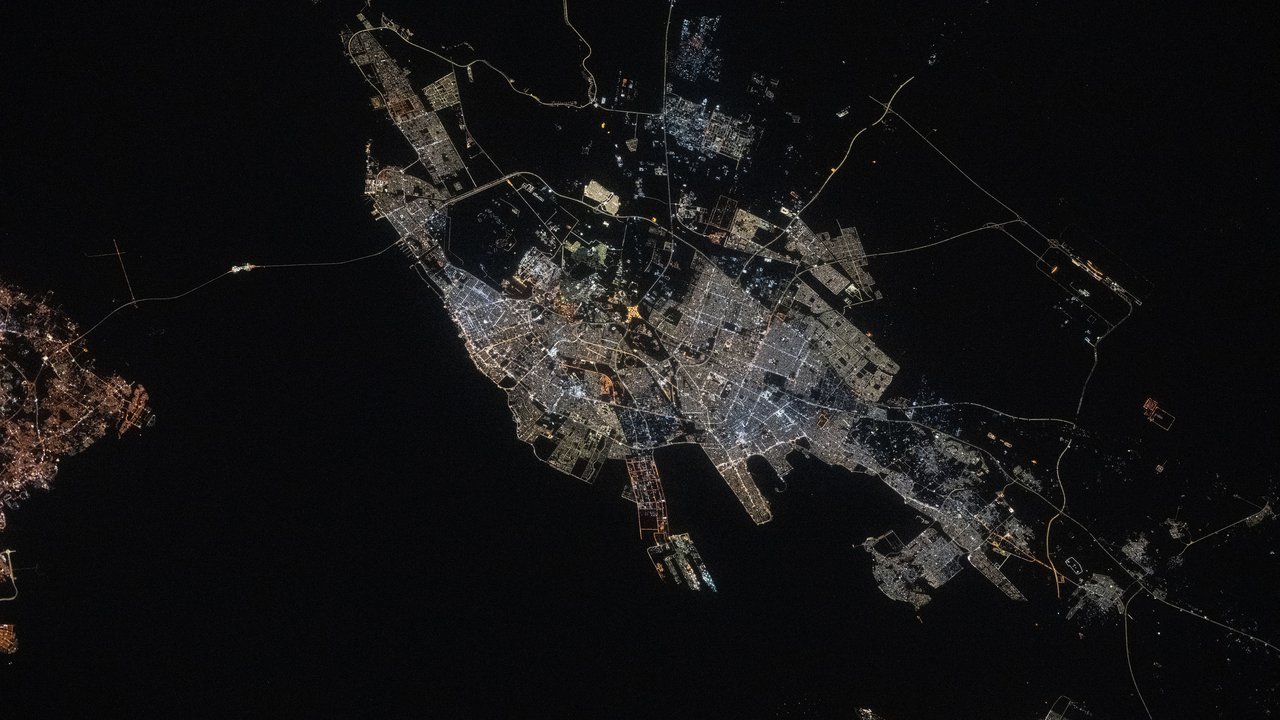
An attack on the main airport in Saudi Arabia’s Eastern Province seems to have killed two people on the evening of Wednesday, Oct. 21, the same day the United States ordered some of its diplomats and their families to leave the kingdom. Saudi Arabia’s General Authority of Civil Aviation, in a statement carried by the Saudi Press Agency at 1:38 a.m. local time Thursday, said King Fahd International Airport in Dammam “was targeted by an attack on the evening of Wednesday, October 21, 2026.” It reported one resident killed and eight others injured, “ranging from minor to critical,” and said: “The attack also caused property damage, the extent of which is currently being assessed.” That first statement did not say what hit the airport or who launched it.
By Thursday morning the toll had risen. In a follow-up statement carried by SPA at 9:53 a.m. local time, GACA said “the death toll has risen to two following the confirmation of an additional fatality. The deceased are a Saudi citizen and an Indian resident.” It said eight people remained injured: one Saudi citizen, two residents each from India, Yemen and Bangladesh, and one resident from Nepal, all receiving care at several hospitals. The authority also said that “airport operations have resumed and air traffic has returned to normal.” Earlier reports, including one by the BBC, gave the toll as one dead; the Saudi business site Maaal carries the same updated GACA figures.
Yemen’s Iran-backed Houthis, as the BBC calls them, said on Thursday that they had launched attacks on Saudi Arabia’s defence ministry in Riyadh, Saudi Aramco facilities in Yanbu and King Fahd International Airport in Dammam, The Guardian reports in a story written with Reuters and Agence France-Presse. Reuters, in a report carried by Al Jazeera, says the Houthis claimed numerous attacks on Saudi infrastructure over 48 hours, adding Abha International Airport to the list, while the Saudi-led coalition said it intercepted and destroyed four drones over the Riyadh and Medina regions. Saudi officials quoted in these reports did not name an attacker for the Dammam strike, and this desk could not verify the Houthi claim.
In Washington, a State Department spokesperson said in a statement: “The US Department of State issued an ordered departure for non-emergency US government employees and their family members in Saudi Arabia,” the BBC reports. Spokesperson Tommy Pigott, in a social media post quoted by Al Jazeera, said: “Iranian-supported Houthis have increasingly engaged in hostilities against Saudi Arabia, including attacks on civilian airports and other critical infrastructure resulting in civilian casualties and severe travel disruptions.” The BBC says the spokesperson also warned that “the hostilities have the potential to escalate rapidly.” The Guardian says the order covers the embassy in Riyadh and its satellite consulates, and that the embassy suffered heavy damage at the start of the US war on Iran and had operated with only a skeleton staff for months.
How far the drawdown reaches seems disputed. Pigott called an earlier media report on departures from US embassies across the Gulf “inaccurate,” Al Jazeera reports, and The Guardian says he described the order as covering Saudi Arabia only. But four US officials told Reuters that US missions in other Gulf states would also order family members to leave (Al Jazeera and Reuters), and The Guardian says outlets including NBC and AFP reported families of embassy staff leaving the United Arab Emirates, Jordan, Qatar and Bahrain. This desk did not read Pigott’s post, the NBC report or the AFP report directly.
The US Mission in Saudi Arabia issued a security alert on Oct. 21 that describes Houthi attacks on “civilian airports and other critical infrastructure” and says US government employees in the kingdom “require special authorization from Chief of Mission to use any airport in Saudi Arabia following recent missile and UAV attacks on airports in the Kingdom.” The alert, which does not mention the Dammam attack, says operations at King Khalid International Airport in Riyadh “remain suspended,” while the Jeddah and Dammam airports “are operational with some delays and cancellations.” It points travelers to rail, bus and car options and says all land border crossings, including the King Fahd Causeway to Bahrain, remain open. It also passes on a Saudi Interior Ministry warning that “filming, publishing, or sharing information related to counter missiles and drones, and their impact sites, exposes you to legal liability.”
Separately on Wednesday, Saudi Arabia’s energy ministry said two people died after air defences intercepted a drone that tried to hit a Saudi Aramco facility at the Shaybah oilfield, Reuters reports (via Al Jazeera). The Guardian says falling debris from the interception killed two and injured two more. The BBC also reports two deaths from the debris, but a later line in the same BBC report says the Shaybah drone “left two people injured”; this desk flags that wording gap. The BBC adds that the ministry has not said who launched the drone. Reuters and AFP cited sources as saying Aramco ordered staff to evacuate its headquarters in Dhahran, according to Al Jazeera; The Guardian, citing two sources who spoke to AFP, says essential workers at Aramco’s headquarters in the east of the country got told to evacuate on Thursday.
The BBC says airports in Saudi Arabia have come under repeated Houthi attack. Al Jazeera, carrying Reuters, says the kingdom reported that a projectile strike on Riyadh’s King Khalid International Airport on Oct. 11 killed one person and injured 11, and that the civil aviation authority reported an Oct. 10 attack on the same airport that killed 12 people and injured more than 300. The BBC also says an informal ceasefire between the Houthis and Saudi Arabia held for four years before it unravelled in July, when the Houthis announced a “maritime embargo” against the kingdom and began missile and drone attacks; the Houthis say they act in retaliation for what they call a Saudi blockade of their territory.
The departures also come amid reports about Iran. The Guardian says the New York Times reported that the US and Israel had developed plans for a “short but intensive operation” against Iran, and notes that President Trump has publicly said he does not intend to restart the war before the Nov. 3 elections. This desk did not read the New York Times report.
