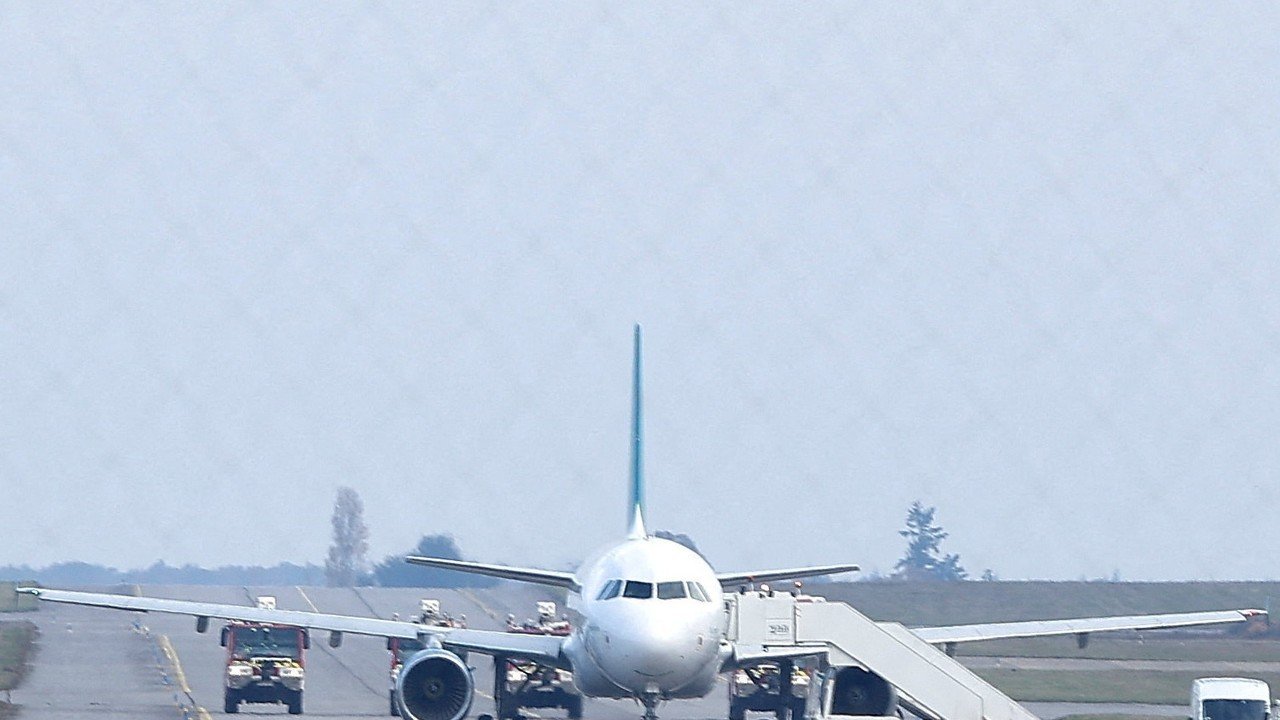
A second wave of bomb threats hit passenger flights across Europe on Thursday morning, Nov. 5, forcing diversions, fighter escorts and runway inspections from France to Bulgaria. The Irish flag carrier Aer Lingus said flight EI402 from Dublin to Rome “diverted to Normandy this morning as a security precaution,” landed safely, and that the airline would re-accommodate customers, according to the BBC and the Guardian. French authorities routed the Airbus A320 to Evreux military airfield west of Paris. France’s prime minister’s office said the plane landed safely, that 151 passengers and six crew reached safety, and that bomb-disposal teams worked on site, according to Euronews and a @France24_en report that cited the same office. Reuters and CBC likewise reported the Irish airline’s diversion statement and placed Evreux about 100 km (62 miles) west of Paris. This desk read BBC, Guardian live, Euronews, CBC and a Reuters wire reprint through Investing.com, plus agency posts on X.
Counts of Thursday’s wave still move. The Guardian’s live blog posted a running list that reached 15 flights by about 12:18 CET, including EI-DEH / EI402 Aer Lingus Dublin–Rome (diverted to Evreux); three Ryanair Sofia-bound flights from Madrid, Copenhagen and London Stansted (the Stansted flight diverted to Plovdiv); LOT LO235 Warsaw–Brussels; Wizz Air W46387 Milan Malpensa–Warsaw (diverted to Vienna); Finnair AY1761 Helsinki–Rome and AY1471 Helsinki–Vienna; four Prague-bound flights; Wizz Air W43064 Milan–Bucharest; Aegean A3552 Thessaloniki–Milan Malpensa; and Ryanair FR8953 Porto–Milan Malpensa. AFP and Euronews, writing earlier, put the figure at “at least 12” with several fighter escorts and at least two diversions. The BBC described several flights bound for Italy, Poland, Bulgaria, Austria and Czechia without publishing a single total. This desk reports the range and follows each outlet’s own tally rather than inventing a merged number.
Military escorts and diversions marked the morning. Italy’s air force escorted a Finnair Helsinki–Rome flight to its scheduled landing, a person close to the matter told Reuters, and Rome’s airport operator ADR later said verification on that Finnair alert finished with “negative results” and no impact on normal operations, according to the Guardian. Wizz Air confirmed that its Milan Malpensa–Warsaw flight diverted to Vienna after “a bomb threat received during the flight,” and said the diversion followed established security protocols, according to the Guardian. Bulgaria’s transport ministry told the Guardian that three Ryanair flights to Sofia from Madrid, Copenhagen and London activated bomb-threat procedures; the Madrid and Copenhagen flights continued to Sofia while London diverted to Plovdiv, and inspections after landing “identified no issues,” the Guardian reported. LOT Polish Airlines said that after a potential threat warning on LO235 Warsaw–Brussels the crew inspected the cabin, found no suspicious items, and that Brussels Airport authorities then inspected the aircraft again with the same result, according to CBC and the Guardian. Czech police said four flights heading to Prague received bomb threats, assessed credibility as low, still activated security measures, and later confirmed pyrotechnic inspections yielded negative results, with the investigation handed to NCTEKK (the National Center Against Terrorism, Extremism, and Cybercrime), according to the Guardian and CBC.
Watch: France 24 on the Evreux diversion, posted on X
If an embed does not load, it shows as a plain link to the original post.
View the @France24_en post on X
Finnair told the Guardian that AY1761 Helsinki–Rome (144 passengers and seven crew) and AY1471 Helsinki–Vienna (177 passengers and six crew) “have faced unfounded or hoax bomb threats today,” that both landed safely, and that “Threats are almost always unfounded” while aviation safety remains the top priority. Italian news agency Ansa, cited by the Guardian, said an anonymous email written in Italian and headed “segnalazione minaccia” (“threat warning”) went early Thursday to Rome airport company ADR and affiliated firms and covered the Helsinki–Rome and Dublin–Rome warnings. Euronews also noted Flightradar24 showing no departures from Rome Fiumicino for a stretch of the morning for a reason the tracker then listed as unknown.
Thursday’s wave followed earlier threats the same week. The BBC said it came days after eight European flights, including two from the UK, faced suspected bomb threats and that searches found no explosives. Reuters wrote that on Tuesday at least seven flights and a cruise ship received bomb threats. Euronews and AFP described “some 10” European flights targeted Tuesday, with a brief Warsaw airport closure and Italian air-force scrambles into Rome. The UK government called those Tuesday incidents “malicious hoax threats,” according to the BBC and Euronews. Marco Chan, an aviation expert at Kingston University, told the BBC the week’s threats looked “most likely a hoax, but the system is right to treat it as real,” and that three days of incidents remain “too small a sample to separate coordination from contagion.”
No government has pinned blame on a named actor. Reuters and CBC wrote that the threats arrive while European officials blame Russia and Iran for “hybrid attacks” and sabotage, claims Moscow and Tehran deny. The same Reuters piece quoted Eliran Almog, CEO of aviation cybersecurity firm Cyviation, saying repeated threats can disrupt operations and let someone observe how airlines and governments respond, and noting the same week’s supermarket-refrigeration cyber disruptions across Europe. This desk treats those frames as attributed analysis, not as proven authorship of Thursday’s emails or calls. Related Seems News coverage of the European freezer cyber wave sits in the related rail.
French fighter jets escorted the Aer Lingus jet after the threat report, French authorities said, according to Euronews and France 24. AFP’s English account posted breaking alerts that at least 12 European flights faced bomb alerts, with fighter escorts and diversions. CGTN Europe, WION and other outlets on X amplified the Evreux diversion; many attached stock Aer Lingus photos rather than the Evreux tarmac frame. This desk’s lead uses the Gonzalo Fuentes/Reuters photograph of the diverted A320 at Evreux that the Guardian and CBC published, after comparing it with @AFP’s Thursday file photos and a people-free AI illustration.
This desk checked the BBC report by Gabriela Pomeroy, the Guardian live blog, Euronews’s developing story, CBC’s Reuters-style world piece, Reuters’ wire via Investing.com, and X posts from @AFP and @France24_en on X. Times convert from CET/UTC to Pacific Time (UTC−8). Flight tallies and Tuesday baseline counts still differ by outlet; later official updates may revise them. No outlet has reported explosives found where inspections finished in the sources above.