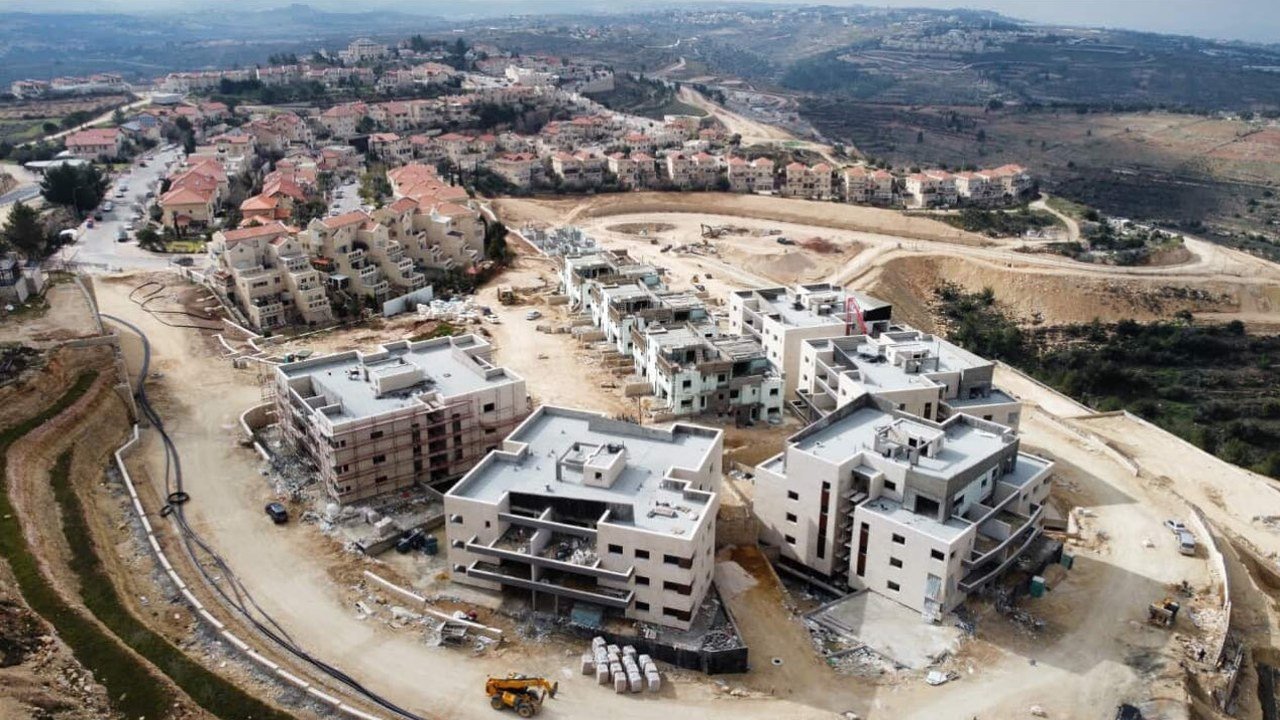
Britain on Tuesday, Nov. 17, imposed sanctions on eight Israeli companies that it says plan, build, supply or market housing and infrastructure in settlements in the occupied West Bank, along with an Israeli activist group that it says blocks aid bound for Gaza. Each target now faces an asset freeze and director disqualification, the Foreign, Commonwealth and Development Office said in a statement published at 10:04 GMT, or 2:04 AM Pacific time. The Guardian and Middle East Eye both describe the package as the first set of UK sanctions against Israeli firms over settlement building.
Foreign Secretary Ed Miliband singled out one settlement project. “Protecting the two-state solution is the North Star of this Government’s approach,” he said in the Foreign Office statement. “That is why my message on E1 is clear: do not bid, do not build, and do not profit from the destruction of the two-state solution. And we will not stand by while those blocking desperately needed aid deepen the intolerable suffering of civilians in Gaza.” On X, Miliband wrote: “We said we would act, and we are.”
Videos from X: Foreign Secretary Ed Miliband’s own post announcing the sanctions, Sky News’s breaking report, and MP Joe Powell’s clip on the sanctions regime.
View the @Ed_Miliband post on X
View the @SkyNews post on X
View the @josephpowell post on X
The Foreign Office named the eight firms as Har Hevron Development Company, Hemdat Shomron, S.A.G. (Velvel) Construction and Development, Lev HaHar Yazamut, Harey Zahav, Ariel Residential Judea & Samaria, Ami Gvirtzman Architects 2021 and Z.F. Building Company. According to its list, their work spans settlements and outposts including Efrat, Shilo, Eli, Ariel, Itamar, Elon Moreh, Tekoa, Einav, Dolev and Nokdim, and one of them, Ami Gvirtzman Architects, designs housing, neighborhoods and public infrastructure rather than building them. The Foreign Office said it “welcomes and encourages trade with green line Israel” (Israel inside its pre-1967 lines) and firmly distinguishes that trade from activity in settlements.
The ninth target, Tzav 9, rests on a separate rationale in London’s telling. The Foreign Office calls it “an Israeli activist movement whose stated mission has been to stop humanitarian aid entering the Gaza Strip,” and says it “has organised and carried out blockades of crossings, ports and roads used by humanitarian aid convoys bound for Gaza.” The statement says those blockades continued as recently as October. The United States sanctioned the same group in June 2024, when the Biden administration labeled it a “violent extremist Israeli group,” The National reports; Middle East Eye also notes the earlier U.S. step. Miliband’s own posts spell the name “Tsav 9.”
The Foreign Office ties the timing to E1, a planned settlement in the area between Jerusalem and the settlement of Ma’ale Adumim, as Israel National News locates it. The ministry says it announced the package “just before the final deadlines for the E1 tender,” and its notes warn that the project “would cut across the heart of Palestine and risks separating the West Bank from East Jerusalem.” The National puts the plan at around 3,400 homes, and The Jerusalem Post, in a report that carries Reuters copy, describes it as a project that would bisect the West Bank. The Guardian and Middle East Eye report that the announcement came shortly before Israel’s government planned to allocate the E1 tenders.
London built the legal tool for these designations only weeks ago. According to the Foreign Office, legislation laid on Oct. 13 widened the UK’s Global Human Rights sanctions regime so that it can target people and companies involved in serious violations of international humanitarian law anywhere in the world. The ministry says the package delivers on Miliband’s Sept. 8 pledge, and that separate legislation now in preparation would ban imports of settlement goods and the advertising of settlement properties in the UK. Its statement adds that “More settlements have been approved under the four years of this Israeli government than in the previous twenty years.”
The Guardian and Middle East Eye both raise questions about how much bite the measures carry. The Guardian writes that “in practice the extent to which any of the firms are dependent on British finance is yet to be tested.” Middle East Eye reports, citing government sources, that implementing the full sanctions announced in September could take up to nine months, and that, if fully applied, they would require British banks, pension funds and asset managers to divest from companies operating in settlements. MEE also reports that some Foreign Office officials have pushed to keep British companies with settlement ties outside the sanctions’ scope.
The first reactions quoted in coverage came from advocacy groups. Chris Doyle, director of the Council for Arab-British Understanding, told Middle East Eye, “This is a welcome first step under the new UK sanctions regime including on construction companies but also Tsav which blocks aid into Gaza,” but added, “The greatest flaw is that it is the Israeli government that builds the settlements and it is the Israeli government that restricts life-saving aid into Gaza.” In Israel, the group Peace Now blamed Prime Minister Benjamin Netanyahu and Finance Minister Bezalel Smotrich, saying, “The longer they remain in power, the more sanctions will expand, and the damage to Israel will deepen,” according to The Jerusalem Post.
Israel’s government had not answered publicly in the sources this desk checked. The Israeli embassy in London “did not immediately respond to a request for comment,” according to the Reuters report on The Jerusalem Post, and Israel’s Foreign Ministry account on X posted nothing about the sanctions between 08:00 and 12:43 GMT. Israeli outlet Israel National News reported the move using the biblical name Judea and Samaria for the West Bank and wrote that the Foreign Office aims to disrupt construction in Jewish communities there. On Gaza aid, The Guardian notes that Israel’s government says it restricts some goods to keep Hamas from obtaining items that could serve in attacks on Israel.
The Foreign Office paired the sanctions with figures on Gaza’s winter. It says floods have left nearly 4,000 households without shelter and 1.4 million people living in tents or makeshift shelters, and, citing the UN, that more than 150,000 tents and 300,000 tarpaulins sit outside Gaza, held by Israeli authorities. The ministry also points to £5 million for UNICEF’s winter work, announced on Nov. 12, and a meeting of more than 50 countries at the UN that day calling on Israel to let more aid in.
The Guardian calls one line in Miliband’s statement a potential olive branch: “We are committed to working productively with a new Israeli government and the Palestinian Authority to advance lasting peace and security for Israelis and Palestinians alike,” he said. President Isaac Herzog asked Gadi Eisenkot to try to form a government after a deadlocked election, as Seems News reported, and The Guardian, which calls Eisenkot Israel’s possible new prime minister, says he has pledged that, if appointed, he will take a tougher approach than Netanyahu to settler violence. The Jerusalem Post says Britain’s relationship with Israel has deteriorated significantly over the past three years, and recalls that Israel threatened in September to close the British consulate building in East Jerusalem before diplomats reached a last-minute deal last month.