Europe’s benchmark natural gas price climbed to €100 per megawatt-hour on Wednesday, Oct. 28, for the first time since the 2022 energy crisis. The front-month Dutch TTF contract traded at €100.37 at 16:00 CET, or 8 a.m. PT, up more than 4% on the day, Euronews reports (Euronews). Reuters, citing data from the Intercontinental Exchange, says the contract briefly touched €100 at around 13:35 GMT, or 6:35 a.m. PT, up around 4% from the previous session (Reuters via Euronext). Euronews puts the last such level in December 2022 (Euronews).
The move came hours after the European Union’s energy chief warned of a hard season ahead. “Once again, due to geopolitical turbulence, Europe faces another energy crisis,” Dan Jørgensen, the EU commissioner for energy and housing, told reporters in Brussels after a meeting with European oil refiners, according to Euronews and Anadolu Agency (Euronews; Anadolu Agency). He said this winter would prove difficult for European citizens and for the economy in general, and that fuel bills in the EU had started “skyrocketing”, Euronews reports (Euronews). On X, he wrote: “Europe faces a difficult winter” (@DanJoergensen on X).
Watch: Jørgensen’s press point on X
The EU energy commissioner posted video of his Brussels press point on X. This desk viewed a still from the clip before embedding. If the embed does not load, it shows as a plain link.
View the @DanJoergensen post on X
Prices have roughly tripled since the war began. Euronews says the benchmark stood at around €32 before the Iran war started in late February, while Reuters describes current prices as around triple pre-war levels (Euronews; Reuters via Euronext). Both outlets note that the price remains far below the record of about €340 set in August 2022 (Euronews; Reuters via Euronext). Reuters attributes the latest climb to disruption of liquefied natural gas (LNG) shipping from the Middle East, which keeps supply tight ahead of winter (Reuters via Euronext).
Europe holds less gas in storage than usual, according to figures from the EU’s energy regulators cited by Euronews. EU gas storage stood at 75% on Oct. 21, Euronews reports, citing the EU Agency for the Cooperation of Energy Regulators (ACER), short of the bloc’s usual target of 90% by Nov. 1; countries may apply that target more flexibly (Euronews). Storage sites held just 28% at the end of last winter, against a nine-year average of around 40%, and ACER estimated that the war has added between €18 billion and €33 billion to Europe’s gas import bill, according to Euronews (Euronews). Reuters puts German storage at around 60% (Reuters via Euronext). “As winter approaches, Europe has less of a storage cushion than needed and fewer options to quickly replace disrupted supply,” Mathieu Utting, a gas and LNG analyst at Rystad Energy, told Reuters (Reuters via Euronext).
Supply routes have shifted. Almost no Qatari LNG reached the EU over the summer, ACER said, according to Euronews, leaving the bloc more reliant on the United States, which now supplies roughly 30% of its gas (Euronews). ACER also warned that Europe will compete with Asia for spare LNG cargoes this winter, Euronews reports, though gas demand runs around 20% below its level before the 2022 crisis (Euronews). Equinor’s chief executive said on Wednesday that Europe could face another price spike if cold weather lifts demand later this winter, Reuters reports (Reuters via Euronext).
Reuters reports that the effects reach power prices and industry. Gas-fired plants typically set the price of electricity at peak demand, Reuters notes, and the German front-year baseload power contract rose 1.7% to 159.30 per megawatt-hour, its highest since June 2023 (Reuters via Euronext). Chemical, fertiliser and steel makers depend on gas, and some have cut output, according to Reuters (Reuters via Euronext). Retail contracts lag wholesale prices, so most of the hit to household bills arrives in 2027, Reuters reports; it adds that German gas tariffs for new customers have risen 55% this year (Reuters via Euronext).
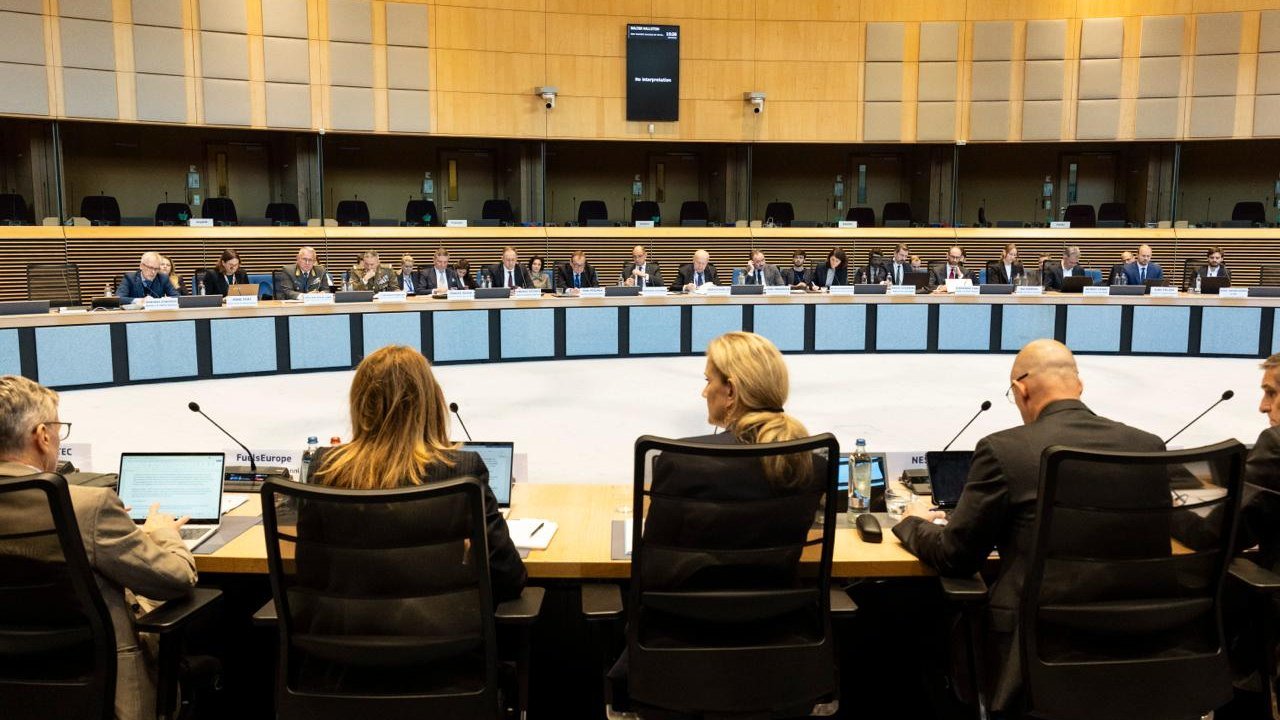
Brussels used Wednesday’s meeting to push for more fuel output at home. Jørgensen and Defence Commissioner Andrius Kubilius chaired the first European dialogue on refineries, attended by industry representatives, trade associations and NATO, according to Eunews (Eunews). Around a quarter of EU refineries have closed over the past two decades, cutting capacity by around 10%, Jørgensen said, according to Anadolu Agency, and he expects the global diesel market to stay tight well into 2027 (Anadolu Agency). He called the crisis a “wake-up call” for refining capacity and said: “We will work to increase outputs from refining assets in Europe. The industry has made some suggestions that we need to assess” (Anadolu Agency; Euronews). The Commission did not say whether it would back reopening closed plants or building new ones, Euronews reports, and it notes that the push to keep more refining capacity raises a conflict with the EU’s climate goals (Euronews). Jørgensen said the EU would also look at the sector’s long-term future, with a focus on biofuels and e-fuels, according to Anadolu Agency (Anadolu Agency).
More talks follow within days. EU energy ministers meet on Thursday, Oct. 29, Euronews reports; ahead of that meeting, Poland, Czechia and Slovakia urged Brussels in a document seen by Euronews to draw up a long-term strategy to protect the bloc’s refineries (Euronews). The EU and Canada also appear to explore a long-term LNG deal, according to a draft statement for their summit in Montreal on Thursday and Friday, seen by Euronews (Euronews). The Commission plans to meet the refining sector again early next year to assess progress, Anadolu Agency reports (Anadolu Agency).