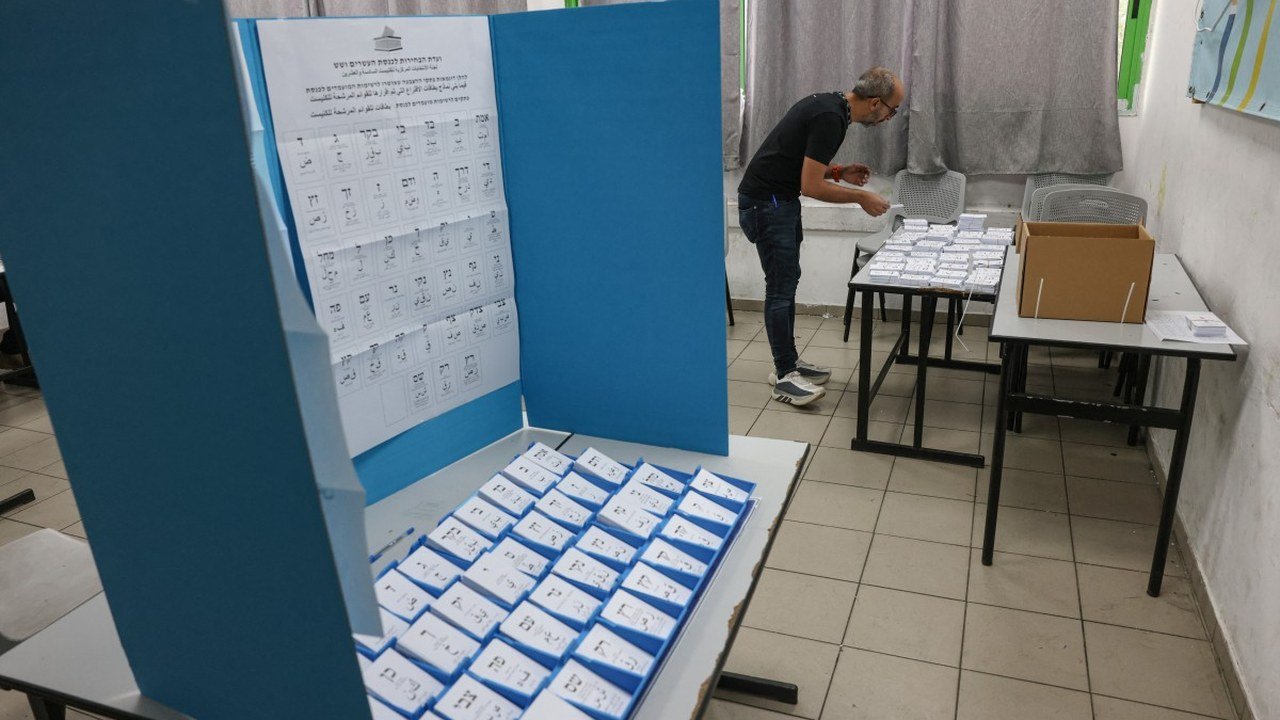
Israelis went to the polls on Tuesday, Oct. 27, at the brisk early pace of any national vote in more than four decades, according to the country’s Central Elections Committee. By 10 a.m. Israel time (1 a.m. PT), turnout stood at 16.68%, against 15.9% at the same hour four years ago, the committee said at a morning press conference, as CNN reports; the committee called it the highest early figure since 1981 (CNN). Dean Livne, the committee’s interim director, put the number of voters by that hour at more than 1.2 million, Israel National News reports (Israel National News). AP rounds the same figure to 17% (AP).
The comparison with past elections gives the number its weight. The Jewish Chronicle, citing committee data, writes that the 10 a.m. figure in 1981, the year Menachem Begin won re-election, stood at 17%, and that the low point this century came in 2006, at 9.9% (The Jewish Chronicle). Final turnout hovered around 70% across the last five elections, with 70.63% in November 2022, according to AP (AP). An early surge does not guarantee a record by nightfall; the morning numbers measure pace, not the final total.
Analysts read the morning figure with care. Ofer Kenig, a research fellow at the Israel Democracy Institute, told CNN that the pace reflects enthusiasm and “the perception of many Israelis of very significant elections - very crucial elections,” while he warned that the gain over 2022 looked modest so far and that broad conclusions would come too early (CNN). Finance Minister Bezalel Smotrich offered a partisan reading. In a post on X, CNN reports, he wrote: “The high voter turnout figure is a result of exceptional turnout rates in the Arab sector and in left-wing strongholds.” (CNN). The committee released no demographic breakdown, The Jewish Chronicle notes, and Smotrich urged conservative voters: “Don’t throw your vote in the trash.” (The Jewish Chronicle).
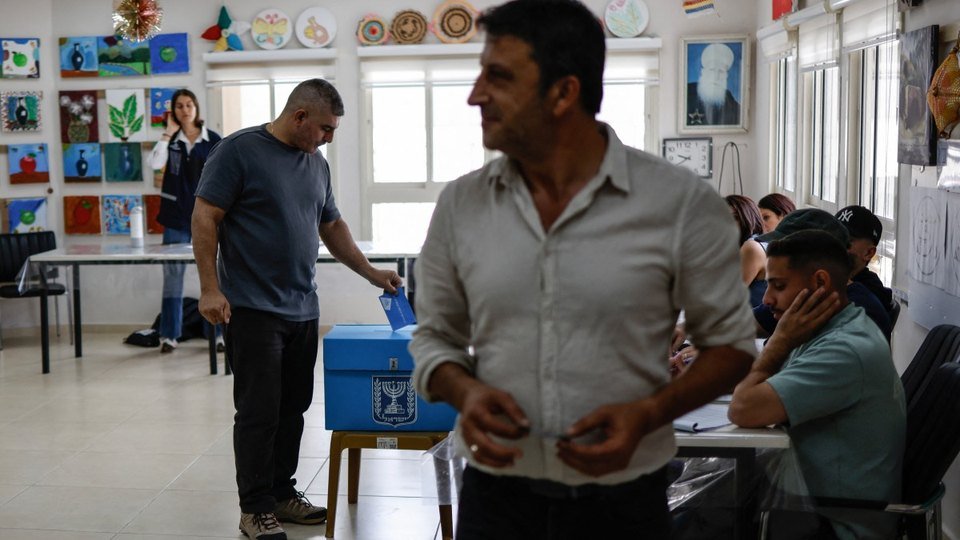
The machinery behind the vote runs on paper. Israelis place a slip for their chosen party in a blue envelope, and staff count the ballots by hand at each station once voting ends, according to AP, which reports that more than 15,000 cameras went up at polling stations to document possible irregularities (AP). The committee counts 7,331,981 eligible voters and 12,018 polling stations, with 36 lists in the race for 120 seats, Israel National News reports; AP gives a rounder count of more than 7.3 million voters and notes that 38 parties registered before some dropped out (Israel National News; AP). Parties need 3.25% of the vote to win seats (AP).
Those paper slips drew the day’s sharpest complaints. Eisenkot’s Yashar party told the elections committee that its slips had gone missing, suffered damage or ended up turned over inside voting booths, and called the pattern “systematic and deliberate” sabotage rather than accident, AP reports (AP). “Anyone who tries to steal ballot slips is trying to steal the election,” the party said, according to The Jerusalem Post, which also lists complaints from the Religious Zionist Party, Yisrael Beytenu, People of Israel and Yoaz Hendel’s Reservists party (The Jerusalem Post). The committee said it had so far found no indication of systematic attempts to sabotage the voting and that it would address every isolated incident, according to AP (AP).
Officials also played down the wider picture of trouble. Livne said reports of irregularities or problems at polling stations by mid-morning ran much lower than in previous elections, AP reports (AP). Mansour Abbas, leader of the Islamist Raam party, said some polling places had reported shortages of Arabic-language ballots and urged supporters to vote regardless of unforeseen challenges, according to the same report (AP). Abbas, whose party could emerge as a kingmaker if neither bloc wins a majority, said: “Our vote will change the government,” AP reports (AP).
Watch: polling stations on election morning
Two news outlets posted video of the opening hours on X. This desk has not frame-checked either clip. If an embed does not load, it shows as a plain link.
View the @trtworld post on X
View the @ETNOWlive post on X
The leading candidates voted early. Netanyahu, 77 and seeking a record seventh term, cast his ballot with his wife, Sara, in Jerusalem. “We really know what’s on the line, and because I can’t say things explicitly, I will say vote correctly,” he said, according to CNN (CNN). His main rival, former army chief Eisenkot, 66, met voters as polls opened in Ofakim, one of the southern communities attacked on Oct. 7, 2023, and said that if those in “the government had a shred of responsibility, they would start the morning here,” AP reports (AP; CNN). Smotrich voted in the West Bank settlement of Kedumim, CNN reports (CNN).
Voters cited a broad set of motives. A Channel 12 poll that CNN cites ranks the economy and cost of living first, at 21%, ahead of ultra-Orthodox conscription at 17%, the Oct. 7 security failure at 14% and the war with Iran at 10% (CNN). In Arab towns, AP reports, candidates and voters pointed to crime and housing; the Abraham Initiatives, a coexistence group, has tallied 186 crime-related killings in Arab communities so far in 2026, according to the agency (AP). At Hostages Square in Tel Aviv, families of those killed and taken hostage on Oct. 7 held a minute of silence at 6:29 a.m. (9:29 p.m. PT Monday), the moment the attack began, CNN reports (CNN).
Some groups voted at a faster clip still. The Israel Defense Forces put turnout among soldiers at 30% by 10 a.m., up five percent from 2022, in the paper’s phrasing, The Jewish Chronicle reports; troops in Gaza, the West Bank and Lebanon could vote over the past week at mobile stations (The Jewish Chronicle). Around 70,000 Israelis flew home to vote, the paper writes, since Israel ranks among a handful of democracies without absentee voting (The Jewish Chronicle). Counts of young voters differ: AP puts the number at around 330,000 young Israelis who spent high school in the shadow of war, while The Jewish Chronicle refers to half a million first-time voters (AP; The Jewish Chronicle).
The night ahead will settle only part of the question. Most stations close at 10 p.m. Israel time (1 p.m. PT), while those in small communities, hospitals, prisons and nursing homes close at 8 p.m., and networks publish exit polls at the final closing, Israel National News reports (Israel National News). No single party has ever won a 61-seat majority in the 120-member Knesset, CNN notes, and polls suggest weeks or even months of coalition talks among about a dozen parties, according to AP (CNN; AP). Netanyahu stays on as caretaker prime minister until a new government takes the oath, The Jerusalem Post reports (The Jerusalem Post).