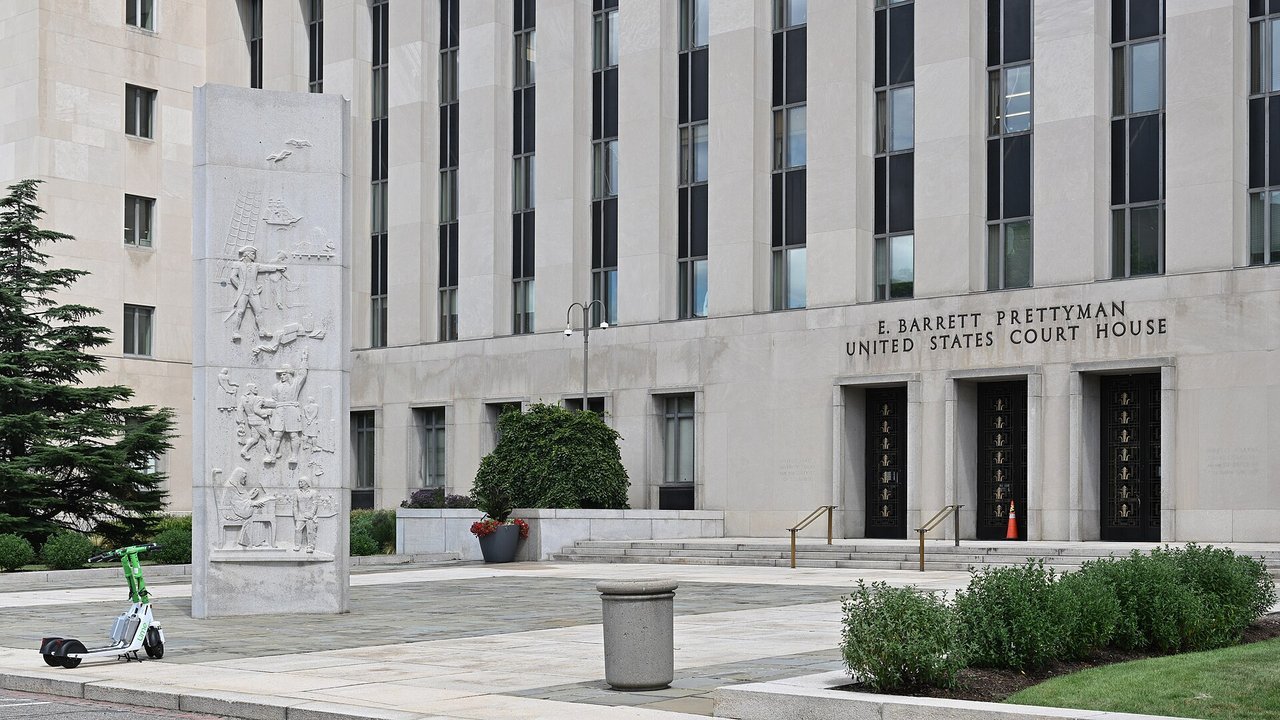
A federal judge in Washington has ordered the Trump administration to keep honoring White House press credentials for reporters from CNN, MS NOW and Politico while the three outlets’ lawsuit over President Trump’s ban plays out, according to the court’s order and opinion. U.S. District Judge Timothy J. Kelly, a Trump appointee, as CBS, CNN and NPR note, granted the outlets’ motion for a preliminary injunction on Tuesday, October 13, in Cable News Network, Inc. v. Trump (No. 26-3287). The order bars the defendants, except Trump himself, from enforcing the September 18 decision to revoke the hard passes, “thereby maintaining the status quo” since a temporary restraining order Kelly entered on September 24. CNN, itself a plaintiff, posted the earliest report this desk found (Tierney Sneed, 8:03 PM PT), followed by CBS News (Melissa Quinn, 8:27 PM PT), CNBC (Dan Mangan, 8:27 PM PT), NBC News (Dareh Gregorian, Gary Grumbach and Alexandra Bacallao, 9:11 PM PT) and NPR (David Folkenflik, 12:16 AM PT Wednesday). CBS notes that CNN and CBS News share a parent company, Skydance.
The opinion lays out the timeline. On the afternoon of Friday, September 18, Trump announced on Truth Social that he would bar the three outlets from the White House; the next day, the court says, hard-pass holders from the outlets “were denied entry by the U.S. Secret Service.” The outlets sued on Monday, September 21, and on September 22 the “White House Press Office” sent each organization a letter that the opinion describes as “unsigned and not on official letterhead,” accusing them of “trafficking in verifiable falsehoods about national security and other issues” and “publishing sensitive or classified information,” and setting a September 25 deadline to respond. Kelly held a hearing the next day and granted the restraining order the day after that, the opinion says. CNBC instead writes that Kelly issued the order “two days later” than the September 21 suit; the court’s own order and NPR give September 24. The opinion puts the reach of the ban at “78 reporters and three major news organizations,” citing the plaintiffs’ reply brief; NBC reports the same 78 figure from court filings, CNBC says the ban “reportedly” hit 78 journalists, and NPR says “more than 70.”
On due process, Kelly relies on two D.C. Circuit precedents, Sherrill v. Knight (1977) and Karem v. Trump (2020), which he says hold that a hard pass “may not be suspended without due process.” He writes that the government argued “no less than five times” that those cases came out wrong, and answers: “Fair enough. But as they know, that is a matter above this Court’s pay grade.” The opinion finds that the outlets likely received no fair notice, before the conduct at issue, of the standards or of the sanction, and says the September 22 letters, sent after the ban, “do not pass muster under Karem.” It also notes that two of the outlets’ reporters had their hard passes renewed after publishing articles that the letters later cited against them.
On the First Amendment, Kelly writes: “President Trump’s own comments suggest that he intended the revocation of Plaintiffs’ hard passes to alter their reporting on him, bolstering the case that his action here is sufficient to deter a reporter of ordinary firmness from reporting in the same way she had before.” NPR quotes that passage in full; CNBC and CBS quote parts of it. The opinion cites Trump’s answer, when asked about a “particular reason” for the ban, that “it’s really just cumulative stories over the last two years,” his remark that he would “love it” if the outlets “could straighten themselves out,” and a Time magazine interview. Kelly rejects the government’s comparison to a Fourth Circuit case over a Maryland governor’s no-comment policy, writing that the ban “cuts far deeper into an individual reporter’s ability to do her job.” He concludes that the ban likely amounts to unlawful viewpoint discrimination as well as retaliation.
Kelly also rejects the national-security case the Justice Department made in court. “First, there is no evidence in the record that President Trump made the decision to revoke Plaintiffs’ hard passes on national security grounds from the get-go, nor at any time has he directly stated that national security was the reason for his decision,” he writes; CNBC and CNN quote most of the sentence. He says the September 22 letters “appear to conflate concerns about otherwise protected speech” with national-security concerns, and that a declaration from Kingsley Wilson, whom the opinion identifies as press secretary for the Department of Defense, “now also known as the Department of War,” says “little to nothing” about the president’s decision. “In the end, Defendants do not even bother to identify what specific information in any of these ‘reporting incidents’ was allegedly classified or sensitive,” Kelly writes, adding that the government chose not to file any other material, classified or not, under seal or ex parte. The opinion itself gives two timings for the “particular reason” exchange: “About an hour later” and “later that day” in two passages, but “The next day” in a third; this desk flags the slip and does not pick one.
Kelly adds a caveat near the top of the opinion: “Still, no one should interpret the Court’s decision to suggest that President Trump’s concerns about accuracy and fairness in the media’s reporting are unfounded,” he writes, “or that the government is powerless when its true aim is to protect national security when classified information is unlawfully disclosed.” CNBC, CNN, NBC and NPR each carry all or part of that sentence. Later he writes: “Presidents have criticized the media along these lines since time immemorial.” NPR’s summary says Kelly found the ban “violated” the journalists’ rights; the opinion itself speaks of likely success on the claims, and CBS, CNBC and CNN use “likely,” in keeping with a preliminary ruling. CNBC notes that the order “is not a final ruling on the merits of the suit.”
Theodore Boutrous, the outlets’ lawyer, said in a statement that CBS, CNBC, NPR and CNN carry: “When the President issued his ‘ban on the free press,’ he blatantly and explicitly violated due process and the First Amendment.” At the October 8 hearing, Justice Department lawyer Michael Velchik argued that “Access to the White House is a privilege — not a right,” according to NBC, and told the judge that removing reporters falls “within the discretion of the president,” according to CNN. CBS says Trump wrote on Truth Social last month that the Justice Department would appeal if Kelly ruled against him, and NBC says he “vowed to appeal” before the ruling. NBC and NPR say the White House did not immediately respond to requests for comment; CNN and CNBC say they asked the White House and the Justice Department.
Outlets add context the court papers do not carry. NPR says the administration has at times kept CNN out of tighter spaces such as Air Force One and the Oval Office even under the restraining order, including a trip to Tennessee, which has kept CNN from serving as the designated video-pool network. NBC and NPR report that the Justice Department said last week it had five television networks, including CNN and NBC, under antitrust investigation after the networks declined to provide pool coverage over the ban. CBS recalls the separate Associated Press case over the “Gulf of America” name, in which an appeals court let the White House limit AP’s access to the Oval Office and Air Force One. This desk read the court’s order and memorandum opinion through the CourtListener RECAP archive; it could not open AP’s report (403, then a timeout) and did not read Politico’s or MS NOW’s own coverage, the October 8 hearing transcript, or Trump’s Truth Social posts, which the opinion reproduces as images.
