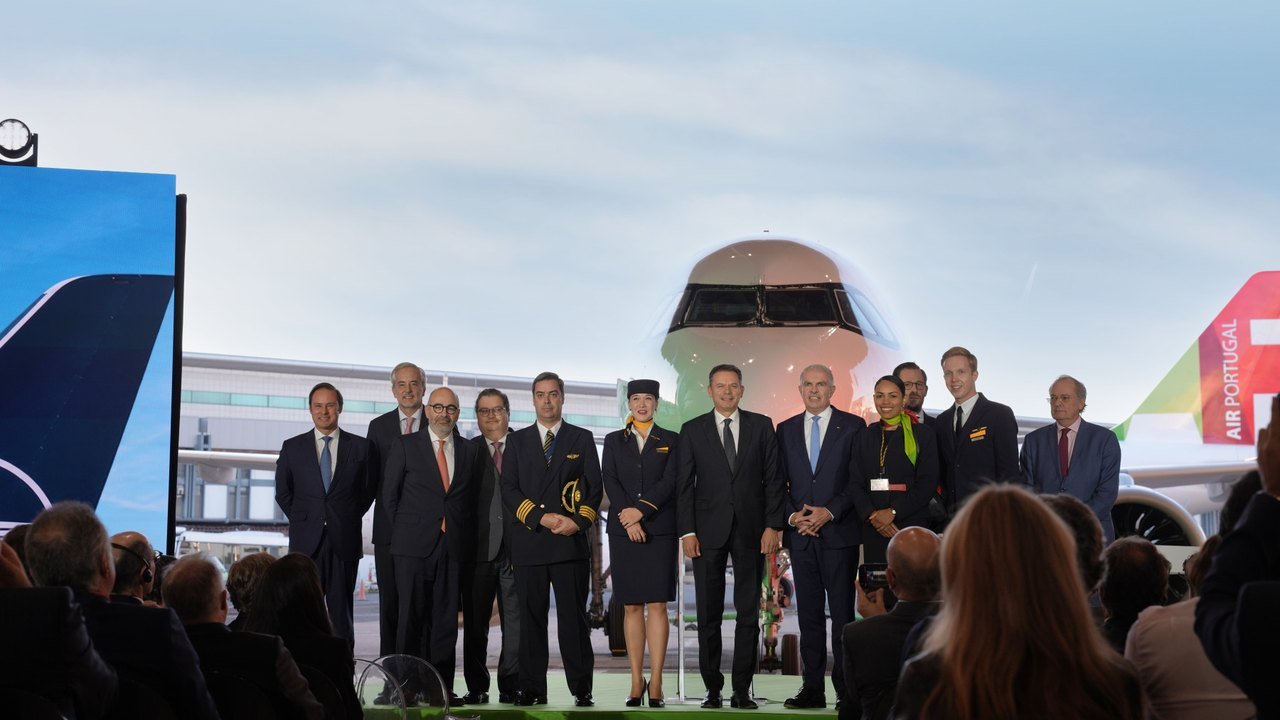
Lufthansa Group and Portugal’s government signed an agreement on Tuesday, Nov. 3, under which the German airline group will buy an initial minority stake of 44.9% in TAP Air Portugal, the state-owned flag carrier, for €1.025 billion, according to a Lufthansa Group statement. The signing took place at Lisbon’s Humberto Delgado Airport, Lufthansa said, and public broadcaster RTP reported that it happened shortly before 5 p.m. Lisbon time (about 9 a.m. PT). Lufthansa said it will pay for the stake entirely from available liquidity, and that completion “remains subject to approval by the relevant authorities, in particular the European Commission.”
The price could climb. If Lufthansa also buys the shares first offered to TAP’s employees, its stake could rise to 49.9%, and with a so-called ticking fee the total price could reach up to €1.2 billion, according to the Lufthansa statement. The government picked Lufthansa on Oct. 14 for a bid of €1.201 billion for up to 49.9%, of which 5% would go preferably to workers, according to Euronews; RTP reported that the German bid topped Air France-KLM’s offer by €163 million. Jornal Económico reported that the sale of the 5% tranche to workers will take place in 2027, and that Lufthansa will buy whatever the workers do not take.
Spohr made the identity pledge in person. “TAP will continue to be a Portuguese airline,” Lufthansa CEO Carsten Spohr said at the ceremony at the TAP Campus beside Lisbon airport, according to Euronews. In Lufthansa’s written statement he called the signing “an excellent signal that extends far into our shared future with TAP Air Portugal” and said the group wants to “preserve its Portuguese identity and develop Lisbon into a Lufthansa Group hub.” Speaking to Portuguese reporters, he cited group airlines such as Brussels, Swiss, ITA and Austrian as carriers that kept their national identities, according to Jornal Económico.
Watch: the TAP–Lufthansa signing ceremony and a route-map clip, posted on X
If an embed does not load, it shows as a plain link to the original post. The government broadcast carries Portuguese audio.
View the @govpt post on X
View the @aviacionline post on X
A pen from the cabin crew made it into the story. Observador and Jornal Económico reported that Spohr signed with a pen given to him by the crew of the TAP flight that brought him to Lisbon from Frankfurt, where Lufthansa had presented quarterly results earlier in the day. Observador reported that the contracts themselves carried the signatures of two Lufthansa executive board members, the head of the state’s treasury agency, Infrastructure Minister Miguel Pinto Luz and Finance Minister Joaquim Miranda Sarmento, and that Montenegro, the only government member to speak, did not sign.
Montenegro framed the sale as a matter of national interest rather than money. According to the Portuguese government’s account of his speech, he said: “O país dá hoje um passo extremamente importante para garantir que vamos continuar a ter uma companhia aérea portuguesa” (in this desk’s translation: today the country takes an extremely important step to ensure we will continue to have a Portuguese airline). He also acknowledged “o trauma que a sociedade portuguesa tem com as sucessivas injeções de capital nesta companhia,” the trauma of repeated capital injections into TAP, and said the government acted with no “capricho ideológico” (ideological whim). He called the price fair rather than excessive, the government said.
Lisbon would become Lufthansa’s seventh hub. Lufthansa said the deal would lift its share of Europe–Latin America traffic from about 9% to about 20%, “bringing Lufthansa Group in line with its key competitors,” and that Porto, the Azores, Madeira and the Algarve also form part of its growth plans. The group puts potential synergies at up to €450 million, most of which a minority stake already makes achievable, it said. Its airlines currently offer 353 weekly flights to six destinations in Portugal, Lufthansa added.
Brussels comes next. The deal needs European Commission antitrust approval, and Spohr said overlaps between the two networks look limited, Reuters reported in a story by Sergio Goncalves: “About potential overlaps, we believe they are fairly limited due to the fact that the markets of TAP and Lufthansa Group are not overlapping to a high extent,” he told reporters. Reuters reported that he called it too early to discuss potential antitrust remedies; in Portuguese, Jornal Económico quoted him as saying “é muito cedo para falar sobre certos remédios” (it remains too early to talk about certain remedies). RTP reported that the Commission’s competition directorate will examine the deal route by route.
The timeline stretches into 2028 and beyond. Euronews reported that the government expects European approval in the first half of 2028, while Observador wrote that closing could slip as late as July 2028. RTP reported that business integration could then take 12 to 18 months, pointing to completion between 2029 and 2030, and that TAP will stay independently managed until approval, with Lufthansa following along under the agreed terms.
The contract also sets governance terms, according to RTP: the state keeps five of nine board seats, including the chair; strategic decisions such as fleet and larger operations require consensus; the headquarters, brand and Lisbon hub fall to the shareholders’ meeting; and Lufthansa may not sell its stake for five years. RTP also reported fleet commitments: growth from about 100 aircraft today to 117 in 2035, and the transfer of up to eight Airbus A350-900s by 2030. Jornal Económico reported that Lufthansa will run TAP’s executive committee while the state keeps its board majority, and that Spohr said: “Não estamos a falar de despedimentos, estamos a falar de crescer em conjunto” (in this desk’s translation: we talk not of layoffs but of growing together).
Full privatization remains contested. Lufthansa said it “expressly welcomes the prospect of a full privatization,” and it has offered €863 million in cash plus a 5% stake in the Lufthansa Group, valued at €488 million, for the state’s remaining 50.1%, should the government decide to sell, Reuters reported. Montenegro backed a second phase on Tuesday, Jornal Económico reported. But in October, ECO reported that both main opposition parties, the Socialists (PS) and Chega, oppose selling all of TAP, and that the minority government needs one of them to complete that phase; PS parliamentary leader Eurico Brilhante Dias told ECO, “Não mudámos de opinião” (in this desk’s translation: we have not changed our minds).
Lisbon also changed TAP’s legal regime on the same day. Observador reported that a long-awaited decree exempting TAP from parts of the public-manager statute, which governs pay and appointment rules for state-company executives, came out Tuesday afternoon and takes effect Wednesday. TAP chairman Carlos Oliveira said the current team will keep executing TAP’s strategic plan until closing, according to Observador.