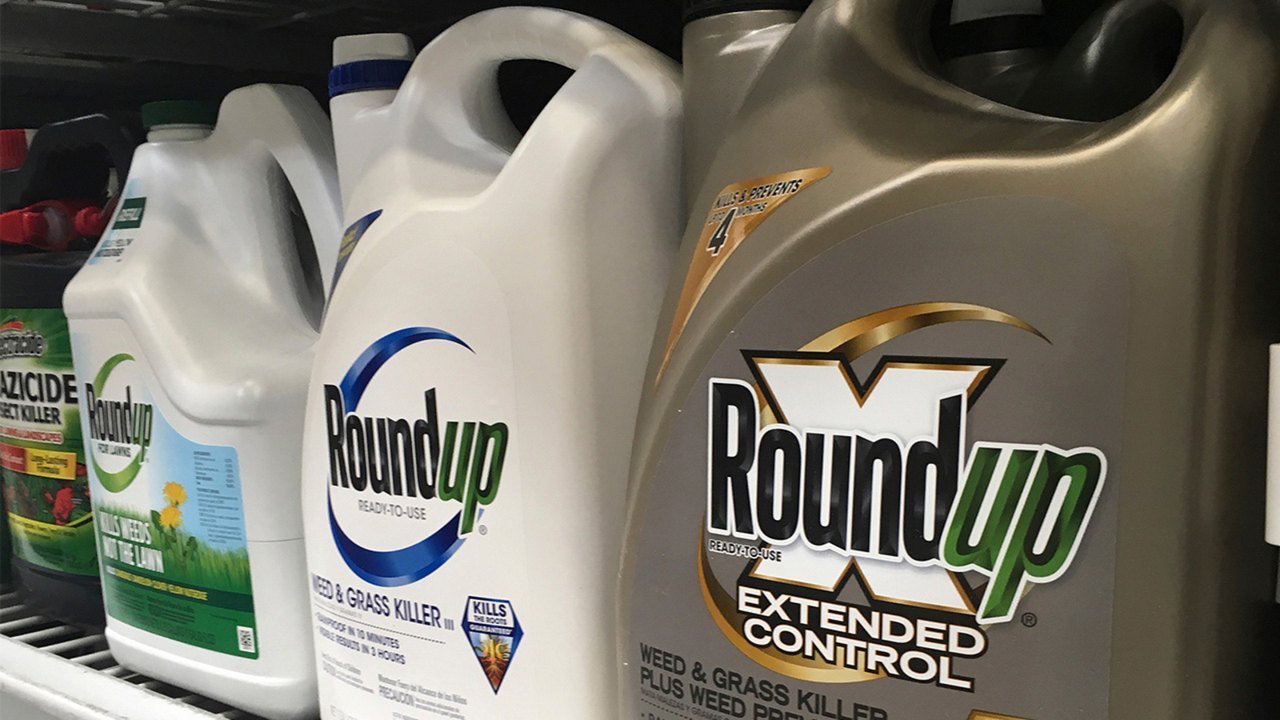
A Missouri state judge on Friday, Nov. 20, approved Bayer’s plan to pay up to $7.25 billion to resolve current and future U.S. claims that its Roundup weedkiller causes non-Hodgkin lymphoma. Judge Timothy Boyer of the circuit court in St. Louis found the settlement “fair, reasonable, and adequate,” Reuters reports, and the agency says the deal could resolve litigation that “has weighed on the German company for close to a decade” (Reuters). Bayer announced the ruling the same day and said the court’s final approval order “is subject to appeal” (Bayer release).
Bayer CEO Bill Anderson welcomed the order. “The court’s final approval is a decisive milestone in the company’s strategy to mitigate the risks of both pending and future Roundup litigation,” he said in a statement quoted by Reuters (Reuters; Bayer). The company says the agreement “does not contain any admission of liability or wrongdoing,” and it continues to maintain that glyphosate, Roundup’s active ingredient, does not cause cancer (Bayer; Reuters).
How the money flows: according to Bayer, its Monsanto unit will make “declining capped annual payments for up to 21 years totaling up to 7.25 billion U.S. dollars, inclusive of payments already made” (Bayer). The class covers people exposed to Roundup before Feb. 17, 2026, who either have a non-Hodgkin lymphoma diagnosis now or receive one within a 16-year period after the agreement takes effect, the company says (Bayer). Bayer adds that “any appeal of the Court’s final approval order would pause further Monsanto payments until such appeals are exhausted” (Bayer).
The AP reports that individual participants could receive an average of between $10,000 and $165,000, depending on how they used the product, their age at diagnosis and the severity of their illness. Agricultural, industrial or turf workers with long exposure who received an aggressive diagnosis before age 60 could average $165,000, while people diagnosed at 78 or older would average $10,000, according to the AP (AP via the Seattle Times). The official settlement website advertises a range of “$6,000 to $165,000+” (WeedKillerClass.com). The AP also reports the approved deal includes $600 million for attorneys’ fees (AP).
In his written judgment, Boyer called the average individual payouts “fair and adequate” and the total “among the largest in the history of mass tort personal-injury class action settlements,” the AP reports. The judge also cited a risk that Bayer would have filed for bankruptcy protection had he rejected the settlement, according to the AP (AP). Reuters reports that he overruled objections that payouts to individual cancer victims would fall too low because claimants who settled earlier received more, and that he warned that delay could force victims, including people with terminal cancer, to wait “an indeterminate number of years” for payment (Reuters). Bloomberg Law quotes the ruling as saying the deal serves “the best interests of the class representatives” (Bloomberg Law).
Not every plaintiffs’ lawyer agrees. At a September hearing on the deal, attorney Gerson Smoger said, “This settlement is the scariest, worst future settlement that’s ever been contemplated,” according to the AP, which reports he argued that it locked in future claimants for decades with no chance at punitive damages (AP). Reuters says lawyers for some objecting victims did not immediately respond to requests for comment after the ruling (Reuters). On the other side, Christopher Seeger, a court-appointed counsel for cancer patients, said, “Today’s final approval order delivers guaranteed compensation to Roundup cancer victims who have waited more than a decade for justice,” the AP and NPR report (AP; NPR). Seeger also said the Supreme Court’s Durnell decision narrowed victims’ ability to pursue claims in court, Reuters reports (Reuters).
The Supreme Court ruled while the settlement awaited approval, and the AP says the decision “undercut one of the central arguments in the Roundup lawsuits” (AP). The Supreme Court’s docket shows that on June 25, 2026, the justices reversed and remanded in Monsanto Co. v. Durnell, with Justice Brett Kavanaugh writing for the Court and Justice Ketanji Brown Jackson, joined by Justice Neil Gorsuch, dissenting (Supreme Court docket). Reuters reports the 7-2 decision overturned a $1.25 million jury award to Missouri man John Durnell and agreed with Bayer that a federal law regulating pesticides barred failure-to-warn claims brought under state law (Reuters). The BBC’s account calls the overturned award a “$1.25m settlement”; court records and Reuters describe a jury verdict (BBC). The AP also reports that a Missouri jury in October sided with Bayer in the first Roundup verdict after the ruling, in a case alleging design defects, negligence and fraud (AP).
Reuters reports that Bayer, which has faced extensive Roundup litigation, has seen its share price fall 46% since it bought Monsanto for $63 billion in 2018, that the company settled much of the litigation for $10.9 billion in 2020, and that it had faced about 65,000 claims in U.S. state and federal courts (Reuters). The AP puts the total number of Roundup-related claims made against Bayer at about 200,000 and reports the company previously set aside $16 billion for Roundup legal costs, with the new deal coming on top of that (AP). Bayer’s release says Monsanto “believes the company is adequately provisioned to manage the remaining litigation” and that the company expects opt-outs to amount to “a very low percentage” of current and potential future claims (Bayer). The settlement leaves out some federal cases; Reuters reports Bayer counts about 200 still in litigation (Reuters).
The science remains in dispute, the AP reports. The World Health Organization’s cancer research agency classified glyphosate as “probably carcinogenic” in 2015, while the U.S. Environmental Protection Agency has determined it unlikely to cause cancer in humans when used as directed, the AP reports (AP). NPR reports the EPA now has a review of the human-health evidence under way, and that the Trump administration sided with Bayer in the Supreme Court case and issued an executive order to promote domestic glyphosate production (NPR). Bayer has already removed glyphosate from new Roundup versions sold for residential use, according to the AP (AP).
What comes next: people diagnosed before the cutoff must register within 180 days after final approval and file a claim within 180 days after any appeals end, according to the settlement website, which, when Seems News checked it on Saturday, still said registration had not opened (WeedKillerClass.com). Objectors may appeal, which under the agreement would pause further payments, Bayer says (Bayer). Seems News earlier covered this week’s stock-market slide.