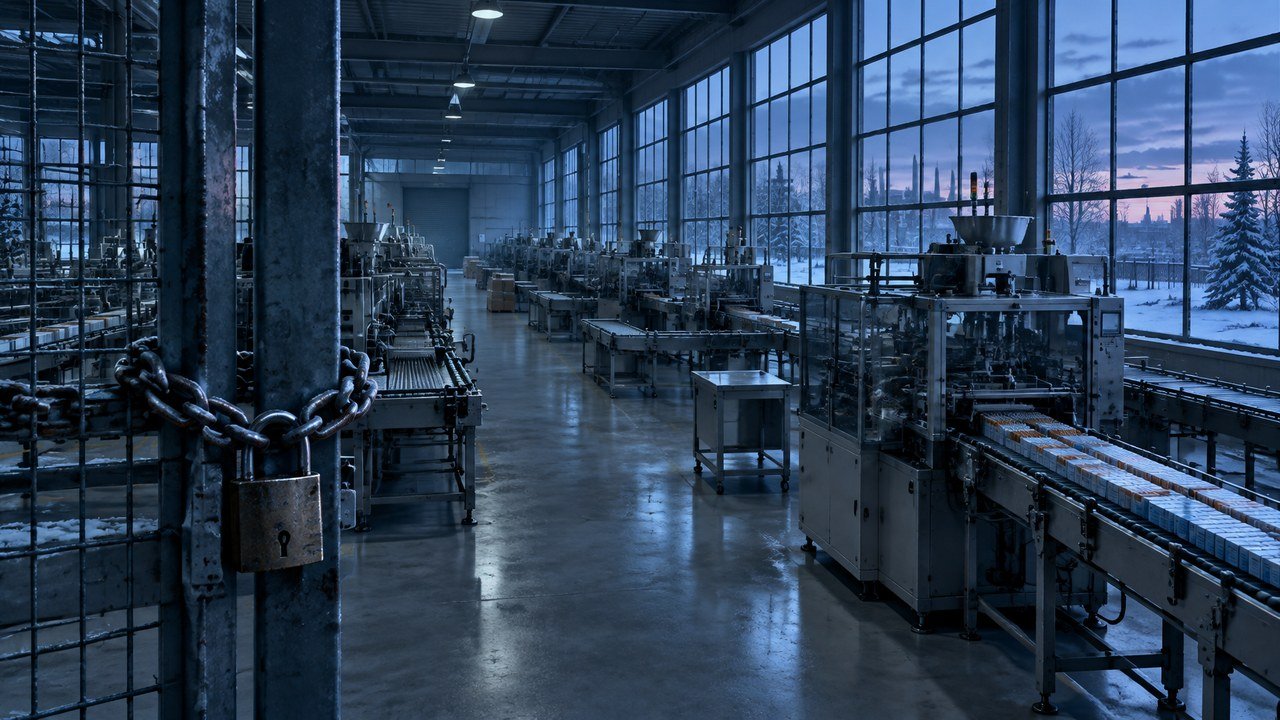
Russian President Vladimir Putin signed a decree on Thursday, Nov. 5, that places the Russian assets of Japan Tobacco International under temporary administration, Reuters reported in a story carried by Channel NewsAsia (CNA), timed 8:37 p.m. Singapore time, about 4:37 a.m. PT. Reuters called JTI the latest foreign company to lose control of its local operations in what it described as a widening Kremlin crackdown. NHK wrote that the order covers four manufacturing facilities held by JTI in Russia, and Nikkei Asia described four Russian subsidiaries of Japan Tobacco placed under temporary management by a local entity. The Moscow Times (Mack Tubridy, with AFP contributing) called it a presidential decree placing the assets under “temporary management” of the state, and Euronews said the decree transferred JTI’s four factories, around 4,000 employees and roughly 40% of the Russian cigarette market to a state-linked holding company.
The decree hands the stakes to a company called Industrial Assets. Reuters said the decree placed JTI’s stakes in four businesses under that company’s management and gave no reason. TASS, the Russian state news agency, named the four as Donskoy Tabak, Pereslavl-Tabak, JTI Yelets and Kres Neva, and wrote that the document appeared on Russia’s official legal information portal. The Moscow Times wrote that independent media reported multiple Russian companies carry the name Industrial Assets, including some tied to earlier seizures of foreign business assets, and that the company taking JTI’s units reportedly registered on Sept. 16 and belongs to Sergei Dremov, a former Kursk region officer of the FSB security service. This desk could not confirm that registration detail independently.
JTI answered carefully. In an emailed statement that Reuters and The Moscow Times both quoted, the company said it knew of the decree and described its stance as “assessing the situation and our options, prioritizing our stakeholders, most notably our employees.” The Moscow Times wrote that JTI has operated in Russia since 1999, holds a market share of up to 40% and sells brands including Winston, Camel, Sobranie and LD. TASS wrote that JTI has operated in Russia since 1999 and ranks as the country’s largest tobacco manufacturer, and Reuters said JTI describes itself as Russia’s biggest tobacco manufacturer by sales volume. NHK, citing JTI’s website, placed the four manufacturing facilities in St. Petersburg, the Leningrad region, Rostov-on-Don and the Lipetsk region.
Watch: NHK’s bulletin on the decree, posted on X
If the embed does not load, it shows as a plain link to the original post. The clip carries Japanese on-screen text and does not replace the outlet text above.
View the @nhk_news post on X
Outlets framed the legal basis differently. TASS wrote that an April 2023 presidential decree titled “On the Temporary Management of Certain Property” lets Russia respond to the seizure of assets or restrictions on property rights of Russian owners abroad by placing assets of entities from countries it calls unfriendly under temporary management. Reuters wrote that the new decree gave no reason and recalled that the Kremlin has tied similar moves to the behavior of “hostile countries.” The Moscow Times wrote that Putin has defended such moves as a symmetrical response to Western sanctions and the freezing of Russian state assets, and that he said control of seized subsidiaries could return under favorable conditions. NHK wrote that the Associated Press reports Western businesses placed under temporary management have ended up sold to Russian owners at heavily discounted prices.
The move lands amid strained Russia–Japan ties. Reuters wrote that Russia’s foreign ministry said in October that it considered a drone sale to Ukraine by a Japanese company a hostile step and warned of a harsh response, and that Russia said it had detained a Japanese journalist in the Sakhalin region last month. The Moscow Times named that journalist as Yuki Imai of the Hokkaido Shimbun and wrote that both his employer and the Japanese government dispute the FSB’s stated reason for holding him; NHK wrote that the FSB detained a Hokkaido Shimbun journalist on Oct. 13. The Moscow Times added that some analysts say Moscow seeks to punish Tokyo for its growing support of Ukraine and its decision to join G7 sanctions. NHK noted that Putin visited Etorofu Island for the first time in August.
Tokyo signaled a reaction. Mainichi wrote, in Japanese, that a senior Foreign Ministry official said on Thursday night that Japan intends to protest to Russia soon; the paper added that the ministry sees a countermeasure to Japan’s Ukraine-related sanctions as likely and plans to consider its response. This desk translated that passage and could not find a named spokesperson or an English-language ministry statement. Nikkei Asia’s headline said the move came as Moscow–Tokyo ties fray; its full text sat behind a paywall, so this desk used only the visible lede.
This desk read the Reuters text via CNA, The Moscow Times, TASS, NHK, Mainichi (via a d-menu copy), Euronews’ Nov. 5 bulletin page and the Nikkei Asia lede, plus X posts from @nhk_news, @Japandailydotjp and @ElNuevoPais2026 on X. The decree text on Russia’s legal portal, the Kremlin site and JTI’s own press page returned errors or went unread, so the decree’s wording reaches this page only through the outlets above. Reuters says “temporary administration,” while TASS, NHK and The Moscow Times say “temporary management.” Times convert from Singapore, Tokyo and Moscow clocks to Pacific Time (UTC−8).