Russia seems ready to return to three-way peace talks with the United States and Ukraine next month. Kremlin foreign-policy aide Yuri Ushakov told reporters that President Vladimir Putin informed U.S. envoy Steve Witkoff that Moscow stands “ready in principle” to resume the talks, the BBC reports, after the two met in St. Petersburg on Wednesday, Oct. 21. RFE/RL, which places the meeting at the Constantine Palace, quotes Ushakov saying, “Our president informed Steve Witkoff that we are, in principle, ready to resume the mentioned talks.” The Kremlin posted a Russian-language readout of his briefing at 4:25 p.m. Moscow time (6:25 a.m. PT), the earliest account on hand, and Reuters, in a copy carried by CNBC-TV18, says no such talks have taken place since February.
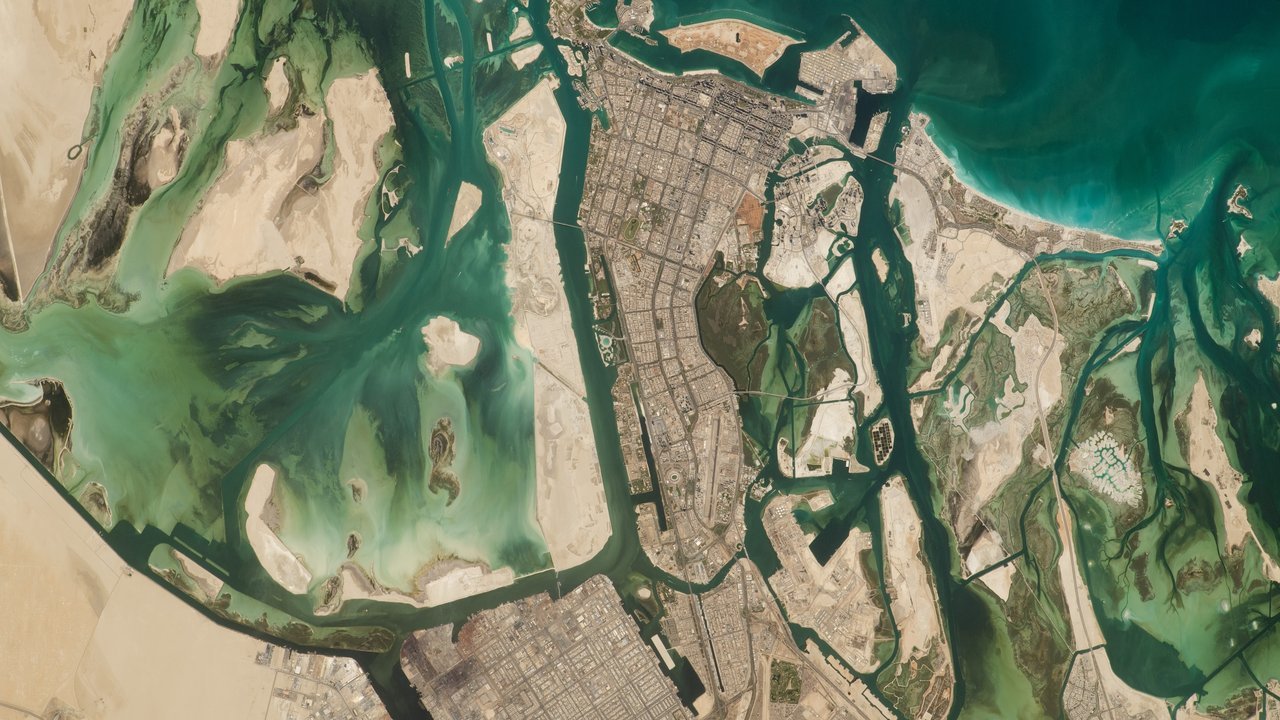
Accounts of the timing differ. The Kremlin readout uses a Russian phrase that this desk reads as the middle ten days of November, and BBC News Russian quotes Ushakov in the same terms. TASS quotes him telling the Russian state channel Vesti, “We are focusing on Abu Dhabi. Sometime in the middle of November, around November 10 was agreed upon.” CNN says Putin would resume the talks “after November 10,” while the BBC says Ushakov suggested a round “around 10 November” in Abu Dhabi, the capital of the United Arab Emirates. CNN says Ushakov named Abu Dhabi in answer to a question on the Russian state channel Russia 24. BBC News Russian reports that the delegation lineup had not yet won approval and notes that Russia, Ukraine and the U.S. already held three-way talks in Abu Dhabi in January 2026.
Ushakov said the talks must focus on “building a security system for Russia and Ukraine after the end of the conflict,” per the BBC and Reuters. CNN says he offered no further details on what Russia would demand as part of that framework. RFE/RL writes that the Kremlin has repeatedly invoked security concerns and demands for a so-called security zone to justify its war, and CNN says it sees no sign so far that Russia has moved off what it calls Moscow’s maximalist positions, including a demand that Ukraine give up the whole Donbas region. According to the Kremlin readout, Witkoff replied that Trump would welcome the decision with great satisfaction.
CNN says Putin made the offer at Witkoff’s request. In the televised opening of the meeting, Witkoff told Putin he hoped “you might consider that as the next step in the peace process, so we can begin to have technical teams discussing what are those next steps,” according to the Kremlin’s English transcript. A U.S. official told the BBC that Witkoff and Trump’s son-in-law Jared Kushner had proposed “a trilateral meeting at the technical level between the US, Russia, and Ukraine” at Tuesday’s talks in Oslo, adding, “This was accepted by the Ukrainians in Oslo yesterday and by the Russians in St Petersburg today.” CNN cites a U.S. readout with the same acceptance line. Witkoff called his meetings with Putin and Zelensky “constructive” in a post on X, CNN reports, and wrote, “While there is still important work left to do, President Trump remains committed to seeing this war end and achieving a comprehensive, durable peace.” Kushner joined by video link; the Kremlin readout says he could not fly in for health reasons, and CNN says he has the flu.
Ushakov gave little credit to what Witkoff brought from Oslo, where, per Reuters, the envoy met Zelensky, the Norwegian prime minister and the Finnish president. Reuters quotes him saying Witkoff “noted some new approaches, new points in the approaches of the Europeans and Kyiv, although they did not contain much that was useful in the context of resolving the Ukrainian crisis”; RFE/RL renders the last part as “there wasn't really much substance in them.” A U.S. official had earlier told CNN that the U.S. and Ukraine made “meaningful progress” in Norway. One date conflict: the BBC at one point places the Oslo meeting on Monday, but elsewhere in the same story it refers to Tuesday’s talks, and CNN and RFE/RL put the Oslo talks on Tuesday, Oct. 20, which matches Putin’s on-camera “yesterday” in the Kremlin transcript.
Moscow and Kyiv tell different stories about the war itself. Ushakov said Putin told Witkoff that Russian troops held a “strategic initiative” and kept advancing across the front, per the BBC, which says Ukraine and its European allies dispute that claim and point to a virtual stalemate. The Kremlin readout blames Kyiv for derailing a resumption that Moscow says it had planned right after Russia’s State Duma elections, citing what it calls massive Ukrainian strikes on voting day; the BBC says the Kremlin blamed last month’s “massive” Ukrainian strikes during the elections for the pause.
Zelensky, speaking to Fox News on Wednesday, repeated that Ukraine would accept a ceasefire that freezes the current front line and then seek security guarantees, CNN reports, quoting him: “Right now we have to freeze, and I think this is (the) real way to end this war.” CNN also quotes him saying, “I always said that we are open to negotiate in any format, any topics, but don’t speak about us without us, please.” BBC News Russian says Kyiv had made no statement on the Kremlin offer as of its report.
The talks ran almost three hours, per the Kremlin readout and Reuters, and covered more than Ukraine. The readout says the two sides discussed a possible first meeting of the leaders of Russia, China and the United States at the APEC summit in Shenzhen in November, an idea it says none of the three capitals rejects. On Iran, Reuters quotes Ushakov: “Vladimir Putin emphasised that the potential for diplomacy is far from exhausted and that it is both possible and necessary to reach agreements with Tehran, which is our strategic partner.” On the diesel deal, Putin said on camera, “The first tanker, carrying 40,000 tonnes, will depart in two or three days, and the others will follow in succession,” per the Kremlin’s English transcript. That figure differs from earlier reports: NPR said Putin put the first tankers at 60,000 tons, and The Guardian cited Russian officials on an initial shipment of about 300,000 tonnes. The same meeting saw Russia free the American Stephen Hubbard, which this desk covered in an earlier story.
