Updated Nov. 14, 4:57 PM PT: The catch worked. Ship 42 settled into the launch tower’s “chopstick” arms at Starbase at about 4:20 p.m. EST (1:20 p.m. PT) on Saturday, about 22.5 hours after liftoff, according to Space.com, which calls it the first recovery of an orbital Starship upper stage. “Mechazilla catches Starship!” SpaceX posted on X at 1:21 p.m. PT. CNBC reports that the ship circled Earth 14 times before landing. During Saturday’s webcast SpaceX’s Kate Tice said “early indications are that the booster ended its boostback [burn] early due to a low fuel mass alarm,” and that engineers still look for the root cause, per Space.com. With Booster 22 lost off Texas, SpaceX “fell short of its desired double catch,” Al Jazeera notes. “We caught a Starship, and now everything changes,” SpaceX commentator Dan Huot said on the webcast, per Space.com.
View the @SpaceX post on X
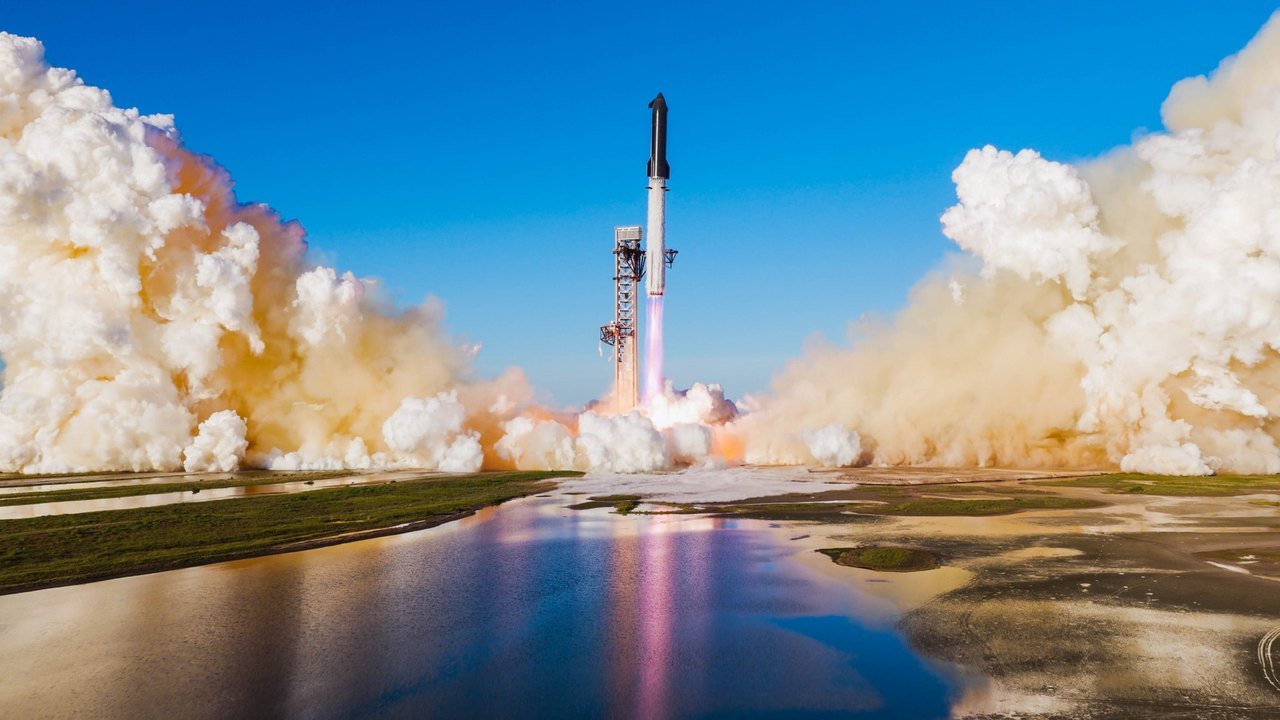
SpaceX’s Starship climbed to orbit on Friday, but the booster beneath it never made it back to the launch tower. The 15th Starship test flight lifted off from the company’s Starbase site in South Texas at 4:47 p.m. local time on Nov. 13 (5:47 p.m. ET, 2:47 p.m. PT), Spaceflight Now and Space.com report. Space.com says the 33 Raptor 3 engines on the Super Heavy booster produced more than 18 million pounds of thrust. Reuters, in a report published by CNA and Ireland’s RTÉ, describes the flight as a mission the company hopes will become “the first round-trip rocket voyage into orbit and back to the very spot where it left Earth.”
The booster’s return went wrong late in the flight. SpaceX had planned for Booster 22 to fly back to Pad 2 and drop into the tower’s mechanical “chopstick” arms about six and a half minutes after launch, according to Spaceflight Now. Instead it diverted offshore. “We were initially go for a catch but in the later stages of the coast the booster aborted itself for a GNC [Guidance Navigation and Control] issue that it detected and that put it into its contingency landing offshore,” SpaceX commentator Dan Huot said in an update nearly seven hours into the mission, as quoted by Spaceflight Now. Earlier, during the webcast, Huot said: “We'll dig in to what caused that abort during its flight back to the tower,” per Space.com’s live blog, which also noted that one of the booster’s 33 engines “may have dropped out” after stage separation.
Accounts of the ending differ. Reuters reports that the booster “momentarily hovered aloft before exploding a short distance over the sea surface,” while the New York Post, in text that matches AP’s report, says it “fell into the Gulf of Mexico and exploded.” Spaceflight Now writes that the vehicle “exploded and disappeared from view before appearing to rise back out of the sea as remaining propellants burned off.” Ars Technica calls the blast “a fantastically powerful explosion, even for observers more than 10 miles away.” Space.com, by contrast, describes a “controlled splashdown in the Gulf of Mexico.”
Clips below come from SpaceX and Spaceflight Now, posted during and after Friday’s launch.
View the @SpaceX post on X
View the @SpaceflightNow post on X
View the @SpaceX post on X
View the @SpaceflightNow post on X
The booster belonged to the newest design. SpaceX has caught a Super Heavy with the tower three times before, most recently in March 2025, according to Reuters. Space.com says those three catches all involved first-generation (V1) boosters, two of which flew again, and that a catch on Friday would have marked the first recovery of a Version 3 Super Heavy. The New York Post notes that this booster stretches 236 feet (72 meters) and serves as the production model for moon and Mars expeditions.
The upper stage, by every account read, flew as planned. “We’ve got a nominal orbit insertion, so Starship now in orbit around Earth for the second time ever,” Huot said on the webcast, according to Space.com, which puts the ship in an orbit about 170 miles (275 kilometers) up. Reuters says the vehicle reached orbit about 27 minutes after launch, citing SpaceX. Ship 42 then released 26 Starlink V3 satellites over roughly 42 minutes starting 35 minutes after liftoff, Space.com reports; Reuters says SpaceX reported all 26 released within the first two hours. Space.com adds that three of the satellites carried cameras pointed back at the ship to inspect its heat-shield tiles.
The next test falls on Saturday afternoon. “Starship and its heatshield are healthy as the vehicle continues to orbit Earth after a spectacular start to its mission nearly 7 hours ago,” SpaceX posted on X at about 9:45 p.m. PT Friday, adding that teams kept monitoring systems “ahead of a planned return to launch site catch at Starbase ~22.5 hours after launch.” Spaceflight Now reported on X that SpaceX chose at about T+6 hours 48 minutes to skip an early off-ramp to Chile and continue. Elon Musk wrote on X: “So far, so good for the ship.”
Outlets give slightly different landing times. Ars Technica puts the catch at about 3:15 p.m. Texas time (1:15 p.m. PT), Space.com at about 3:17 p.m. and Spaceflight Now at around 3:20 p.m. Space.com and Spaceflight Now say the ship will circle Earth 14 times, while the New York Post says 15 laps. According to Space.com, SpaceX kept a final checkpoint for an early Pacific Ocean return at T+20 hours 41 minutes, then a 10-second deorbit burn at about T+21 hours 36 minutes, plus a contingency splashdown zone in the Gulf. “Starship will only execute a return to launch site if the flight control team has ensured that the vehicle systems critical for reentry maneuvers and final landing burn and tower approach are healthy,” SpaceX wrote in its mission description, as quoted by Space.com.
A ship catch would set a record, by the outlets’ accounts. SpaceX has never tried to catch the upper stage, Ars Technica reports, and Reuters says a successful return would mark the first round-trip flight of a vertically launched spacecraft into orbit and back to its precise point of departure. Ars adds that the route home takes the ship over parts of Mexico and the United States, so SpaceX wants proof of a healthy vehicle before it commits. “Starship, we’re going to catch both the first stage and second stage,” SpaceX launch vice president Kiko Dontchev said before Friday’s launch, according to the New York Post.
Starship also figures in NASA’s moon plans. Reuters reports that NASA has put roughly $3.2 billion toward Starship since choosing it in 2021 as a lunar lander for the Artemis program, and that SpaceX has spent at least $15 billion of its own money; Reuters also says analysts and industry engineers expect remaining milestones, such as fuel transfers between Starship tankers in orbit, to delay the goal of landing astronauts on the moon by 2028. Musk has said he expects weekly Starship launches by the first half of 2027, Reuters adds. NASA Administrator Jared Isaacman wrote on X after the ship reached orbit, “We are looking forward to some of that on-orbit Starlink capability on Artemis III,” per the New York Post.
What to watch: whether Ship 42 passes its last health checks and lands in the tower arms around 1:15 to 1:20 p.m. PT Saturday, or diverts to an ocean splashdown, and what SpaceX finds behind the booster’s abort. AP’s own page returned an error to this desk; its opening, as shown in a search excerpt, matches the New York Post text word for word. The Verge pointed readers to NASASpaceflight’s video for “multiple angles of the booster explosion.”