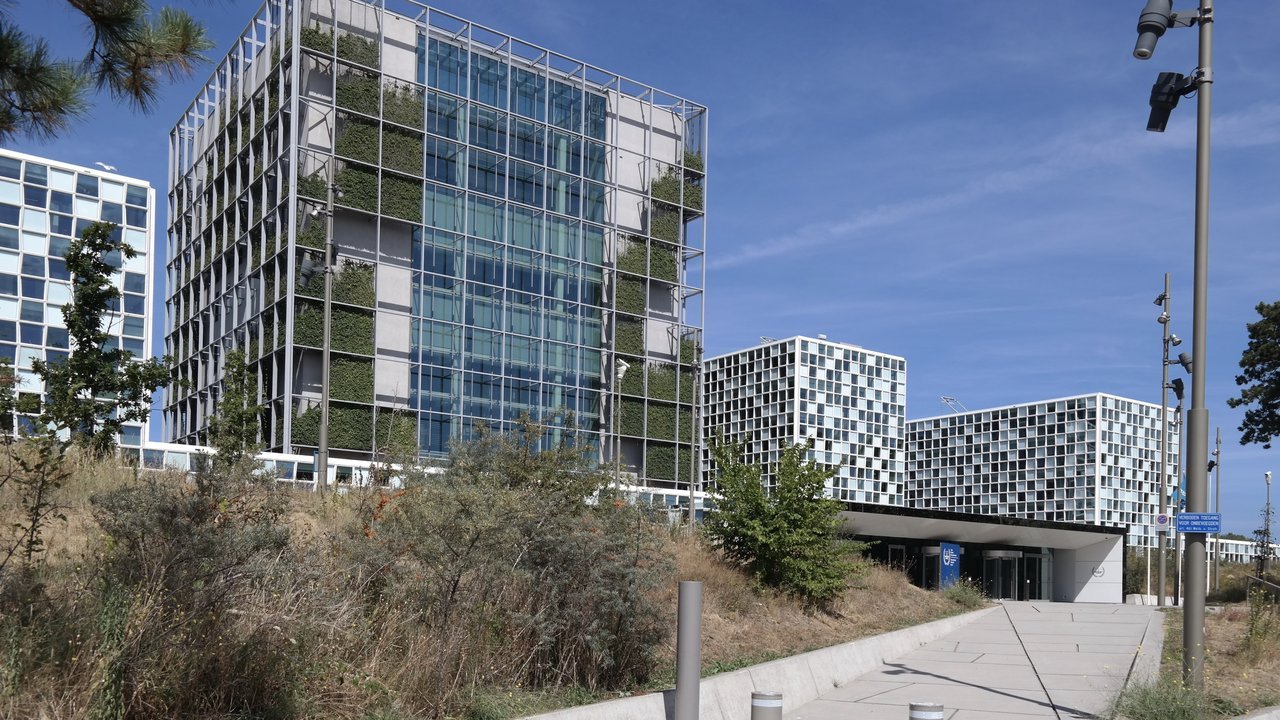
The European Union’s top human rights award seems to have gone to a court under attack from Washington. On Thursday, Oct. 22, European Parliament President Roberta Metsola announced in the chamber in Strasbourg that Parliament had chosen the International Criminal Court (ICC) and its officials for the 2026 Sakharov Prize for Freedom of Thought, according to Parliament’s press release. The award came 13 days after the United States announced a new round of sanctions on the court, which sits in The Hague, CBC reports.
“The European Union is built on respect for multilateralism and international institutions, and this prize recognises the important work of the Court in upholding international law and justice,” Metsola said, according to the text of her statement on the Parliament president’s website. Parliament’s press release words the second half differently: “the European Parliament recognises the Court’s important work in upholding international law and justice.” Rapporteur, a Brussels outlet, reports that MEPs gave her announcement a standing ovation.
Metsola used the same statement to name the two other finalists. She said she wanted “to recognise Tundu Lissu from Tanzania, and Taraneh and Romina Rahimi on behalf of all those persecuted by the Iranian Islamic Regime,” according to the statement. She described Lissu as “currently imprisoned” and said he “has worked for free and fair elections in Tanzania,” and said of the Rahimi sisters that “one faces a death sentence and the other decades in prison for protesting.”
The choice seems to have come down to a narrow, divided vote. According to Rapporteur, which cites officials, Parliament’s political group leaders met behind closed doors on Thursday morning, and an inconclusive first round split the groups three ways: the center-right EPP, the ECR and Europe of Sovereign Nations backed Lissu; the Socialists and Democrats, Renew, the Greens and the Left backed the ICC; and the Patriots for Europe backed the Rahimi sisters. After the Rahimi nomination dropped out, Rapporteur reports, one official said the EPP’s Manfred Weber asked the ECR to bring the Patriots behind Lissu. Instead, the Patriots abstained, Rapporteur says, “giving a narrow majority to the supporters of the ICC.” This desk could not check the vote count independently; Parliament’s release gives no tally.
Lawmakers from both camps read the award as a signal to Washington. Chloé Ridel, a French Socialist who started the nomination, called the win “historic” and told Rapporteur: “This is a message of hope and resistance sent to Donald Trump. We will stand with the ICC for as long as it takes.” Dirk Gotink, a Dutch EPP lawmaker, told Rapporteur the prize would not “save” the court, but called it “a clear signal by the Parliament that it supports the institution and the importance of international law.”
The court says the timing matters. In a statement on Thursday, the ICC said it “is thankful to the European Parliament” and that the award “comes at a time when the Court and its officials face unprecedented challenges, including sanctions aimed at disrupting the Court’s judicial mandate. Against this backdrop, the Sakharov Prize carries particular significance.” The statement on the court’s website carries no name; Al Jazeera, citing AFP and Reuters, attributes the words to ICC President Tomoko Akane. “In a world marked by rising conflicts, there is no peace without justice and no security without law,” the court’s statement adds.
The sanctions come from the Trump administration. U.S. Secretary of State Marco Rubio said the latest curbs, issued on Oct. 9, aimed at “crippling” the court’s “ability to operate,” according to CBC, which quotes him: “Either the ICC will end its threats or we will end the ICC.” The court called those measures “an attempt to obstruct the course of justice” and “an assault on the rule of law,” CBC reports. Al Jazeera reports that the sanctions take effect in six months and that Washington has also sanctioned ICC judges and prosecutors, a UN special rapporteur on the occupied Palestinian territories and Palestinian rights groups that gave evidence to the court. According to CBC, the United States does not belong to the Rome Statute, the treaty behind the court, which in 2020 opened an investigation into U.S. personnel in Afghanistan and in 2024 issued arrest warrants for Israeli Prime Minister Benjamin Netanyahu and former defense minister Yoav Gallant; Israel rejects the allegations, CBC notes.
The prize lands in a month of awards for people tied to the court. CBC reports that on Oct. 9, the same day as the sanctions announcement, the Nobel Peace Prize went to Navi Pillay, a former ICC judge. Rapporteur places the U.S. measures “hours after” the Nobel and says Pillay “oversaw a UN report concluding that Israel had committed genocide in Gaza.”
Europe’s answer may go beyond a prize. Parliament’s release says MEPs “have repeatedly called on the European Commission to activate the EU’s so-called ‘blocking statute’” to shield ICC officials from “extraterritorial attacks,” and that the ICC president and several judges visited Parliament committees in 2025 and 2026 to explain how U.S. sanctions affect their work and personal lives. According to Al Jazeera, EU officials hope to use the six-month delay to talk Washington down while also eyeing that blocking statute, and Commission President Ursula von der Leyen posted after the announcement: “The International Criminal Court must be free to pursue its mission, independently, and without pressure or intimidation.”
Parliament set up the Sakharov Prize in 1988 and named it after the Soviet physicist and dissident Andrei Sakharov, according to the release. The court and its officials will receive the €50,000 award in Strasbourg on Dec. 16, Rapporteur reports; Parliament says the ceremony will take place during its December plenary session.
This desk read Parliament’s release, Metsola’s statement, the ICC’s statement and reports from Rapporteur, CBC and Al Jazeera; it did not reach AP’s report, and it relied on Rapporteur alone for the closed-door vote.
