President Donald Trump on Sunday, Oct. 18, defended his decision to hold off new sanctions and tariffs aimed at Russia, writing on Truth Social at 1:36 PM PT that imposing them now would push Moscow away from peace talks. A day earlier, Secretary of State Marco Rubio told reporters he thought Trump wanted a 60-day period to study the economic effects, according to the State Department transcript. This desk found no such period in the executive order behind the pause, as published by the White House. This follow-up tracks what each official said and what the documents say.
Trump’s post opens: “My decision on Russia is a very simple one. I am in the process of negotiating Peace in the war between Russia and Ukraine, and don’t want to do anything that will drive, foolishly, Russia away from the bargaining table.” He went on: “Great progress is being made, and that includes current hostage negotiations! Signing that document at this time will do that, and I can sign it later, or any time that I want!” Anadolu Agency notes that the president gave no details about the negotiations and did not identify the hostages.
Trump also tied the decision to Iran. “Perhaps more importantly, Russia is doing very little, if anything, to help the Islamic Republic of Iran, compared to what they could be doing, and I want to keep it that way, and will, unless stupid people get in the way,” he wrote. He then turned to Ukraine’s strikes on Russian refineries: “Lastly, Zelenskyy is using Diesel Refineries in Russia as a target, knowing that these attacks are seriously hurting the world diesel markets, including those in the United States.” He added: “Zelenskyy doesn’t care … he doesn’t want to end this war, and probably never did.” The post closes: “I WANT THIS WAR END!”
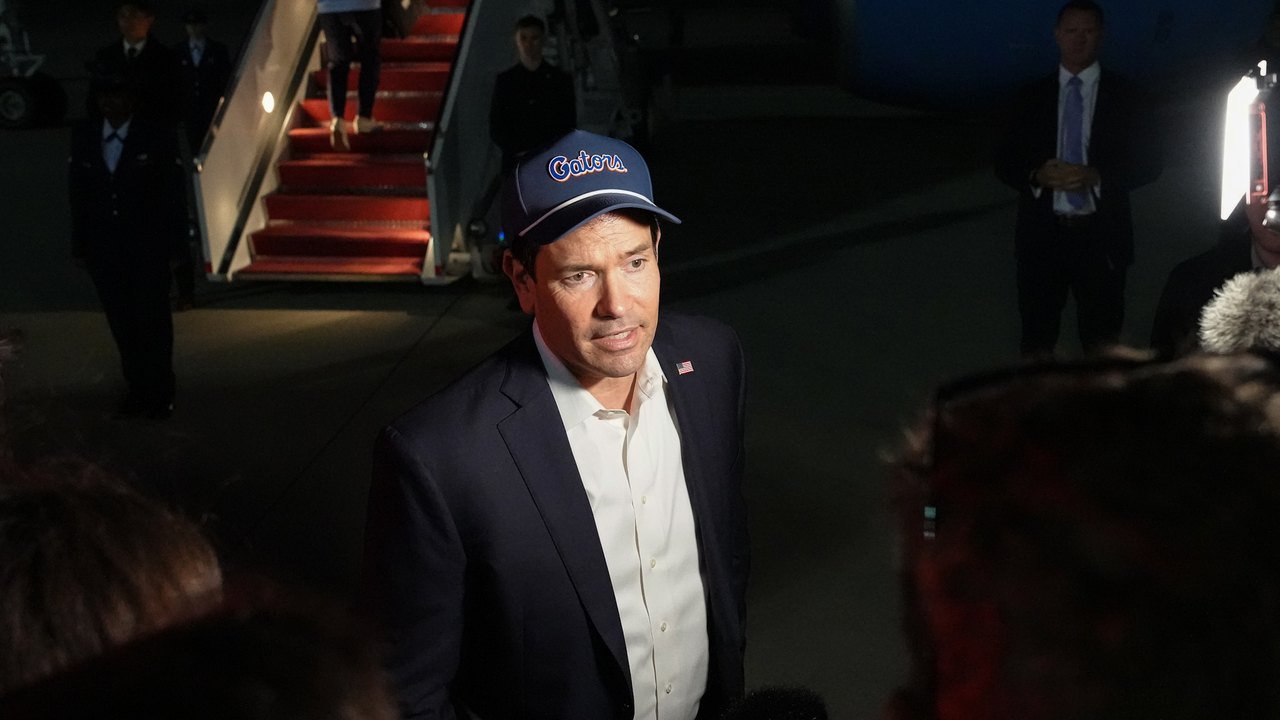
Rubio spoke to reporters on Saturday evening at Joint Base Andrews before a trip to Uzbekistan and India, PTI reports. Asked about Sen. Ted Cruz’s criticism of the waivers, he said, according to the State Department transcript: “the problem is these sanctions were not just sanctions on Russia. They include tariffs on a number of countries – India, for example, and others.” He continued: “And so I think the President wants to take the 60-day period of time to sort of analyze what imposing both sanctions and tariffs will mean to the global economy and even to the U.S. economy.” He listed pressures on energy supplies from Iran, the Strait of Hormuz, Houthi attacks on Saudi Arabia and the war between Russia and Ukraine, and said of the pause: “we need that period of time to sort of study all this and figure out what the right combination is.”
Rubio also linked the waivers to the bill’s design: “I think when the bill was passed, one of the reasons the waivers were put in there is understanding that they would need some period of time to study this,” the transcript shows. Asked whether the waiver and a separate diesel deal gave Russian President Vladimir Putin something for nothing, he said: “Well, that diesel was going to be sold one way or the other.” He added: “If you recall a few months ago, we also did a 60-day waiver on Russian oil when Hormuz was being challenged.”
Section 4(d) of the executive order, dated Oct. 16, says the waivers “shall remain in effect until such time as the President or the Secretary of State, in consultation with the Secretary of the Treasury and the Trade Representative, as appropriate, determine that further action is appropriate.” The waiver section of the Lindsey O. Graham Sanctioning Russia and Iran Act, codified at 22 U.S.C. 10815, requires the president to send Congress a written national-interest certification and a report before issuing a waiver. This desk found no 60-day term in either text, and Rubio did not cite a provision in the transcript. PTI also quotes the order’s open-ended language next to Rubio’s 60-day remark.
Outlets rendered Rubio’s words in different ways. France 24, carrying AFP, summarizes him as saying the waiver “would last 60 days” and quotes him with British spelling (“analyse”); the transcript has him say the president “wants to take” the 60-day period. AFP also renders his diesel remark as “The diesel that Putin was going to sell, they were (going to) make it available to the global market,” wording that differs from the State Department text. This desk quotes the transcript.
Trump spoke about the decision late on Saturday too, AFP reports: “We'll figure it out, and you'll figure it out,” he said. “It's a very good decision, and it's going to be a decision that's good for the country, and I think good for the world.” AFP adds that it remained unclear whether he had made up his mind.
Lawmakers from both parties criticized the waiver, according to AFP and the Guardian. AFP quotes Republican Sen. Thom Tillis on X: “If the President wants to actually bring down energy prices, he can do it by solving the Iran problem, not by doing a solid for Vladimir Putin.” The Guardian quotes Tillis describing the move as a capitulation “to a Russian dictator who illegally invaded Ukraine,” and reports that Republican Sen. Rick Scott said the U.S. had “to do everything we can to put economic pressure on Russia”. AFP says Cruz called the move “a mistake” in comments aired on Fox News.
In Kyiv, Zelenskyy said on Saturday, according to the Guardian: “Unfortunately, the lifting of sanctions will continue, and I believe that the ‘diesel deal’ is the first step.” On Sunday he wrote on X at 7:55 AM PT that he had spoken with Trump’s envoys Steve Witkoff and Jared Kushner: “Peace comes only through strength and cooperation built on trust.” France 24 (AFP) reports that he said “a lot depends” on the U.S. position and that he discussed deliveries of U.S. Patriot air defence systems. AFP also says Zelenskyy told NBC that formal U.S. support for Russia would amount to a “historic mistake”.
The Kyiv Independent answers Trump’s refinery argument by writing that evidence points to the war in Iran as the primary driver of the price surge. It reports that Ukraine paused strikes on Russian refineries after Trump announced an energy ceasefire on Oct. 11 and resumed them on Oct. 15, and it carries Zelenskyy’s claim that Russia hit Ukrainian energy facilities 76 times since that announcement, and AFP says he counted 76 Russian breaches of Trump’s “energy ceasefire”. The Guardian reports that Russian Deputy Prime Minister Alexander Novak, in an interview with state media, said of the diesel deal: “Once the contracts are signed, the fuel will reach the markets – in this case, the US markets – within 15 to 20 days.”
Rubio also addressed reports about Starlink service in Ukraine. “The United States, nobody ordered that Starlink speed to be slowed down,” he said, adding, “my understanding is it’s been restored,” according to the transcript. The Guardian reports that Zelenskyy maintained on Sunday that the U.S. intentionally throttled Ukraine’s Starlink access to send a “message” to Kyiv. This desk read the order, the waiver statute, the transcript and both leaders’ posts directly; it did not read the Wall Street Journal report, cited by AFP, about a proposed Putin–Trump–Xi meeting.
