President Donald Trump said on Friday, October 9, that Russia agreed to pour millions of tons of diesel into world markets after he spoke with Vladimir Putin. Trump wrote that he had “just concluded a highly successful discussion” with Putin and that Russia “will immediately supply over 300,000 Tons of Diesel Fuel to the American and Global Marketplace, another 500,000 Tons during the month of November, and 1,000,000 Tons immediately thereafter,” in a Truth Social post timed at 2:46 p.m. Eastern (11:46 a.m. PT), according to an archive of his posts. He added that Russia would then deliver 3,000,000 more tons “within a short period of time,” depending on “the condition of their Diesel Refineries.”
Treasury followed shortly after, BBC reports. The Treasury Department said its Office of Foreign Assets Control would “immediately” issue a temporary general license authorizing supplies of Russian diesel to the global market, UNN and the Kyiv Independent report, quoting a Treasury statement that Censor.NET says the department posted on X. UNN reports that the license stays in effect until April 7, 2027; the license text on the Treasury website, General License No. 135, confirms that expiry and bars debits to U.S. accounts of Russia’s central bank, National Wealth Fund, and Ministry of Finance (see correction below).
The Kremlin side welcomed the move. Kirill Dmitriev, an envoy for Putin, wrote on social media that “Russia-US co-operation on diesel and energy will benefit the world,” BBC reports. Neither Moscow nor Washington has published a written agreement, and the tonnage schedule comes only from Trump’s post. Russia itself has restricted diesel exports for months: Censor.NET notes that Russian authorities repeatedly extended a ban on diesel exports, at least through the end of October, as Ukrainian drones hit Russian refineries. How Russia would free up fuel for export while that ban stands remains unclear.
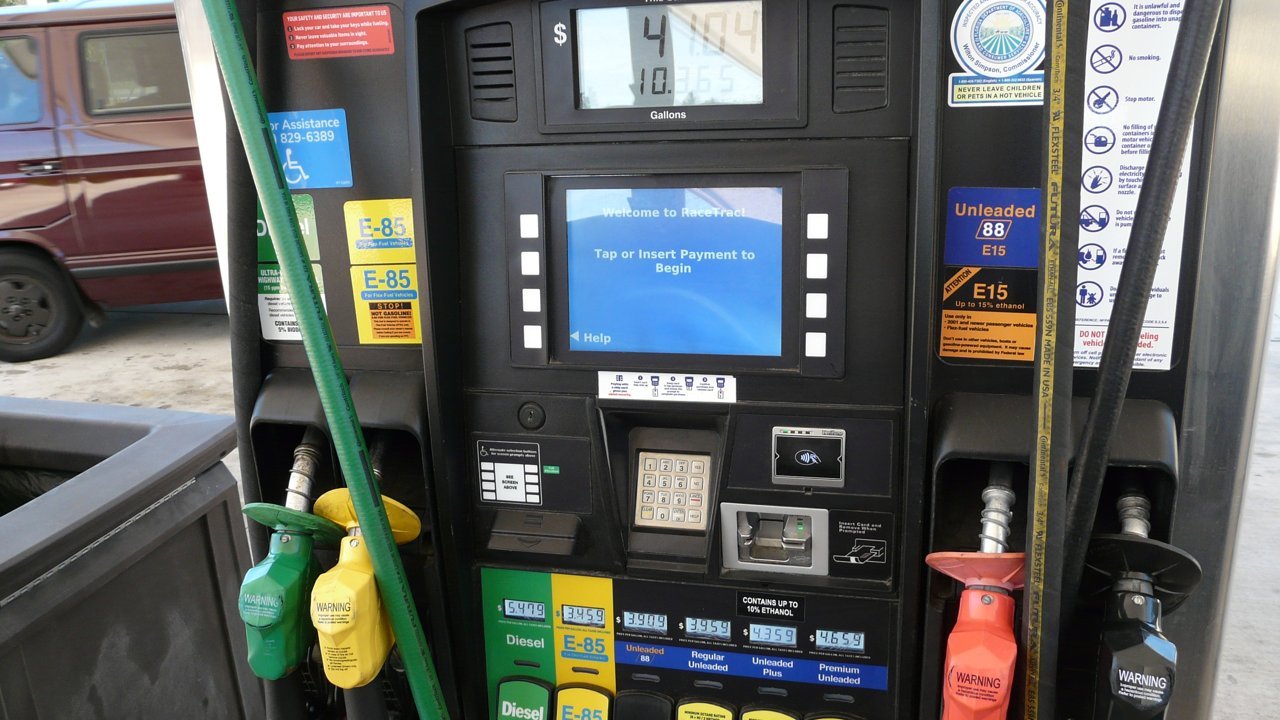
BBC ties the move to prices at home. U.S. diesel prices have doubled since the war with Iran began in February, BBC reports, putting pressure on Republicans before the midterm elections over the cost of living. AAA puts the national average at $6.28 a gallon, down from a record $6.53 at the end of September, according to BBC. Trump framed the deal as relief for “our Great Farmers, Ranchers, and Truckers” and paired it with a claim of “TOTAL CONTROL of the Strait of Hormuz,” a claim this desk cannot verify.
The diesel move caps a string of fuel-price steps. Earlier this week Trump said he might suspend the federal gasoline tax and said he would let red-dyed diesel run on highways without federal tax, BBC reports. He also pressed G7 nations into releasing 100 million barrels of oil and diesel from stockpiles, according to BBC. Censor.NET reports that Trump and Treasury Secretary Scott Bessent have both blamed Ukrainian strikes on Russian energy sites for the diesel squeeze, with Bessent naming the Iran war as a second cause.
Kyiv pushed back. “Gifts to Putin will not bring peace or any benefit to the civilized world. Russia will ‘repay’ diesel with further terror and treachery,” Zelenskyy said, according to UNN. He called the sale of Russian petroleum products “an investment in the war,” per UNN, and repeated an offer of a mutual pause: “Ukraine will not burn Russian oil refining facilities if Russia does not destroy our energy infrastructure.”
The timing overlaps with peace diplomacy. The announcement landed on the first of two days of U.S.-Ukrainian talks in Miami led by envoys Steve Witkoff and Jared Kushner. The Kyiv Independent, citing American and Ukrainian officials, reports that Russia seeks sanctions relief in talks over a possible halt to attacks on energy infrastructure, and that Moscow wants to link any energy truce to ceasefire arrangements in the Black Sea. A European diplomat told the Kyiv Independent that Russia may also press for the release of frozen Russian assets. The Kyiv Independent does not say whether the diesel license formed part of that bargaining, and neither government has said so.
Open questions this desk will watch: the license’s published text and any conditions; whether Russia lifts or eases its own export ban; whether tankers actually load and how fast U.S. pump prices move; how European allies respond; and whether the Miami talks produce the reciprocal energy pause Zelenskyy proposed.
