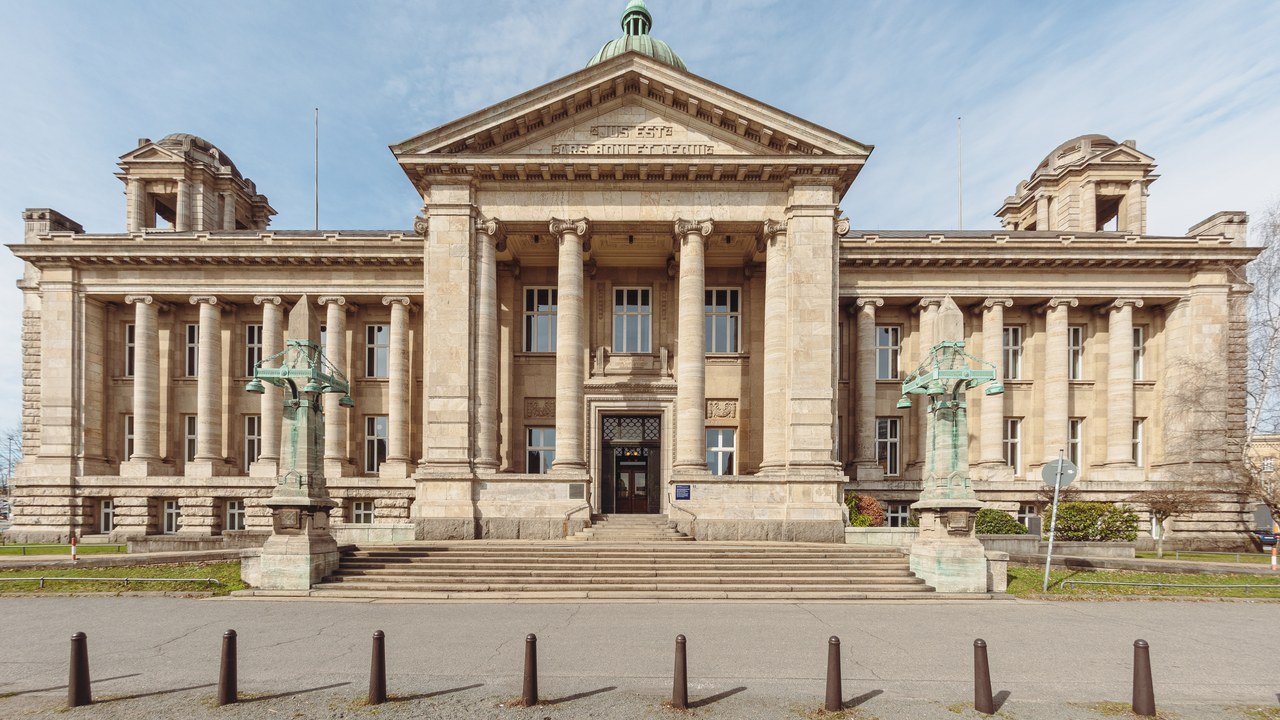
Four years after explosions ruptured three of four Nord Stream gas pipelines in the Baltic Sea near Bornholm, a Ukrainian man identified under German privacy rules as Serhii K. goes on trial in Hamburg on Wednesday, the BBC, DW, RFE/RL and The Straits Times, carrying Reuters, report. Prosecutors say he plotted with other Ukrainian military personnel to destroy the pipelines and stop Russia financing its war with gas revenue, the BBC reports. He denies the charges, as does Kyiv; the BBC quotes President Volodymyr Zelensky as saying Ukraine had “nothing to do with [the Nord Stream blasts],” and DW quotes his August line that Ukraine “has never officially taken part in any operation related to the blowing up of Nord Stream.” The case lands in Germany, which the BBC calls “one of Ukraine's closest allies” and RFE/RL calls “one of its most important military backers”; DW says Germany “continues to support the country.” The BBC calls the case “highly sensitive in Germany,” and DW says the accused’s Ukrainian nationality makes it “especially politically sensitive.”
Prosecutors’ public case centres on a state-backed plot. The BBC says they allege the saboteurs conceived the plan “acting by order of Ukrainian state agencies,” and they treat the case under Germany’s code of crimes against international law as a war crime — “an attack by military means against civilian objects.” RFE/RL quotes a prosecutor summary: “At the end of February 2022, he and other military personnel, on behalf of state authorities in Ukraine, developed the plan,” with the aim “to permanently halt gas deliveries via the pipelines and prevent Russia from using the revenue from the natural gas trade to finance its war efforts.” The Straits Times’ Reuters copy uses “unidentified Ukrainian state entities.” DW lists the charges as accomplice to a war crime by attacking civil energy infrastructure, disruption of public services, causing an explosion and destroying structures. RFE/RL says German prosecutors have identified seven Ukrainian suspects; Serhii K. alone sits in the Hamburg dock for now.
Outlets describe how investigators reached him. After Denmark and Sweden closed their inquiries, German prosecutors focused on deep-sea divers who rented a yacht called the Andromeda in Rostock, the BBC reports; they later said “traces of subsea explosives were found in the samples taken from the boat.” The Straits Times’ Reuters copy says prosecutors allege he traveled to Germany through Poland about three weeks before the attack on a forged Ukrainian passport, and that the group used a sailboat hired in Rostock to plant military-grade explosives with timers near Bornholm. The same Reuters copy, citing Der Spiegel and ZDF, says five men and one woman sailed on Andromeda from September 6 to September 23, 2022. The BBC’s companion evidence piece says prosecutors “strongly suspect” Serhii K. led a crew of four deep-sea divers and that “high-performance explosives” — four devices weighing up to 27 kg each — sat about 80 m below the surface. This desk did not read the indictment or the court file.
Arrest and extradition took more than a year. In August 2025, Serhii K. checked into a hotel near Rimini, Italy, and police acting on a German European arrest warrant detained him, the BBC reports. After court fights, Italy transferred him to Germany late last year; the BBC says court documents identify him as Serhii Kuznetsov, and RFE/RL uses Serhiy Kuznetsov. Another Ukrainian, Volodymyr Zhuravlov, won release from a Polish extradition bid in October 2025 when a judge called a Ukrainian armed mission “justified, rational and just,” the BBC reports; Croatian authorities later arrested him, and Croatia approved extradition last month, though the BBC says the timing and any joinder to the Hamburg trial remain unclear. RFE/RL and The Straits Times (Reuters) identify that second man as Vladimir Z.; RFE/RL adds that Polish lawyers named him Volodymyr Zhuravlyov and that he had worked in Croatia as an adviser on a film about Nord Stream.
Defence lawyers and Kyiv dispute the case’s force. RFE/RL quotes Serhii K.’s German lawyer, Jes Meyer-Lohkamp, saying prosecutors “have not provided any direct, conclusive evidence of our client’s involvement,” and that the court must decide whether Nord Stream counted as a legitimate military target. Oleksandr Merezhko, who chairs Ukraine’s parliamentary foreign-affairs committee, told the BBC the blasts came in wartime and “Nord Stream 2 was nothing but a tool used by Russia in order to get prepared for the war,” adding of the German account: “It’s one of the versions.” Stefan Meister of the German Council on Foreign Relations told the BBC: “They tried to make not a big story out of it, not to give it too much attention, to give it to the institutions, to the judiciary that they will deal with it. This is not a political case. So they tried to depoliticise it.” To RFE/RL he asked, “That is the crucial question: How much came from the top of the Ukrainian political system or how much was prepared by some insiders in the intelligence service?” and added, “The key political question is the role of Zelenskyy and the presidential administration. And there we still have no proof that they were really involved.”
The blasts themselves still frame the hearing. Outlets agree that explosions on September 26, 2022, ruptured three of four pipeline strings off Bornholm; the BBC says Russia had already shut off the flow of Nord Stream 1 gas to Germany weeks before the attack, that Nord Stream 2 had “never been turned on,” and that Berlin had frozen the project shortly before the invasion. DW says Russia had “restricted or stopped” Nord Stream 1 flows “several times” since the war began and calls Nord Stream 2 “not yet operational.” The Straits Times’ Reuters copy puts the system at about 1,200 km (750 miles) and 80 to 110 meters deep, with capacity once put at up to 110 billion cubic meters a year for Germany. Western suspicion first pointed at Moscow, which denied it; Russia’s Vladimir Putin blamed “the Anglo-Saxons,” which the US and UK denied, the BBC reports. In January 2025, Germany’s federal court of justice held that the case fell inside German jurisdiction because it involved “undermining [Germany’s] internal security,” the BBC says. RFE/RL says the Hamburg court has scheduled two hearings a week until at least February; The Straits Times’ Reuters copy expects the trial to continue into February next year. DW notes that Germany’s AfD and BSW already treat alleged Ukrainian responsibility as settled politics; this desk treats those claims as contested until the court rules.
Correction · Oct 13, 2026, 11:02 PM PT: An earlier version credited three details to pairs of outlets that do not each carry them. It credited the Serhii Kuznetsov court-document naming jointly to RFE/RL and the BBC; the BBC says court documents identify him as Serhii Kuznetsov, while RFE/RL says only that he has gone by Serhiy Kuznetsov elsewhere. It said RFE/RL and DW describe Germany as one of Ukraine’s closest European backers; the BBC, RFE/RL and DW each use their own wording, now quoted and credited separately. And it credited the Nord Stream 1 shut-off weeks before the blasts and the Berlin freeze of Nord Stream 2 jointly to the BBC and DW; the BBC alone carries those details, and DW’s own wording now sits separately.
