The Labor Department's Bureau of Labor Statistics reported Wednesday that U.S. consumer prices rose again in September, with gasoline leading a broad energy surge that lifted the headline inflation rate further above the Federal Reserve's 2 percent goal. In the official release (USDL-26-1574), BLS says the Consumer Price Index for All Urban Consumers “increased 0.6 percent on a seasonally adjusted basis in September after rising 0.4 percent in August,” and that “over the last 12 months, the all items index increased 3.7 percent before seasonal adjustment.” That year-over-year pace exceeds the 3.4 percent rise BLS reported for the 12 months ending August. The earliest major-outlet write-ups this desk found came from CNBC (Jeff Cox, published 8:31 AM ET / 5:31 AM PT) and NBC News (Steve Kopack, 8:34 AM ET / 5:34 AM PT); NPR (Scott Horsley) followed at 9:33 AM ET (6:33 AM PT). This desk could not open the Associated Press story (curl returned 403; WebFetch timed out); the ledger marks it Not read. BLS's own html and pdf pages also returned 403 to this desk's curl; the figures here come from a full-text copy of the BLS release hosted as a PDF by TradeOnlyToday, cross-checked against outlet quotes of the same lines.
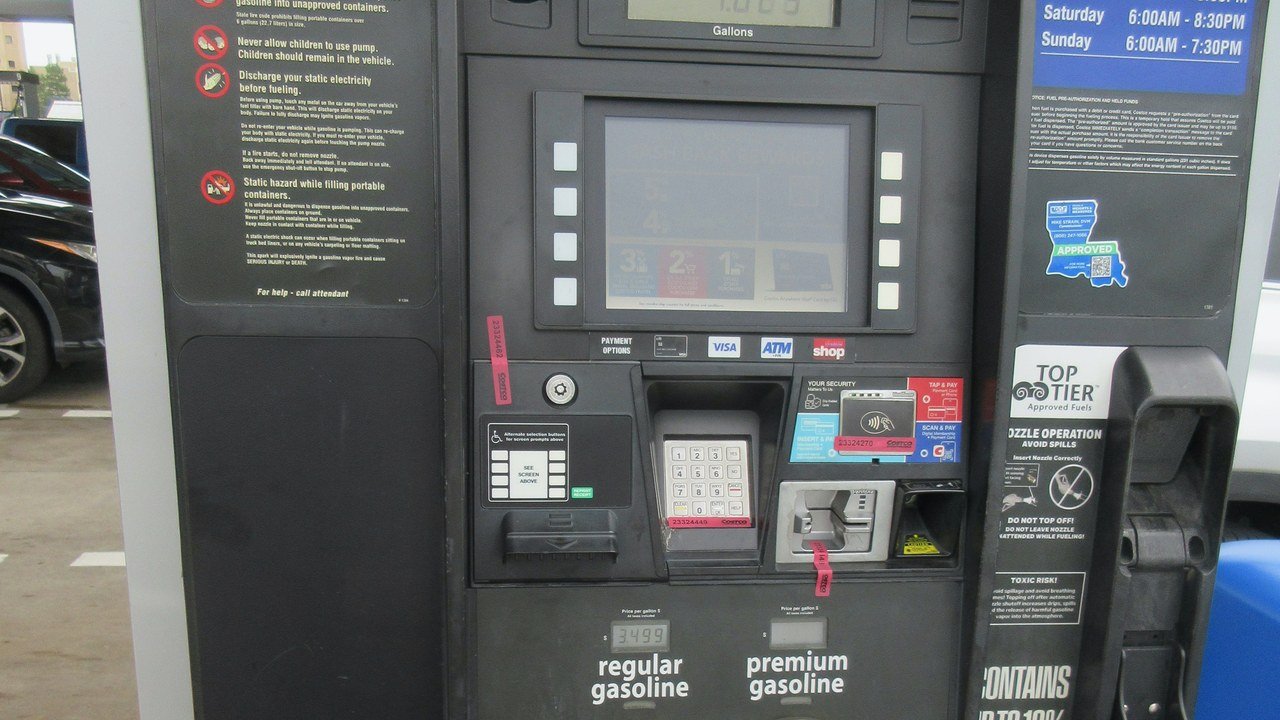
Energy drove most of the monthly move. BLS writes: “The index for gasoline rose 9.1 percent in September, accounting for over half of the monthly all items increase.” The same release says the energy index “increased 5.2 percent over the month following a 2.1-percent increase in August,” and that over the past year energy rose 20.4 percent, “due in large part to the index for gasoline rising 34.2 percent,” with fuel oil up 74.2 percent year over year. Shelter rose 0.4 percent on the month, BLS says, after a 0.3 percent rise in August. Food stayed flat on the month, with food away from home up 0.2 percent and food at home down 0.1 percent, and rose 2.5 percent over the year. Core inflation, the all-items-less-food-and-energy index, “rose 0.3 percent in September, as it did in August,” and rose 2.6 percent over the year after 2.4 percent for the year ending August, according to BLS. CNBC says apparel rose 0.3 percent on the month and 3.4 percent yearly, and that used cars and trucks rose 0.7 percent on the month; BLS lists used cars and trucks among indexes that increased over the month.
Outlets set the print against forecasts and politics. CNBC says economists surveyed by Dow Jones expected a 0.6 percent monthly rise and a 3.6 percent year-over-year headline rate, and adds that the survey expected core gains of 0.2 percent and 2.5 percent; NBC says economists polled by Dow Jones forecast a 3.6 percent headline rate. NBC quotes White House Council of Economic Advisers chairman Kevin Hassett on Fox Business Network: “This was a disappointing number,” and reports that he still said “a lot of Trump policies are helping to keep inflation down.” CNBC quotes Carson Group chief macro strategist Sonu Varghese: “CPI came in hot and it wasn't just fuel prices, as core inflation ran at a 3.7% annualized pace in September and 3.2% over three years,” and “The only surprise is that investors keep getting surprised by broad-based inflation. And we've yet to see the full impact of higher diesel prices and the AI boom.” NPR quotes Boston College economist Brian Bethune: “It's not looking good,” and “The main problem, of course, that everybody knows is gasoline prices. But also heating oil.” NBC separately says unleaded gas has risen 45 percent since late February and diesel 70 percent over the same stretch, figures this desk credits only to NBC, not to BLS.
A Social Security cost-of-living note landed beside the CPI print. NPR reports that shortly after the inflation release, the Social Security Administration announced benefits will increase by 3.6 percent next year, based on prices in July, August and September, and that the jump “amounts to an extra $75 a month for the average Social Security recipient.” NPR quotes AARP CEO Myechia Minter-Jordan saying the increase “helps millions of Americans keep up with rising costs for groceries, routine bills, healthcare and other everyday expenses,” and quotes Max Richtman, president of the National Committee to Preserve Social Security and Medicare: “It won't be enough for most seniors to even tread water financially.” NPR also says average wages in September rose 3 percent, so “the typical worker's buying power has eroded over the last year.” This desk did not open a Social Security Administration primary page; the COLA figures rest on NPR's account.
Markets sold off as traders raised the odds of further Federal Reserve rate increases. CNBC says stock-market futures turned negative after the release and that CME FedWatch odds of a hike at the Oct. 27-28 FOMC meeting rose to about 54 percent, with year-end hike odds above 96 percent and near even odds of a half-point move by December. NBC says that before the data traders had expected the Fed to wait until December, and that after the data odds of an October hike rose above 55 percent; as of midday, NBC puts the Nasdaq Composite down 1.2 percent, the S&P 500 down 0.8 percent and the Russell 2000 down 1.5 percent. AFP's late-morning tape lists the Dow down 0.1 percent at 51,620.22, the S&P 500 down 0.8 percent at 7,741.26 and the Nasdaq down 1.1 percent at 26,893.81. A Reuters stock story carried by Devdiscourse, stamped with 12:30 p.m. ET levels, puts the Dow down 0.30 percent to 51,516.03, the S&P 500 down 1.10 percent to 7,719.86 and the Nasdaq down 1.66 percent to 26,751.71, and names Oracle down 7.8 percent, CoreWeave and Nebius each down more than 11 percent, and Dell down 11.5 percent after a Barclays downgrade. Quartz says chip stocks “are on pace to lose over $1 trillion in market value” as the Philadelphia Semiconductor Index slid 3.1 percent Wednesday and has fallen for six straight sessions, “off roughly 10%,” with Arm down nearly 20 percent, Applied Materials about 15 percent and Intel 11 percent over that stretch. Reuters/Devdiscourse also notes Bank of America shares down 5.3 percent after the bank's third-quarter profit fell with a $1.2 billion regulatory charge — a result this desk covered earlier Wednesday.
Fed context and caveats sit in the same reports. CNBC says officials raised the funds rate a quarter point in September to a 3.75%-4% target range, their first hike in more than three years, and that markets still largely expected a skip in October and another hike in December before the hotter print. NPR quotes Cleveland Fed President Beth Hammack warning that an “inflationary mindset” can become “a self-fulfilling prophecy,” and says investors see about a 50-50 chance of an October hike. Figures move with the clock: midday NBC/AFP levels differ from the Reuters 12:30 p.m. ET print, and this desk does not treat any intraday tape as a close. Primary Social Security and CME FedWatch pages went unread; AP and the live BLS site returned blocks. No outlet this desk read disputes the BLS headline, core, gasoline or energy percentages.
Correction · Oct 14, 2026, 2:54 PM PT: An earlier version of this story said CNBC and NBC News both report that economists surveyed by Dow Jones expected a 0.6 percent monthly rise. CNBC carries both the 0.6 percent monthly and the 3.6 percent year-over-year expectations; NBC carries only the 3.6 percent headline forecast. The Evidence status also listed AFP among outlets agreeing on the energy and gasoline story; AFP carries the 3.7 percent headline but no CPI energy or gasoline detail. The key facts, body and Evidence status now credit each figure to its own outlet.
