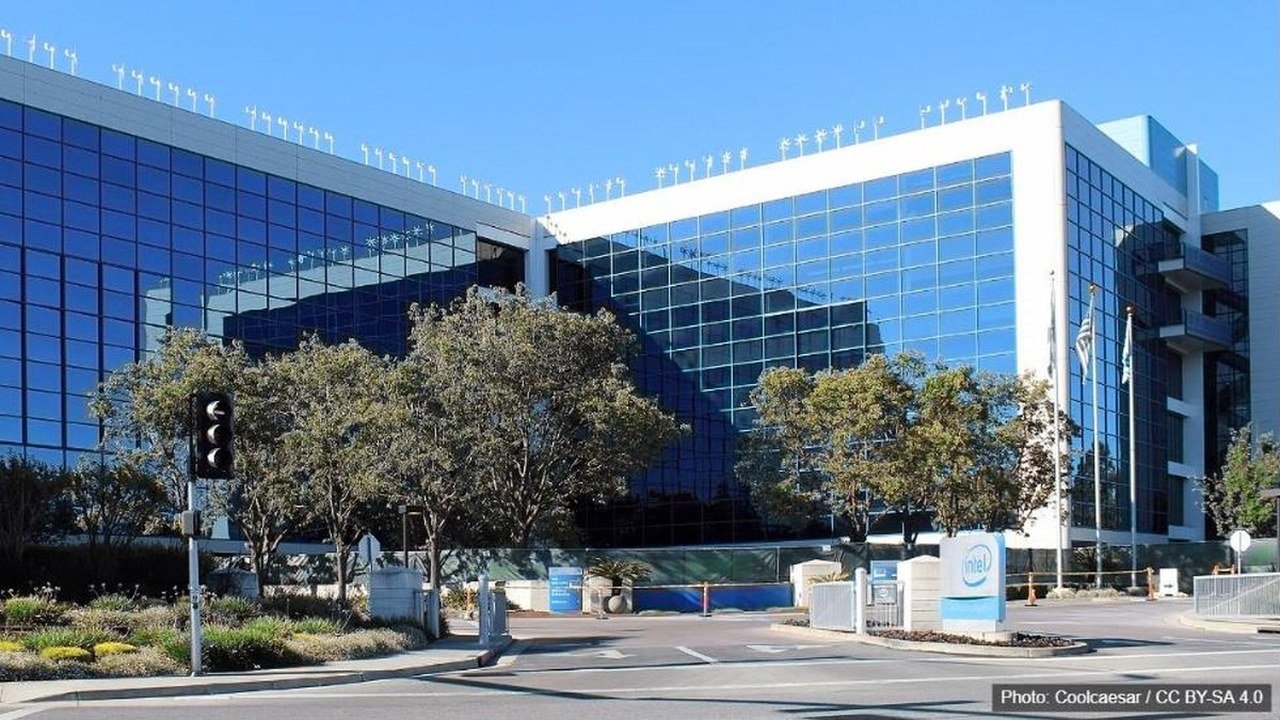
Intel’s stock suffered its worst day in more than half a century on Friday. Shares of the chipmaker closed at $65.76, down 28.58%, according to a quote table published with the Reuters report on Investing.com. Yahoo Finance, which checked closing prices going back to May 1973, found only one worse day in the company’s history: July 5, 1974, when the stock fell nearly 30%. Friday’s fall also topped a drop of roughly 26% on Aug. 2, 2024, according to Yahoo Finance. Reuters, writing during the session, said the stock “sank 30%” and “was headed for its biggest one-day decline ever”; the close came in slightly better than that.
The trigger came after the bell on Thursday. In its third-quarter release, Intel forecast fourth-quarter revenue of $15.0 billion to $16.0 billion and adjusted earnings of 25 cents a share. Analysts had expected revenue of $17.1 billion and earnings of 43 cents, according to LSEG data cited by CNBC; RTÉ, carrying the Reuters account, put the LSEG revenue average at $17.07 billion. Finance chief David Zinsner also said Intel does not expect positive cash flow this year, according to the Reuters account carried by RTÉ.
The quarter Intel had just finished looked strong on paper. Revenue rose 21% from a year earlier to $16.5 billion, and adjusted earnings came to 52 cents a share, according to the company. Its data center and AI unit grew 78% to $7.3 billion, which Zinsner called “our strongest data center revenue growth in 15 years.” Its Client Computing and Physical AI Group slipped 5% to $8.1 billion. CEO Lip-Bu Tan said in the release that “demand for our CPUs remains robust,” despite “near-term headwinds across the PC industry.”
Each outlet this desk checked points to the PC market as the main problem. AI data centers have soaked up much of the world’s memory chip supply, which pushes up the cost of laptops and desktops, Yahoo Finance explains. Intel now expects PC shipments to fall about 12% this year and another 10% in 2027, Yahoo reports. PC chips accounted for roughly half of Intel’s third-quarter revenue, and the company expects that segment’s sales to fall more than 20% from the prior quarter, according to the Reuters account on RTÉ. “We see the PC slowdown continuing at least through the first half of next year,” Zinsner said in the release.
A deadly accident in Israel added to the pressure. According to CNBC, an explosion at an Intel fab there earlier this month killed two workers and seriously injured a third; Tan called it an “unfortunate and tragic accident” that caused an “extended shutdown” affecting shipments of 10-nanometer chips. Zinsner put the cost at about $600 million in lost revenue over two quarters, CNBC reports. Yahoo Finance cites about $300 million for the fourth quarter alone, a figure that fits within CNBC’s two-quarter total.
Analysts reacted sharply. Bernstein’s Stacy Rasgon called the outlook “(in a word) terrible” and cut his price target to $75 from $110, according to Yahoo Finance. D.A. Davidson downgraded the stock to neutral from buy in a note titled “Not fixed yet,” CNBC reports, writing that “it is hard to justify the current multiple when weakness is so significant.” Seaport Research Partners’ Jay Goldberg told Reuters that the selloff reflected “a loss of faith in management’s credibility,” adding: “Intel is producing too many chips for consumer PCs in the worst PC market in 15 years, while it is not making enough chips for AI servers in the biggest growth cycle ever for semis.”
Watch: analysts discuss Intel’s results, via @SchwabNetwork on X
A panel segment of about eight minutes from Schwab Network, posted during Friday’s session; its still shows the Schwab Network set at the New York Stock Exchange. If the embed does not load, it shows as a plain link to the original post.
View the @SchwabNetwork post on X: Intel shares down 30% after earnings
Estimates of the value lost vary with the time of day. Yahoo Finance put the erased market value at nearly $140 billion by the close. Reuters, writing during trading, said the plunge “was set to wipe more than $146 billion off Intel’s market value,” and RTÉ’s version of the Reuters story cited more than $137 billion. The selloff also hit Washington, which took a stake of about 10% in August 2025. CNBC and Reuters put the loss in that stake’s value near $12 billion, while Yahoo said “more than $10 billion,” adding that the stake, bought at $20.47 a share, remains worth about three times what the government paid.
The damage spread across the chip sector and beyond. Other US chip stocks, including Advanced Micro Devices, Arm, Qualcomm, Nvidia, Broadcom and Micron, fell between 4% and 12%, according to Reuters, while server makers Dell, Hewlett Packard Enterprise and Super Micro Computer dropped between 6% and 11%. Overseas, ASML fell more than 6% and TSMC nearly 2%, Reuters reports. The cost of insuring Intel’s debt against default rose to an all-time high, with five-year credit default swaps widening 17.5 basis points to 124.75, according to Markit data cited by Reuters. “The market is in a sell first, ask questions later mood right now,” said Matt Britzman of Hargreaves Lansdown, quoted by RTÉ and Reuters.
Intel’s fall capped a rough week for big tech earnings. The Nasdaq composite slid 2.9% on Friday, according to CNBC, which reports that Alphabet suffered its worst day on record on Thursday and that Amazon slipped 1.4% after missing third-quarter estimates. The S&P 500 lost 1.8% for its worst day since June, according to AP, in a search summary this desk could read; AP’s full page refused this desk’s downloader. Yahoo Finance’s market header showed the S&P 500 down 1.82% and the Dow down 572 points at the close.
The plunge followed a huge run. Intel stock nearly quadrupled from the start of 2026 to a record on June 22, Yahoo Finance reports, and even after Friday it remains up nearly 80% for the year, though it has lost more than half its value since that peak. Before the report, CNBC notes, shares had risen about 150% this year, “buoyed by demand for central processors, which are becoming critical to agentic AI workloads.” Intel held $21.84 billion in cash and equivalents at the end of September, against $46.32 billion in long-term debt, according to Reuters.
Tan argued for patience. “Rebuilding Intel is going to be a multiyear journey, and I remain firmly committed to making it happen,” he said on Thursday’s earnings call, according to Yahoo Finance. Intel still has no external customers for its newest chips from its foundry business, CNBC reports, but Tan told analysts, “We’re going to have a couple of customers ready to announce the next two quarters.”