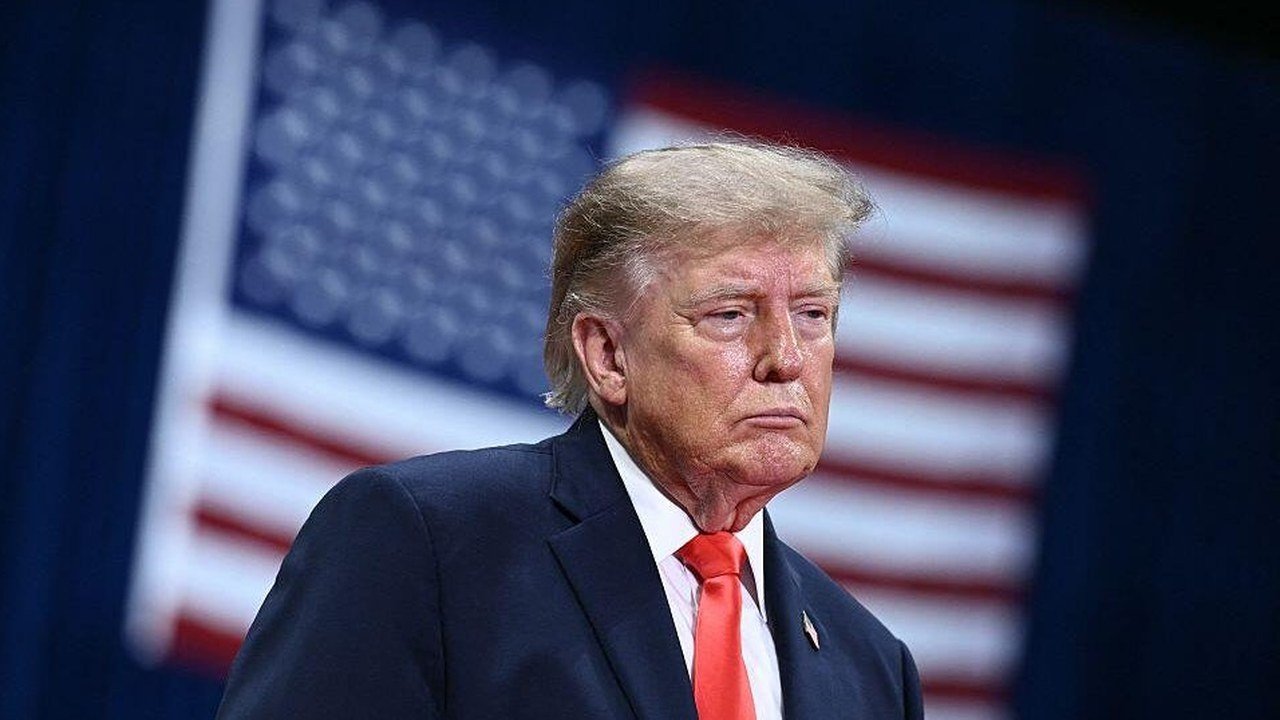
A federal judge in Miami on Saturday, Oct. 31, threw out President Donald Trump’s defamation lawsuit against The Wall Street Journal over its report on a bawdy 2003 birthday letter bearing his name in Jeffrey Epstein’s 50th-birthday album, and barred him from bringing the same claims again, according to the 20-page order entered on the court’s docket and reports by NBC News, CBS News, the BBC and the Guardian. U.S. District Judge Darrin P. Gayles of the Southern District of Florida granted the defendants’ motion to dismiss Trump’s amended complaint. “As President Trump has not plausibly alleged that each Defendant made defamatory statements with actual malice, the Amended Complaint must be dismissed,” Gayles wrote. “And because this is President Trump’s second attempt to allege his claims, the Court finds that dismissal with prejudice is appropriate.”
The defendants include Dow Jones & Company, which publishes the Journal; its parent, News Corp.; Rupert Murdoch, whom the order describes as a director and majority owner of News Corp.; chief executive Robert Thomson; and reporters Khadeeja Safdar and Joseph Palazzolo, who wrote the July 17, 2025, article, according to the order. The amended suit sought $10 billion in damages, according to the BBC, NBC News and CNBC. The BBC and CBS News report that Trump’s original complaint sought $20 billion; other outlets, including AP, describe the case as a $10 billion suit throughout.
The ruling opens with a long passage from the Supreme Court’s 1964 decision in New York Times Co. v. Sullivan, which, as Gayles summarized it, requires a public figure to prove that a defamatory falsehood came with “actual malice” before recovering damages. That standard asks whether a publisher knew a statement contained falsehoods or acted with reckless disregard for the truth. Because “[t]he costs and efforts required to defend a lawsuit through [discovery] could chill free speech nearly as effectively as the absence of the actual malice standard altogether[,]” a public figure “must plausibly allege actual malice at the outset of the litigation,” Gayles wrote, quoting a 2016 ruling by the 11th Circuit. “As with his first attempt, he has failed,” the order says.
According to the order’s summary of the complaint, Palazzolo emailed then-White House press secretary Karoline Leavitt on July 15, 2025, to say Dow Jones planned to publish the story. Leavitt called the reporter and told him the “subject matter” of the proposed article lacked any truth, Trump’s lawyers denied that he wrote the letter and warned the company not to publish, and Trump told Murdoch directly that he had not signed or sent it. When Murdoch replied that he would “handle it,” Trump believed the Journal would not print the article, the complaint alleges; two days later, the paper published it online. In an interview with the Journal before publication, Trump called the letter “a fake thing,” according to the article text quoted in the order. “I never wrote a picture in my life. I don’t draw pictures of women,” he said. “It’s not my language. It’s not my words.”
The article, as quoted in the ruling, described the letter as containing “several lines of typewritten text framed by the outline of a naked woman, which appears to be hand-drawn with a heavy marker,” with a signature reading “Donald” below her waist. The letter ended: “Happy Birthday—and may every day be another wonderful secret.” In September 2025, after Trump filed suit, the House Oversight Committee released a copy of the birthday book that Epstein’s estate produced under subpoena, and that book included a page matching the article’s description, the order says. The Guardian reports that the Journal itself never published the image. Gayles declined to treat the estate’s copies as part of the record at this stage, because Trump disputes their authenticity and denies that he wrote or signed the page.
The judge rejected each of the amended complaint’s main theories. On Trump’s denials, he wrote that Trump in effect argues that once he called the letter a fake, the defendants “should have disregarded everything else they learned in their investigation and not published the story.” He continued: “But that is not what the actual malice standard requires and runs afoul of the First Amendment.” If that argument held, the order continues, “any time a public figure or his team denies an accusation, journalists would be immediately blocked from publishing negative or contradictory press.” Gayles added that the article “did not ignore or minimize President Trump’s denial,” and instead told readers that Trump called the letter a fake.
Watch: Sky News reports the ruling, via a post on X
Viewer note: the clip shows the letter image that the House Oversight Committee released in September 2025, including a drawn outline of a nude female figure. If the embed does not load, it shows as a plain link to the original post.
View the @SkyNews post on X about the ruling
On the Journal’s reporting, the judge found that “the Article details a thoughtful and detailed investigation.” Before publication, the order says, the reporters sought comment from Trump and his team, the Justice Department and the FBI, wrote to Epstein associate Ghislaine Maxwell, and contacted others named in the album, including Leslie Wexner and Alan Dershowitz. “Grasping at straws, the Amended Complaint attempts to manufacture flaws with the investigation,” Gayles wrote. He said he could not discern any meaningful difference between reporters reviewing the letter and keeping a copy of it, and he called the complaint’s focus on Maxwell “a red herring.” The amended complaint itself alleges that Maxwell told Justice Department officials in July 2025, subject to penalty of perjury for lying to a federal officer, that she did not remember Trump submitting a letter, the order notes; in that interview with then-Deputy Attorney General Todd Blanche, Maxwell acknowledged assembling the book, according to NBC News.
Gayles also dismissed arguments that the article left out key facts, including Trump’s denial that he signed the letter. The article, he wrote, states several times that Trump denies writing it and that “[i]t isn’t clear how the letter with Trump’s signature was prepared.” He found the complaint’s reliance on a second Journal piece, a Sept. 8, 2025, visual comparison of the letter with Trump’s past signatures and sketches, “equally unavailing,” noting that the comparison “contains several examples where President Trump’s actual signature and sketches are similar to those in the Letter.” The White House maintains that the signature does not belong to Trump, NBC News reports. “It’s very clear President Trump did not draw this picture, and he did not sign it,” Leavitt said after the House release, according to CBS News.
The order leaves the central factual dispute untouched. “Because the Court finds that the Amended Complaint fails to adequately allege actual malice, it declines to address these issues,” Gayles wrote of the defendants’ argument that the article reported the truth, adding that “whether President Trump was the author of the Letter or Epstein’s friend are questions of fact that cannot be determined on a motion to dismiss.” CNBC likewise reports that the judge did not determine whether Trump wrote the letter.
Trump’s side signaled it would keep fighting. “President Trump will continue to press forward in his powerhouse lawsuit against the Wall Street Journal and all of the other defendants,” a spokesman for Trump’s legal team said in a statement, as reported by CNBC and CBS News. “The President will continue to hold those who mislead the American People with Fake News and smears accountable for their actions.” A spokesman confirmed to CNBC that the president plans to appeal; a source familiar with Trump’s legal strategy told CBS News that an appeal looks likely. A dismissal with prejudice blocks Trump from refiling the same claims against Murdoch and the paper in federal court, according to CNBC, though an appeal would go to the 11th Circuit. “We’re pleased with the court’s decision,” a Dow Jones spokesperson said, according to CNBC and the Guardian.
The fight over money may continue in Miami. The defendants asked the court to order Trump to pay their legal fees under anti-SLAPP laws, which aim to discourage lawsuits that target protected speech. “The Court agrees that President Trump’s defamation claims lack merit,” Gayles wrote, but he said the limited briefing left unclear whether Florida’s or New York’s statute applies, a choice that matters because several federal courts have found that New York’s law does not allow a fee request by motion in federal court. The order reserves jurisdiction over fees and costs and gives the defendants 30 days to file a motion that includes a choice-of-law discussion.
Gayles first dismissed the suit earlier this year, in April, according to CBS News, CNBC and the Guardian; CBS News reports that he found Trump came “nowhere close” to showing actual malice then. He allowed Trump to amend, and Trump filed the amended complaint on May 27, 2026, according to the order. The court heard argument on the motion on Aug. 5, the order says. The ruling comes as Trump presses other suits against news organizations: another federal judge in Miami on Oct. 22 ordered Trump to sit for a deposition by Dec. 11 in his $10 billion defamation suit against the BBC, CNBC reports.
Seems News could not reach the parties for this report and relies on the court’s order and the outlets named above. This desk read the order in full from the federal court docket as mirrored by CourtListener; quotes from it appear verbatim.