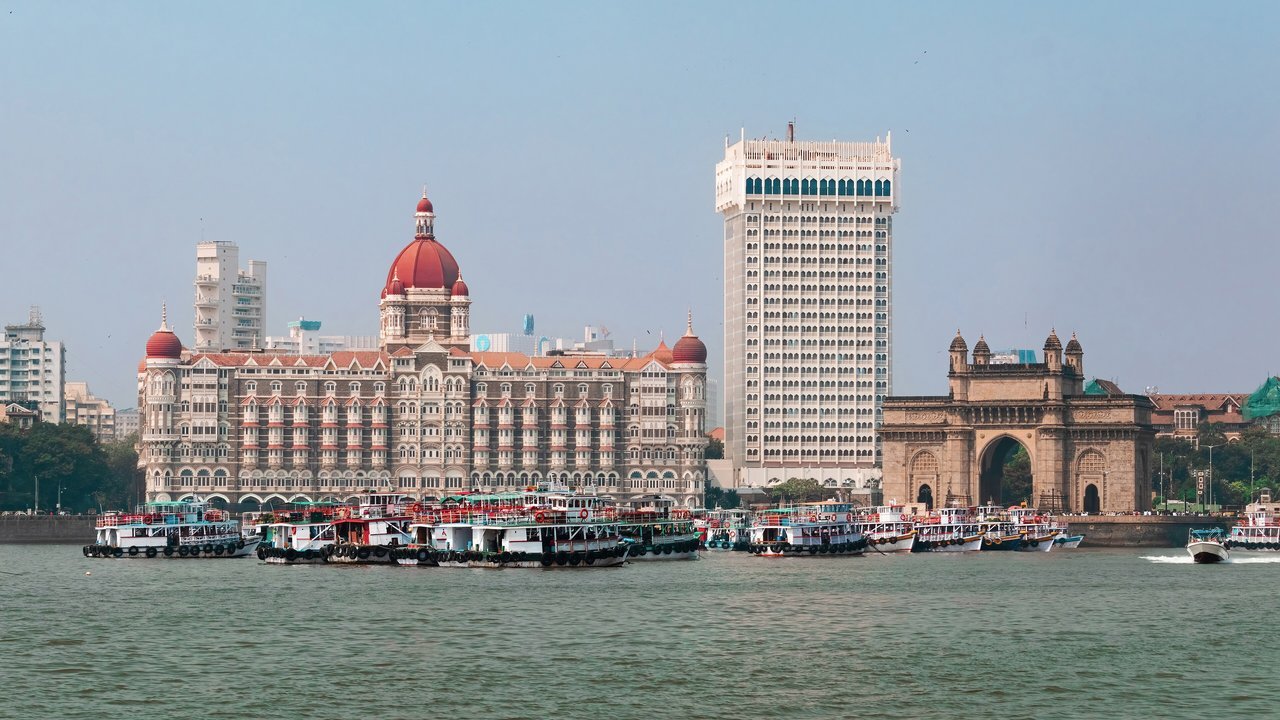
U.S. Secretary of State Marco Rubio says a trade deal between the United States and India now sits close to the finish line, and in the same appearance he pushed back on reports that Washington has cut its help to Ukraine. Speaking to reporters at the Taj Mahal Palace Hotel in Mumbai on Tuesday, Oct. 20, Rubio said, according to the State Department transcript: “We’re very, very close. I would say we’re about as close as you can be without (inaudible) agreement. I think there’s a small number of items to wrap up, so I think that will happen shortly – we’re hoping; it should.” AP, in a story carried by The Seattle Times and ABC News, fills the gap the transcript marks as inaudible: “I would say we’re about as close as you can be without having executed the agreement.” AP also renders the next line as “a small number of items left to wrap up.” The transcript has Rubio adding: “And hopefully I’ve got some good news to announce fairly soon.”
Rubio described his own role in the talks. The State Department “doesn’t negotiate trade agreements, but we are very much involved in what’s happening,” he said, per the transcript, which has him speaking “in my perch as National Security Advisor,” a second post he holds. AP says the two countries seek to revive negotiations stalled for months by tensions over American tariffs and India’s purchases of Russian oil, that Washington imposed tariffs of up to 50% on most Indian goods in August 2025 after talks broke down, and that a framework agreed in February cut the rate to 18%. AP adds that Finance Minister Nirmala Sitharaman said earlier this month that the talks had “plateaued,” while Commerce and Industry Minister Piyush Goyal said last week that the first tranche of a deal had reached its final stages. The Washington Post says U.S. Ambassador Sergio Gor told an energy conference last week that “The big items are done,” though, the Post says, he gave no sign of an imminent announcement. None of the sources this desk read gives a date for a signing or a published text.
The formal meeting came the same day. The State Department readout says Rubio and Jaishankar discussed regional and global issues, “including developments in the Middle East,” and that Rubio “reiterated that increased energy trade with the United States can play a transformative role in diversifying India’s supply chains while meeting its sizable consumer demand.” The readout says Rubio also commended progress in defense and civil nuclear cooperation and pressed for more purchases of U.S. technologies and systems. Jaishankar wrote on X: “We shared views on further advancement of our ties, focusing on trade, energy, technology, defence and people to people ties.” He also posted about a three-way meeting with the United Arab Emirates’ deputy prime minister and foreign minister, Sheikh Abdullah bin Zayed Al Nahyan, and Rubio, calling it “A useful exchange of perspectives on energy, connectivity and contemporary developments.” AP says Rubio described the three officials as meeting to discuss “regional energy security and advance our shared economic priorities.” Jaishankar wrote that he “Joined US @SecRubio in laying a wreath at the 26/11 memorial at Hotel Taj,” the site of the 2008 Mumbai attacks; India Today says Ambassador Gor accompanied Rubio at the memorial.
Rubio also took questions on energy. Asked whether Indian companies could refine more Venezuelan crude, Rubio replied, per the transcript: “They can, and we’ll talk about that tomorrow with Reliance.” He called India “a refining superpower” and said of Reliance: “We’re going to go see what their hold-up is and what opportunities exist.” The Washington Post quotes the same remark as “We’re going to go see what the holdup is.” Rubio also noted “pre-existing sanctions on the Maduro regime” as a possible obstacle. AP says Rubio plans to visit the Jamnagar refinery in Gujarat on Wednesday and meet business leaders, calls it the world’s largest refining complex, and says Trump announced in March that Reliance would invest $300 billion in an oil refinery in Brownsville, Texas; the Post describes the Texas plan as a multibillion-dollar refinery project. Asked about India’s Russian oil purchases, Rubio said, per the transcript: “I think they’ve made substantial progress in that regard, and we’re happy to see that.” He also said of the Strait of Hormuz that “there are nights where as much oil gets through there as pre-conflict, and most nights it’s at least 70 or 80 percent of it”; this desk could not check that figure.
On Ukraine, Rubio said he wanted to clear up reports he called inaccurate. “I spoke to him today. We had a 45-minute conversation,” he said of Zelensky, per the transcript, adding that “the Department of War, everything they’ve been doing with Ukraine, remains the same.” On intelligence sharing, he said: “The President made it very clear he’s ordered no such changes.” Asked about a batch of interceptors that European buyers paid for through the Prioritized Ukraine Requirements List (PURL) and that, reporters said, still awaited Defense Secretary Pete Hegseth’s signature, Rubio answered: “it could be the case, because these things are always reviewed through the context of whether they’re needed somewhere else.” He went on: “I think the important takeaway from you is that there has not been some deliberate political directive to go out and harm Ukraine.” Reuters, in a report carried by The Straits Times, renders that sentence as “I think the important takeaway is that there has not been some deliberate political directive to go out and harm Ukraine,” and the Kyiv Independent gives “takeaway for you.” The Straits Times copy says Reuters earlier reported that Hegseth had yet to authorise the latest PURL package, and that the U.S. had threatened to stop the mechanism to press Kyiv to halt deep strikes on Russian energy sites.
Rubio also rejected claims about missed missile warnings. He said strikes “on the 13th and again on the 18th” that Ukraine did not detect did not stem from any U.S. refusal, calling it “a technical matter,” per the transcript. He described as “scandalous” and “outrageous” a remark he attributed to someone associated with the Ukrainian government. The wording of that remark differs between versions: the State Department transcript has Rubio saying “people in Ukraine are denying because the U.S. is denying them information,” while AP, as carried by CBC News, quotes him as saying “people of Ukraine are dying because the U.S. is denying them information.” The Kyiv Independent says American officials have attributed earlier outages to “bad weather conditions,” while Rubio has cited a software malfunction. On satellite service, Rubio said only: “Well, Starlink is a private commercial company.” He said Trump feels “angry and frustrated at the lack of progress in those negotiations, after having dedicated almost two years to them now.”
Zelensky gave his own account of the call. He wrote on X: “I spoke with Marco Rubio @SecRubio, and it was a substantive conversation – focused on the issues that matter. I am grateful for his readiness to help and his clear position.” He listed interceptors, early warning and Starlink/Starshield, and said: “We agreed to get in touch again soon for an update.” CBC News, carrying an AP report, says Zelensky told a bipartisan group of U.S. lawmakers on Monday that he believes “some political decision has been made to slow down … support for us,” and that, according to Zelensky, Ukraine has nearly run out of American-made Patriot interceptors. The Kyiv Independent says Ukrainian officials and military officers told it that Hegseth has yet to approve the transfer of a significant batch of Patriot missiles for Ukraine, and that Ukrainian officials describe the alleged delay as political pressure. CBC says Zelensky traveled to Norway on Tuesday to meet Norwegian Prime Minister Jonas Gahr Støre and Finnish President Alexander Stubb, with U.S. envoy Steve Witkoff also expected in Oslo.
Some analysts quoted by The Washington Post sound less upbeat than the officials. At the Freedom 250 reception marking 250 years of U.S. independence, Rubio said, in a clip India Today carries: “No two nations on Earth will ever be perfectly aligned on every issue, and there will be times and points of disagreement.” The Washington Post describes a lavish Tuesday evening event for staff of the U.S. Consulate in Mumbai that featured a Trump hologram, a replica of the White House briefing room and a military band. The Post quotes Sadanand Dhume of the Council on Foreign Relations saying the sanctions pause Trump announced on Friday came as a “great relief” to Prime Minister Narendra Modi’s government, and Michael Kugelman of the Atlantic Council saying of Rubio’s earlier, May visit: “But this didn’t address the issues that were bothering New Delhi.” Kugelman added, per the Post: “You can’t solve those policy differences … with mere PR.”
The State Department’s travel page lists Samarkand, Uzbekistan, then Mumbai and Jamnagar from Oct. 17 to 22, with meetings with senior officials and business leaders and talks on “prospects for enhanced energy cooperation.” Accounts of the India leg’s length differ: the Post calls it a three-day visit, while India Today calls it a two-day visit. Still open as of this story: whether a trade text or signing date follows Rubio’s “very, very close,” whether Hegseth signs off on the interceptor batch, and what Reliance tells Rubio in Jamnagar on Wednesday.
