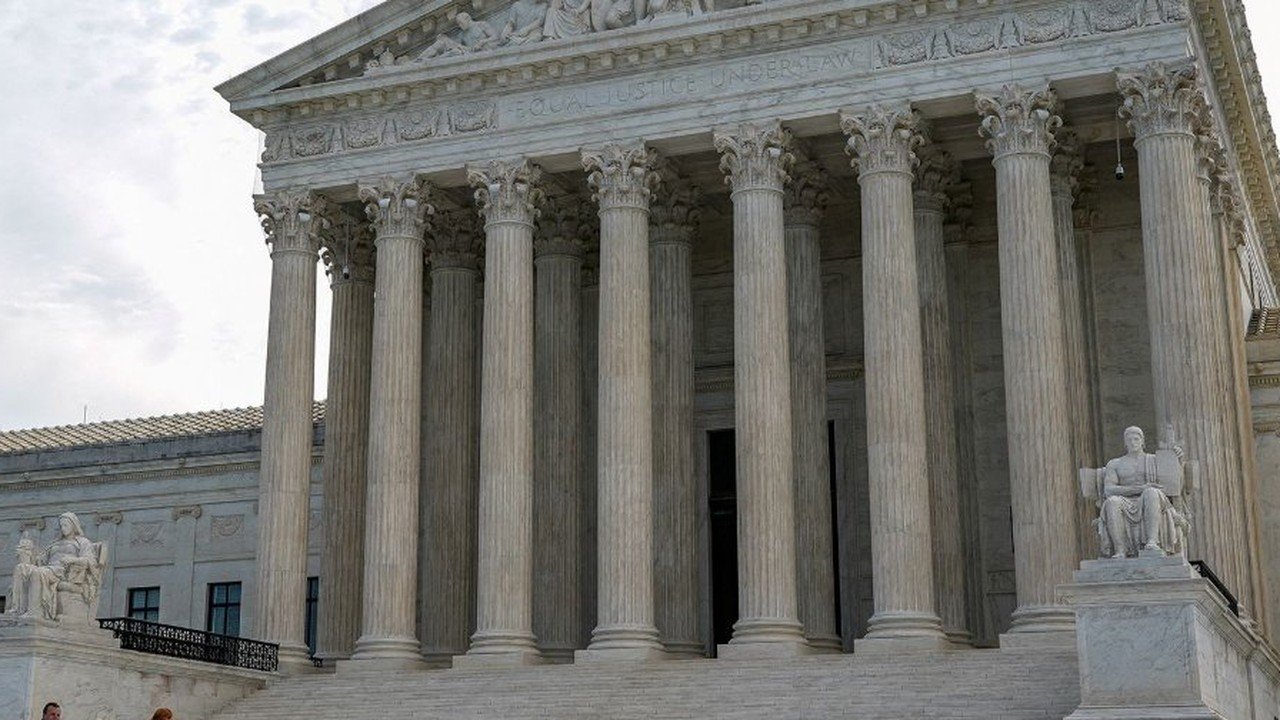
The Supreme Court agreed on Friday, Nov. 13, to decide whether President Donald Trump can cut off access to asylum for migrants at the U.S.-Mexico border, taking up a case that two lower courts decided against his administration. “The petition for a writ of certiorari is granted limited to Questions 1 and 2 presented by the petition,” reads the court’s docket notice for Mullin v. Refugee and Immigrant Center for Education and Legal Services, No. 26-239. SCOTUSblog reports that the justices announced the grant in a brief list of orders after their private conference earlier in the day.
The case traces back to a proclamation Trump signed on his first day back in office. According to SCOTUSblog, the Jan. 20, 2025, order declared that “an invasion is ongoing at the southern border,” suspended the entry of noncitizens “engaged in the invasion,” and signaled that they could no longer seek protections such as asylum. Homeland Security guidance then barred any noncitizens from applying for asylum and said anyone who entered despite the suspension would face quick removal, SCOTUSblog reports. Reuters adds that the bar also reaches migrants who arrive at official crossings without certain medical or criminal-history information, a requirement advocates say people fleeing violence often cannot meet.
The justices took two of the three questions the government posed. Per the docket notice, they will decide whether the proclamation and its implementing guidance “are lawful,” and whether a provision of federal immigration law, 8 U.S.C. 1252(f)(1), “bars the classwide relief entered by the district court.” They passed on a third question about whether the class of challengers fits constitutional and federal court rules, which SCOTUSblog describes as the court turning down that part of the government’s request.
The challengers include 13 people who say they suffered persecution or torture in their home countries and three immigration nonprofits: the Refugee and Immigrant Center for Education and Legal Services, the Las Americas Immigrant Advocacy Center and the Florence Immigrant & Refugee Rights Project, according to NBC News and SCOTUSblog. The ACLU says it brought the suit with the National Immigrant Justice Center, the Center for Gender & Refugee Studies, the Texas Civil Rights Project and two ACLU affiliates.
In the lower courts, the challengers mostly won. U.S. District Judge Randolph Moss ruled in July 2025 that nothing in the Constitution or immigration law “grants the president ... authority to replace the comprehensive rules and procedures set forth in the INA,” NBC News reports. A D.C. Circuit panel upheld his ruling in April, per Reuters; SCOTUSblog says that panel largely upheld it on the merits. SCOTUSblog quotes Judge J. Michelle Childs, joined by Judge Cornelia Pillard, writing that “in supplying power to suspend entry by Presidential proclamation, Congress did not intend to grant the Executive the expansive removal authority it asserts.” Judge Justin Walker dissented in part but agreed the government “cannot remove aliens to countries where they will be persecuted, and the Proclamation and Guidance cannot strip them of mandatory procedures that protect against that removal,” SCOTUSblog reports. The appeals court kept its ruling on hold for the appeal, so the restrictions stay in force, according to SCOTUSblog and Reuters.
The administration frames the policy as central to its border record. Solicitor General D. John Sauer told the justices that the proclamation “rests on a commonsense understanding of the President’s inherent and delegated powers to exclude aliens,” according to SCOTUSblog and NBC News. The Los Angeles Times reports that Trump’s lawyers called the ban his “single most effective policy” in ending chaos at the border and quotes Sauer: “Over preceding four years, at least eight million illegal aliens were encountered along the southern border.” The government petition, as quoted by Roll Call, argues: “The proclamation thus lawfully suspends access to asylum, which is a purely discretionary benefit.”
The challengers argue Congress settled the question. Their brief says the president “may not invent by fiat a new removal system that eviscerates the protections Congress mandated by statute,” per SCOTUSblog, NBC News and Roll Call. They also dispute the crisis claim, SCOTUSblog reports, writing: “By January 2025, before the Proclamation took effect, border apprehensions had returned to historically routine levels, down over 90 percent from their peak.” The desk has not checked that statistic against federal data.
The challengers’ lawyers responded in a statement. “The president does not have the right to unilaterally override the protections Congress has afforded those fleeing danger,” said Lee Gelernt, the ACLU lawyer leading the case, in a statement that the Los Angeles Times also quotes. Melissa Crow of the Center for Gender & Refugee Studies said in the same release: “The president cannot unilaterally rewrite our immigration laws and defy the will of Congress to get its way.” None of the reports the desk read quote a new White House or Justice Department comment beyond the government’s court filings.
The case joins a crowded immigration docket. NBC News counts it as the third significant case on Trump’s immigration policies before the court this term, alongside fights over deportations to third countries and over holding people in detention during deportation proceedings. Reuters notes that the court, with a 6-3 conservative majority, backed the government in June on turning away asylum seekers when officials deem crossings too overburdened to handle more claims, and in September let it resume third-country deportations; arguments in that case come on Dec. 9, Reuters reports. Roll Call notes that last term the justices backed a separate first-term Trump policy that kept refugees from reaching the border, and writes that a ruling for the challengers could let the administration restart that policy and still deny asylum claims.
What comes next: briefs, then oral argument and a decision. Reuters, NBC News and Roll Call expect a ruling by the end of the term in late June; the ACLU expects argument in spring 2027, and SCOTUSblog says arguments will likely come sometime next spring, while the Los Angeles Times says early next year. The court’s grant does not decide whether the policy stands. AP also reported the grant; the desk could not open AP’s page (HTTP 403) and did not rely on its text.