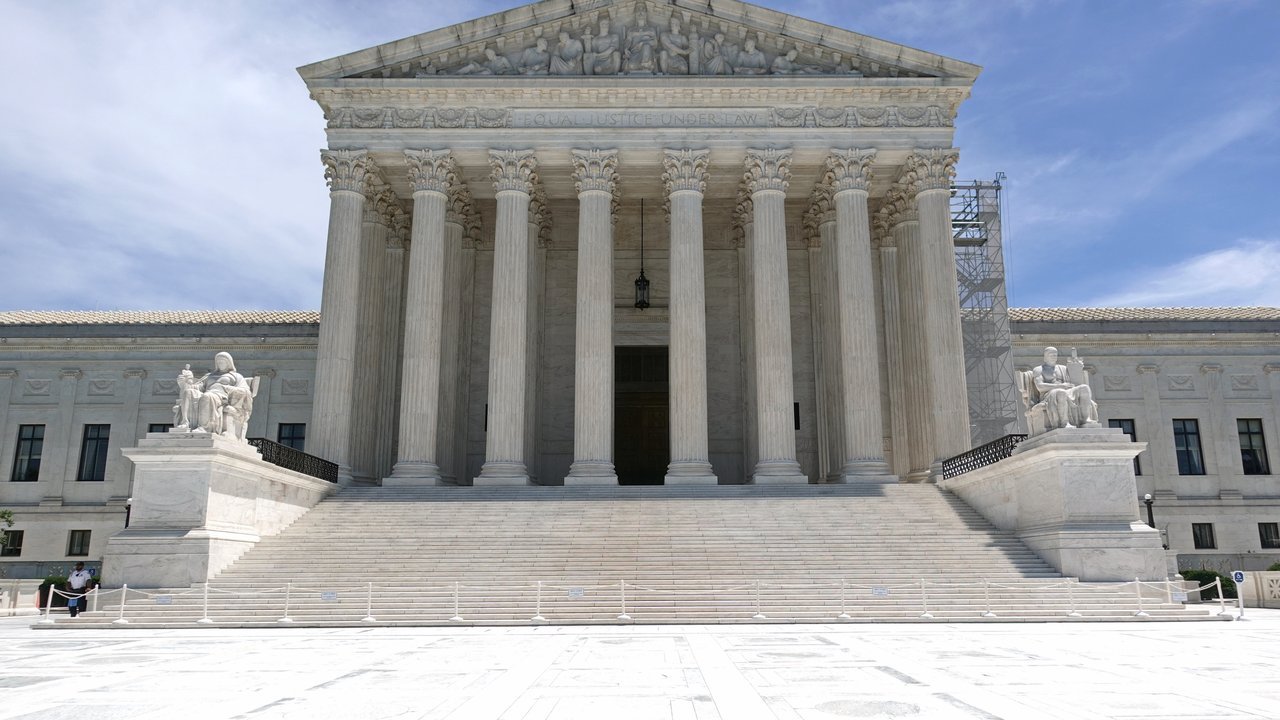
The Supreme Court seems to have kept gender-transition care in place for transgender people in federal prisons, at least while a lawsuit over a new Bureau of Prisons policy plays out. In a brief, unsigned order posted on Wednesday, Oct. 21, the justices denied the Trump administration’s request to pause a lower-court ruling that blocks the policy. The order list for the case, Trump v. Kingdom (No. 26A416), reads: “The application for stay presented to The Chief Justice and by him referred to the Court is denied.” It adds, “Justice Thomas and Justice Alito would grant the application for stay.”
SCOTUSblog, whose report by Amy Howe went up at 11:49 a.m. Eastern (8:49 a.m. PT), the earliest account on hand, says Justices Samuel Alito and Clarence Thomas indicated, without any explanation, that they would have granted the request. Reuters says the two conservative justices publicly dissented and calls the outcome a rare win for transgender rights at the court. SCOTUSblog notes that the court gave no reason for the ruling and did not explain why it acted 12 days after the government filed its reply brief.
The policy at issue, which the Bureau of Prisons adopted in February, would end hormone therapy and “social accommodations” (such as makeup, wigs, and padding), according to SCOTUSblog. Reuters says it prohibits medical and surgical treatments as well as accommodations such as clothing and hair-removal devices, while it would still allow psychiatric services. The Washington Post says the administration offered psychotherapy and group counseling in place of the treatments. SCOTUSblog reports that the bureau says it adopted the 2026 policy “independently of” President Donald Trump’s first-day executive order of 2025, which, per SCOTUSblog, directed the attorney general to “ensure that no Federal funds are expended for any medical procedure, treatment, or drug for the purpose of conforming an inmate’s appearance to that of the opposite sex.”
Three transgender inmates held at federal prisons in New Jersey, Florida and Minnesota filed the class action, Reuters reports. The Washington Post dates the suit to March 2025 and says it accuses the government of skipping proper administrative steps before the change. Reuters cites a 2025 government figure of more than 2,000 transgender inmates in federal facilities and halfway houses, and says the plaintiffs trace hormone treatment in the federal prison system back to at least 1992.
Accounts of the lower-court timeline differ. Reuters says Lamberth blocked the restrictions in June, finding the policy likely “arbitrary and capricious” and saying the bureau “reverse engineered” the measure to carry out Trump’s order. SCOTUSblog says Lamberth issued his most recent order on Aug. 26, and The Washington Post also places that ruling in August; the two dates may refer to separate orders in the same case, which this desk could not confirm from the docket. Reuters quotes Lamberth: “With this opinion, the court has no intention of wading into the culture war being waged against transgender individuals.” Reuters says the D.C. Circuit declined to lift his ruling on Sept. 18; SCOTUSblog calls that panel divided, and the Post quotes it as finding that the government had “not made a strong showing that they are likely to succeed on the merits.”
The government took the case to the justices on Sept. 28, per SCOTUSblog. Solicitor General D. John Sauer told the court that the district judge had “substitut[ed] its own policy judgment for that of the” bureau, SCOTUSblog reports. The Washington Post quotes Sauer saying the treatments “raised security and prison-administration concerns that outweighed whatever limited benefits they had.” Reuters quotes the Justice Department urging the court to let the bureau enforce its “decision to prioritize mental-health treatment, while discontinuing medically disputed and unproven sex-rejecting interventions.”
Lawyers for the inmates told the court, per SCOTUSblog and The Washington Post, that “Withdrawing care will cause significant changes to their bodies” and would put class members at serious risk of worsening gender dysphoria and other mental-health harm. After the order, Aditi Shah of the American Civil Liberties Union said, per Reuters, “This ruling will prevent serious and irreparable harm to plaintiffs and the class while we continue to challenge the government’s unlawful efforts to deny medically necessary healthcare for political reasons.” Human Rights Campaign President Kelley Robinson said the decision “protects incarcerated trans people from the administration’s attempt to steamroll over constitutional rights for now,” the Post reports. Reuters says the Bureau of Prisons declined to comment.
The order settles only the emergency request; the challenge itself continues in the lower courts, per Reuters and The Washington Post. Reuters notes that the court, with its 6-3 conservative majority, has ruled against transgender rights in key cases since last year, including on school sports teams, military service, passports and care for minors.
