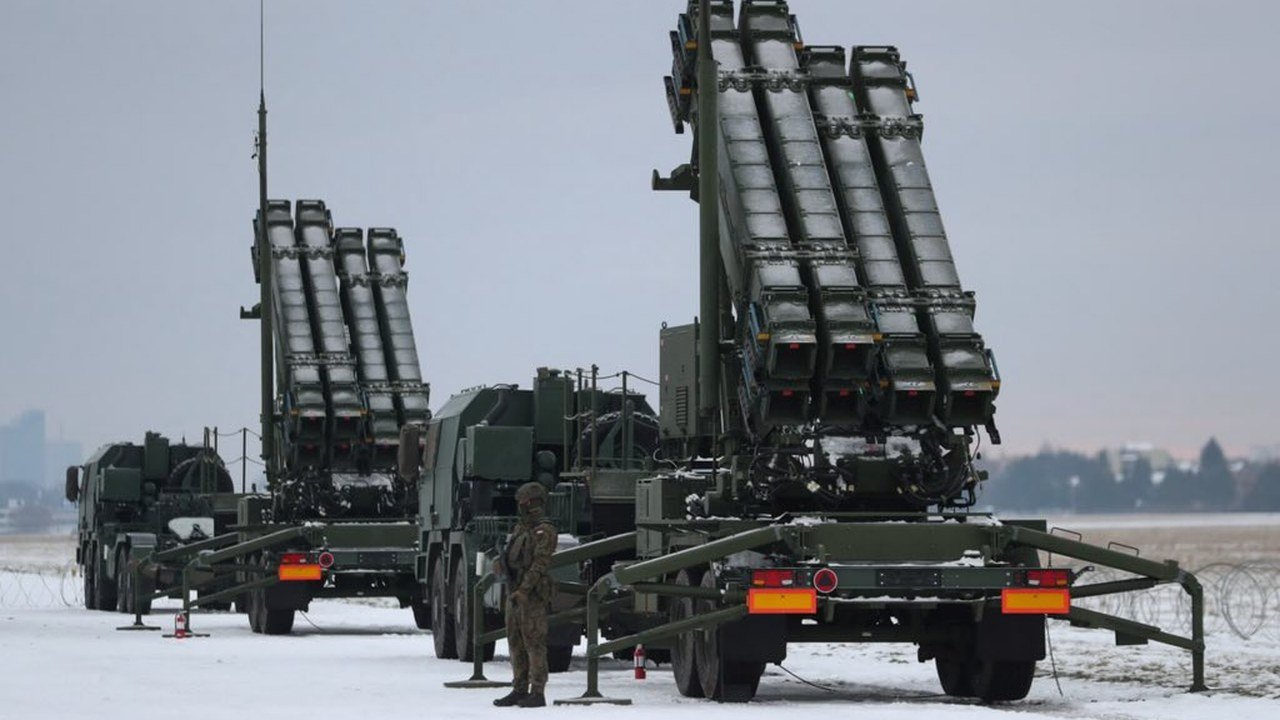
The United States has approved a possible $2.1 billion sale of 500 Patriot interceptor missiles to Ukraine, and the Ukrainian president answered within hours with thanks and a warning about timing. In a notice dated Friday, Oct. 30, the State Department’s Bureau of Political-Military Affairs said it “has made a determination approving a possible Foreign Military Sale to the Government of Ukraine” for PATRIOT Advanced Capability-3 Missile Segment Enhancement missiles, the PAC-3 MSE, along with “classified and unclassified spare parts” and logistics and program support. The department put the estimated total cost at $2.1 billion, “funded entirely by partners and allies.”
The notice spells out who pays. “Ukraine will pay for this purchase with donations from Canada, Germany, and Norway via the JUMPSTART program and national funds, financed by the European Union’s Ukraine Support Loan,” it says, and adds that no U.S. funds go into the deal. The Kyiv Independent describes JUMPSTART as a U.S.-led fast-track framework that lets allies and partners finance American-made weapons quickly; the Guardian, citing a Pentagon website, says the program uses allied donations to buy weapons, services and training for Ukraine. The department names Lockheed Martin, based in Bethesda, Maryland, as principal contractor, and says it knows of no offset agreement tied to the sale.
The State Department framed the sale in strategic terms. It “will support the foreign policy and national security objectives of the United States by improving the security of a partner country,” the notice says, and “will improve Ukraine’s capability to meet current and future threats by improving its integrated air and missile defense capabilities.” The missiles “will sustain existing PATRIOT system operations against ongoing aerial threats,” according to the department, which adds that “Ukraine will have no difficulty absorbing these articles and services into its armed forces” and that the sale will not harm U.S. defense readiness or require extra U.S. personnel in Ukraine.
An approval of this kind marks a step toward a sale, not a finished purchase. The Kyiv Independent notes that Congress generally has 30 days to review a proposed sale to Ukraine, and the Guardian reports that the statement did not estimate when the weapons could reach Ukraine. The BBC reports that it understands the order covers newly built missiles rather than existing stock, so a rapid delivery looks unlikely, and that the U.S. Department of Defense puts Patriot missile output at only 600 a year.
Zelensky welcomed the move in a long post on X at 3:43 p.m. PT on Oct. 30, already early Saturday in Kyiv. He called it “a strong decision by the U.S. State Department,” described 500 PAC-3 interceptors as “a substantial number,” and wrote that “very soon – this winter – they COULD make for a highly effective defense package.” Then came the catch: “deliveries may begin ONLY IN A FEW YEARS,” he wrote, and Ukraine wants its American partners “to find a solution” for the moment of real danger. He said Russia had carried out “more than 30 Russian strikes on critical parts of our power grid” in the past two weeks of October alone, aimed at “electricity, heating, water supplies, bridges, and life in our cities in general.”
Watch: Patriot launchers and the sale, via @TRTWorldNow on X
A short news clip about the approval. If the embed does not load, it shows as a plain link to the original post.
View the @TRTWorldNow post on X about the Patriot sale to Ukraine
Context: a broadcast report on the sale and Zelensky’s request, via @WIONews on X
View the @WIONews post on X about the Patriot approval
In the same post, Zelensky laid out the alternative Kyiv wants. Ukraine asked Washington for a winter support package “at a rate of 100 Patriot interceptors per month,” he wrote, and 500 missiles would suffice “to protect our skies over the coming months.” He argued that the United States, European partners and others “have sufficient stocks of PAC-3 interceptors in their warehouses,” and that handing those over now, then refilling allied arsenals in later years from the production Ukraine and its partners already paid for, offered “the right approach,” one he called “entirely feasible.” He thanked President Donald Trump, said he had recently discussed PAC-3 interceptors with Secretary of State Marco Rubio, and asked for decisions that protect lives “not the day after tomorrow or sometime later.”
Reports differ on how long the wait might last. Two people briefed on the U.S. decision told the Guardian that the missiles, not yet manufactured, would likely arrive only a couple of years into the 2030s, and one said Ukraine’s Ministry of Defense has urged the Pentagon to move the date up, possibly by handing over missiles from the U.S. arsenal and backfilling them with the new interceptors. Alex Raufoglu, an RFE/RL correspondent in Washington, citing sources familiar with the matter, reported that deliveries would not begin before 2030, according to Ukrainska Pravda. None of these accounts comes from an on-the-record U.S. official, and the State Department notice itself sets no schedule.
The approval lands amid a long fight over supply. Zelensky said this month that Ukraine received an average of just 12 Patriot interceptors a month from the United States in 2026, against roughly 150 Russian ballistic missiles a month, according to Anadolu Agency and the Kyiv Independent; the Kyiv Independent quotes him: “Imagine: you can count on 150 missiles per year from America, but you need to shoot down 150 ballistic missiles a month.” Earlier in the week he said Kyiv had waited nearly a month for Defense Secretary Pete Hegseth to sign off on Patriot and NASAMS missile transfers, the Kyiv Independent reports. Two weeks ago he told NBC’s “Meet the Press” of “always a big deficit with Patriot missiles and other kind of air defense,” NBC News reports.
Washington and NATO describe a different picture of current deliveries. Speaking in Riga on Oct. 30, NATO’s Supreme Allied Commander Europe, Gen. Alexus Grynkewich, said the U.S. continues to supply Patriot missiles bought under the NATO-coordinated PURL list, and that “we just had the delivery within the last week,” according to the Kyiv Independent, citing Bloomberg; he said the U.S. government had approved every third-party transfer requested of it. On Oct. 20, Rubio said any hold-ups did not stem from a deliberate political directive, the Kyiv Independent reports. The BBC and the Guardian both point to strain on U.S. stocks of air defense munitions after American use in the war with Iran.
Money from Europe has already moved toward the same missiles. In September, the European Commission approved 6.1 billion euros ($6.82 billion) in defense procurement for Ukraine, including PAC-3 Patriot interceptors bought under a special exception to EU rules, though it did not say how much went to them, RFE/RL reports. The pressure on Ukraine’s air defenses continues: on Thursday, a Russian drone strike killed at least 14 people on a crowded rail platform in Dnipro, the Guardian reports, citing officials.
What happens next depends on Congress, the contractor and the Pentagon. The notification opens a review window in Congress, the Kyiv Independent notes; any contract and delivery schedule would follow from negotiations the State Department notice does not describe. As of early Saturday, Oct. 31, no outlet this desk reviewed had reported a U.S. response to Zelensky’s request to draw interceptors from existing stocks this winter.