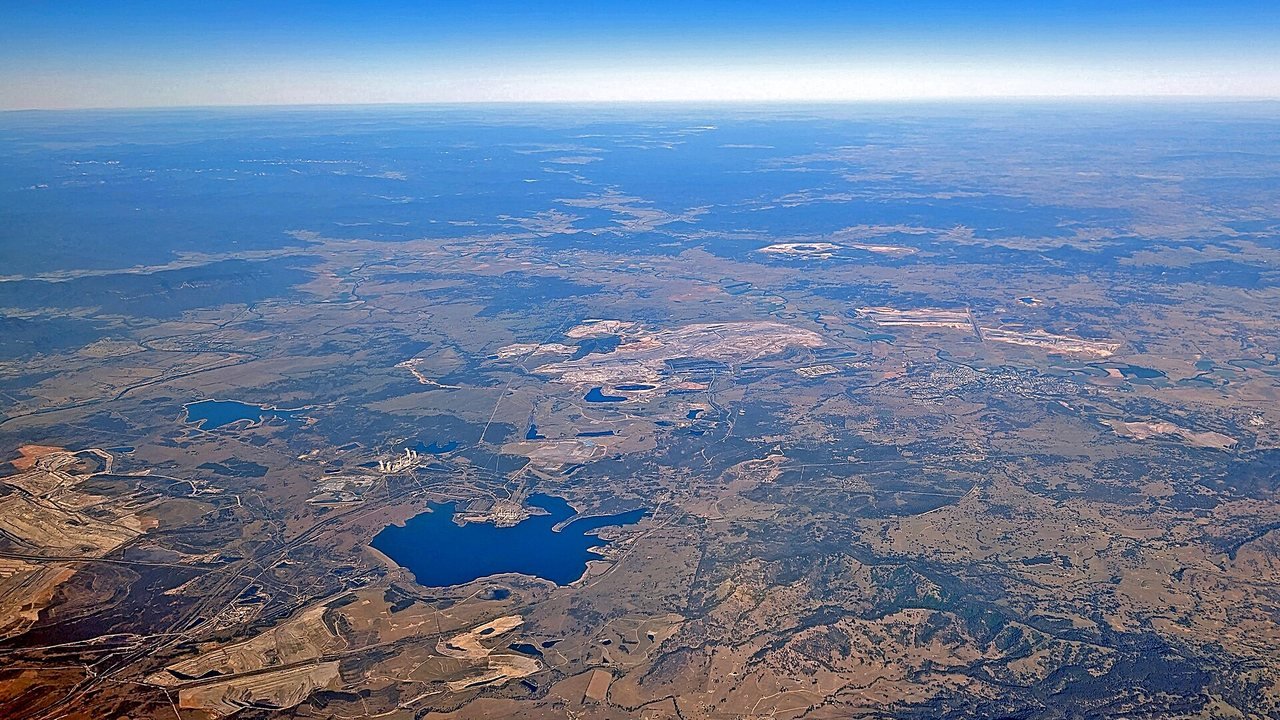
Australia’s highest court seems to have stopped one of the largest coal mine expansions in New South Wales, and the reason it gave could reach well beyond one pit in the Hunter Valley. On Wednesday, October 7, Australian time, the High Court of Australia dismissed an appeal by MACH Energy and left standing the cancellation of a state approval that would have let the company’s Mount Pleasant mine near Muswellbrook keep digging until 2048 and roughly double its output. A majority of the court found that the state’s planning commission had looked at only a sliver of the project’s greenhouse gas emissions and never asked whether to limit the rest: the emissions from coal shipped abroad and burned in other countries.
The vote ran 3–2. Justices Michelle Gordon, James Edelman, and Robert Beech-Jones made up the majority, according to 2NM, a regional broadcaster in the Upper Hunter that summarized the judgment, while Chief Justice Stephen Gageler and Justice Jill Jagot dissented on the point that decided the case. Reuters quotes Edelman: “By focusing only upon 2% of the project’s emissions, the Commission failed in its reasons to consider” whether to impose conditions that would keep greenhouse gas emissions “minimised to the greatest extent practicable.” That phrase comes from a New South Wales planning policy for mining projects. Emissions from burning a mine’s coal elsewhere carry the label “scope 3,” and the Guardian and Reuters both put them at 98% of Mount Pleasant’s projected total. 2NM, citing the judgment, puts those overseas emissions at about 860 million tonnes; the commission set conditions only on the mine’s own on-site emissions, roughly 2% of the whole. The ABC, the national public broadcaster, says the extension would add roughly twice Australia’s total annual greenhouse gas emissions to the atmosphere.
The stakes for the company look large. The Guardian reports that the expansion would have doubled Mount Pleasant’s output to 21 million tonnes a year until 2048, and Reuters says it would have let MACH extract an additional 406 million tons of coal and turned the operation into the largest open-cut coal mine in the state. Al Jazeera reports that Droxford International, a subsidiary of Indonesia’s Salim Group, owns MACH. The state’s Independent Planning Commission approved the expansion in 2022, Reuters says. According to the High Court’s case page, the New South Wales Court of Appeal struck that approval down on July 24, 2025, and the full High Court heard MACH’s appeal in Canberra on May 13, 2026.
The challenge came from a small group of neighbors. Retired science teachers Wendy Wales and Tony Lonergan lead the Denman Aberdeen Muswellbrook Scone Healthy Environment Group, and the Newcastle Herald reports that the group fought the case through three levels of court over four years, losing first in the state Land and Environment Court before winning on appeal. “Today the high court has said what we have always known: we cannot dig up coal, ship it overseas, watch it drive climate change, and then pretend the consequences have nothing to do with us,” Wales said, as quoted by the Guardian, Reuters, and AFP. She added, in the group’s statement as carried by the Newcastle Herald: “We can’t ignore physics, chemistry and biology. We must live within Nature’s limits and this ruling endorses that.” Lonergan, the group’s treasurer, told the Herald: “Wendy and I have seven grandkids between us. We did this for them.” He went on: “Today, the highest court in the country agreed that those decisions have to account for the damage they cause.”
What the ruling actually requires already looks contested, and readers should keep the two readings apart. Campaigners and several outlets describe a sweeping precedent. The ABC reports that the court found planning authorities must consider local climate change effects when they approve fossil fuel projects, AFP says the court halted the expansion because planners had not properly looked at the local impacts of the coal’s emissions, and the Newcastle Herald writes that the court upheld the Court of Appeal’s finding that the commission failed to consider how exported coal would worsen bushfires, drought, flooding, and heat in the region. Anita O’Hart, the Johnson Legal lawyer who represented the group, said: “The High Court has confirmed that planning authorities cannot ignore the chain of causation from a project’s emissions through to real, local climate harm.” She called the ruling “historic” and, in Reuters’ words, one of the “most significant domestic climate law decisions in the world.”
2NM’s summary of the judgment points the other way on that local-harm question. It says all five judges found that the commission did comply with its duty under state planning law to consider the project’s likely environmental impacts, rejected the Court of Appeal’s reasoning that local climate impacts lay at the heart of that duty, and left open whether climate change can count as an environmental impact in the area around a mine. On 2NM’s reading, the approval fell only because of the scope 3 conditions point, a procedural failure rather than a finding that the emissions run too high or that the mine must not go ahead, and the court did not look at the merits. The Guardian likewise reports that the High Court found the approval invalid “on a different basis” than the Court of Appeal, and the Australian Financial Review and Reuters frame the ruling around the failure to consider scope 3 emissions. The desk has not read the full judgment; until it does, the narrower reading has the clearest grounding in the court’s own reasons as reported.
Even the narrower ruling could matter across the state. Elaine Johnson, director of Johnson Legal, told the Guardian: “The court has said that when considering coalmine expansions, our planning authorities must consider how to limit emissions generated from coal burned overseas.” The Newcastle Herald reports that the decision directly affects 17 coal proposals in the New South Wales planning pipeline. Sue Higginson, a Greens member of the state parliament, pointed to the Hunter Valley Operations extension, which the Guardian calls the biggest in the state’s history and which the planning commission approved a week earlier. “HVO’s environmental impact statement didn’t even account for scope 3 emissions at all,” she said, adding, “It seems clear that the approval of HVO fails this test.” The Newcastle Herald reports that the HVO approval came with conditions to limit exports to countries with emissions policies consistent with the Paris Agreement, that the project still needs federal approval, and that Premier Chris Minns visited the site to show his government’s support for a project tied to about 1,500 jobs.
Industry voices warned of the cost. Tania Constable, chief executive of the Minerals Council of Australia, called the decision “a further blow to Australia’s prospects of meeting continued demand for our high-quality coal from global customers,” the Guardian reports, and added: “Now mines may have to work out how to reduce emissions from their export customers.” MACH Energy said in a statement that it would “carefully review the judgment to understand its implications for future project assessments and environmental approvals,” and that “the High Court has now provided that guidance.” The company also said, “Thousands of local residents in the Hunter Valley rely on Mount Pleasant for employment and income. These residents have lived with fear and uncertainty for too long.”
The mine itself does not shut down overnight, though the timeline remains murky. 2NM reports that the mine’s current consent allows extraction until December 22, 2026, and Reuters says the mine faces the end of operations in December. MACH, however, says a separate state approval in August, known as Modification 8, extends the mine’s operational life by six years and raises permitted coal extraction over that period. 2NM says the expansion case now returns to the Land and Environment Court; the Newcastle Herald says it will go back to that court or to the planning commission. Either way, the Mount Pleasant expansion now needs a fresh decision that weighs how to curb the emissions from its coal wherever it burns.
The ruling lands weeks before COP31, the United Nations climate conference that AFP says opens next month and that the Guardian reports Australia and Turkey share hosting duties for, and as Australia, among the world’s top exporters of coal and liquefied natural gas, weighs how far its climate duties follow its fuel offshore.
