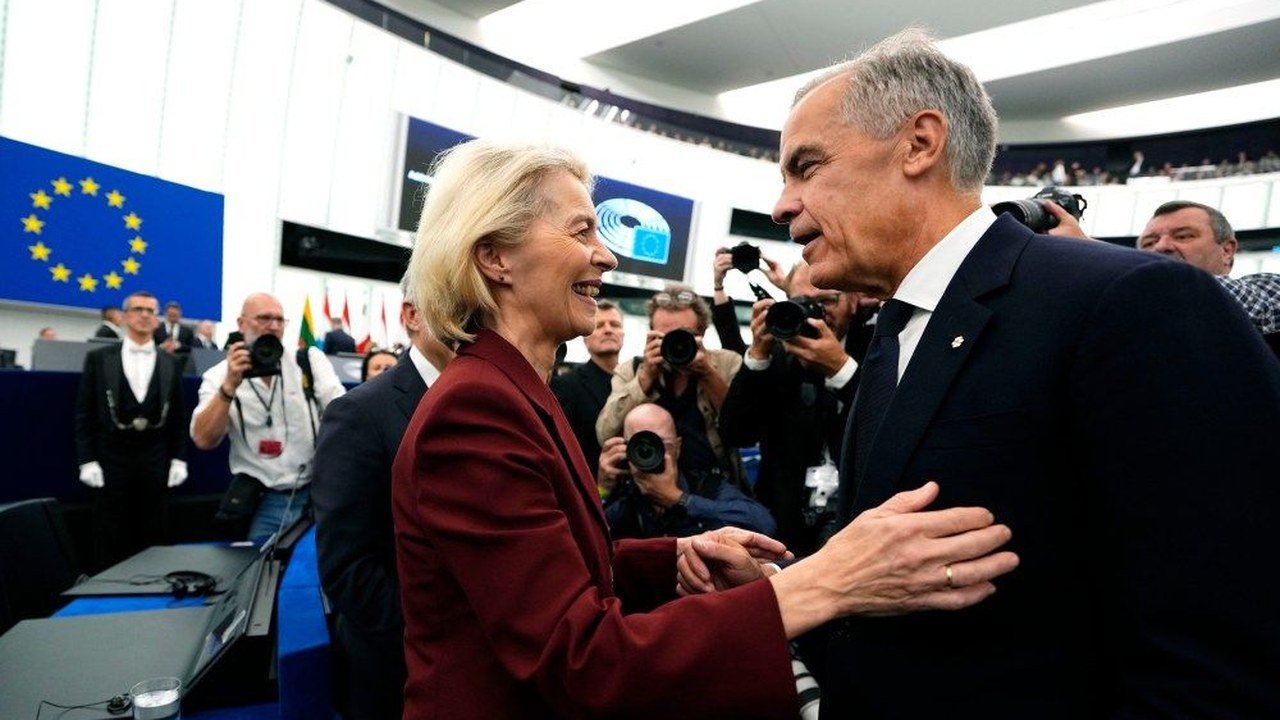
The European Union has removed the phrase “associate membership” from the draft joint declaration that it and Canada plan to adopt at their summit in Montreal on Thursday and Friday, Oct. 29–30, according to Euronews, which reported the change on Wednesday morning Pacific time (Euronews). In its place, the new text commits both sides to an “ever closer association,” stopping short of full membership. Euronews says Germany insisted on the change in a revised text circulated to member states on Wednesday (Euronews). The Guardian and National Post, which both say they saw the draft, report the same wording (Guardian; National Post).
The new language, as quoted by the Guardian, says the two sides will “work to define by the 2027 EU-Canada summit the concept of an ever closer association of Canada to the EU, short of full membership itself,” wording that the draft ties to shared goals of prosperity, economic security and strategic autonomy (Guardian). The Guardian reports that a previous draft included at least two references to Canada as an “associate member,” including an acknowledgment that defining the term would take another year (Guardian). The Brussels news service Agence Europe reports that member states failed on Tuesday to agree on a definition of the status, and that the latest draft, adopted on Wednesday, sets the 2027 deadline, a source confirmed to the service (Agence Europe).
The term came from von der Leyen. The Commission president floated it in her State of the Union address to the European Parliament last month, inviting Canada to become the EU’s first associate member, Euronews reports (Euronews). The Guardian says the announcement “surprised nearly everyone” and drew political and legal pushback in EU capitals, where diplomats wondered whether Canada could join the European Council, legislative bodies or decision-making processes without a vote (Guardian). The term appears nowhere in the EU treaties, according to Euronews and Agence Europe (Euronews; Agence Europe). “Nobody was consulted about associate membership apart from [Von der Leyen’s] closest staff, it would seem,” one diplomat told the Guardian. “This is all about fixing the plane while it is flying” (Guardian).
Germany pushed hardest against the phrase, according to Euronews. An earlier draft went to member states on Tuesday under the silent procedure, in which a text counts as adopted unless a country objects, and Germany, France, Italy and Greece all raised issues with it (Euronews). Euronews notes that Chancellor Friedrich Merz had earlier proposed a similar status for Ukraine, as a way to offer Kyiv security guarantees before full accession; the Guardian reports that Germany argued associate status should stay reserved as an interim step for prospective candidates such as Ukraine or Montenegro (Euronews; Guardian). The Guardian also reports that Italy proposed keeping “associate membership as proposed by the commission” and leaving the definition for later, before Germany suggested the “ever closer association” wording (Guardian). The office of European Council President António Costa spent hours in talks with several capitals, above all Berlin, Euronews reports, and it resubmitted the latest text under the silent procedure on Wednesday afternoon (Euronews).
Von der Leyen herself kept using the phrase after the change. In an X post at 2:17 p.m. PT on Wednesday announcing her arrival, she wrote: “We have a new ambition: bringing Canada closer to us than ever before, as Associate Member of the EU” (@vonderleyen on X). National Post called that reference surprising (National Post).
Watch: von der Leyen lands in Montreal, via X
The Commission president’s arrival post, with its short video, still uses the phrase “Associate Member.” This desk viewed a still from the clip before embedding. If the embed does not load, it shows as a plain link.
View the @vonderleyen post on X
Canadian Prime Minister Mark Carney has played down the label. Euronews reports that he has favored the phrase “alliance for the future” and has said the terminology belongs to the EU to settle (Euronews). “What matters is the difference it will make to the lives of Canadians,” Carney told reporters on Tuesday, according to the Guardian, which adds that he has said Canada has no interest in formally joining the EU (Guardian). The Guardian also notes that U.S. President Donald Trump previously called the associate-membership proposal “laughable” (Guardian).
The draft goes beyond the label, according to National Post. It says both sides have concluded “substantive negotiations” on a Digital Trade Agreement meant to supplement the existing Canada–EU free trade deal, and it promises to support “connecting instant payment systems” across the two economies (National Post). National Post also reports that the draft confirms Canada’s intent to join the EU’s €90 billion Ukraine Support Loan without naming a Canadian amount, mentions an agreement with the European Investment Bank on critical minerals, and commits to new subsea cable links between Canada, Europe and Asia (National Post). Sources told the paper the text could still change (National Post).
Carney, von der Leyen and Costa expect to sign the final statement on Friday after a three-way meeting in Montreal, National Post reports (National Post). Ahead of the summit, one of Canada’s largest banks released a report suggesting “meaningful” upside for Canada from deeper economic ties with Europe, according to the Guardian, which cites TD Economics (Guardian). Agence Europe reports that the two sides will define what “ever closer association” means by their next summit in 2027 (Agence Europe).