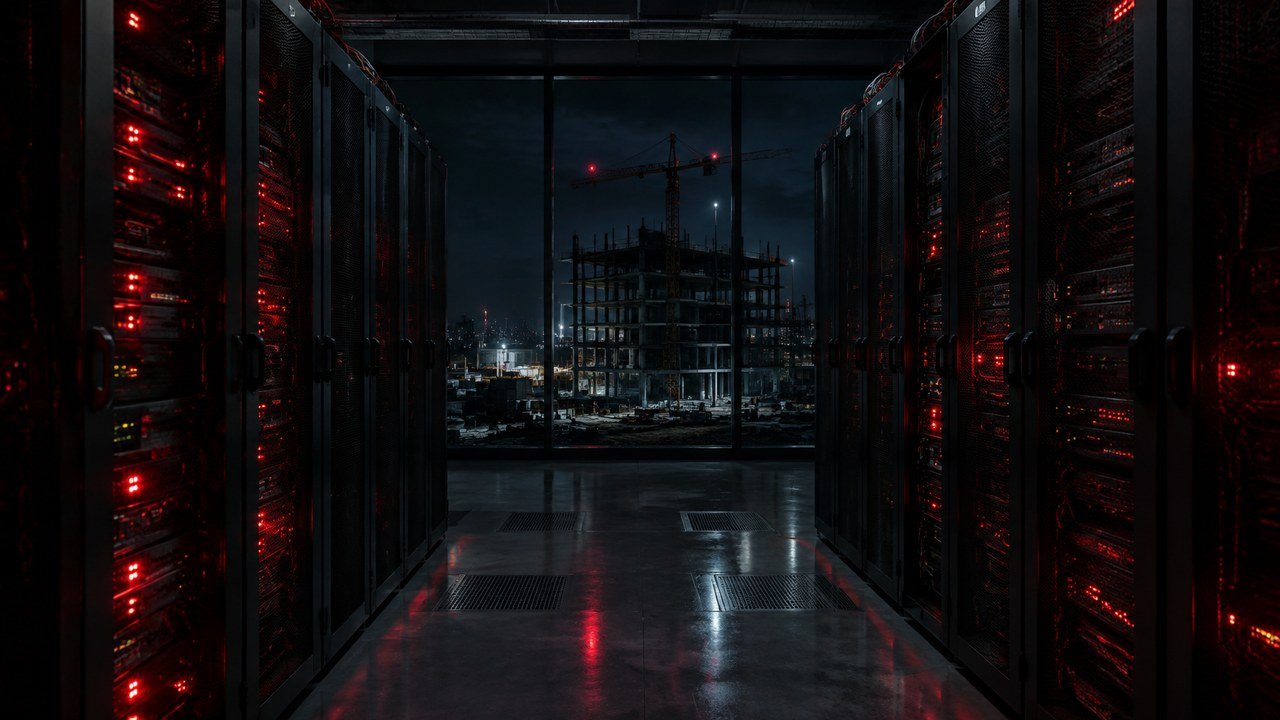
U.S. stocks suffered their worst day in more than a year on Thursday, Nov. 5, as chip and AI-infrastructure shares collapsed after the Democratic midterm sweep. USA Today (Medora Lee, updated 5:44 p.m. ET) reported that the tech-heavy Nasdaq Composite closed at 24,314.997, down 5.52%, or 1,421.516 points; the S&P 500 closed at 7,353.73, down 4.36%; and the Dow Jones Industrial Average closed at 51,523.06, down 3.44%, or 1,833.06 points. USA Today said all three indexes had their worst day since April 2025. The Associated Press wrote that the S&P 500 fell 4.4% for its worst day since President Donald Trump shook markets in April 2025 with his “Liberation Day” tariffs, and that the Dow sank 1,833 points, or 3.4%. This desk could read only an excerpt of the AP piece, because the full page returned a 403 error.
The Nasdaq had already slipped into a correction earlier in the session, as this desk reported in its midday story. By the close, Reuters wrote that the index sat firmly in correction territory and had fallen as much as 14% from its all-time high, set about a month earlier, with roughly $2 trillion wiped from its market value on the day. AP put the Nasdaq 11.9% below its record at the close. The BBC estimated the Nasdaq’s loss at $2.5 trillion, citing Dow Jones data, while the Guardian wrote that more than $2 trillion left the index. The Guardian added that Wall Street’s “fear index,” the VIX, jumped 61% to its highest level since the early weeks of the Iran war.
Chip stocks led the slide. Reuters wrote that the Philadelphia chip index fell 12%, its second-biggest fall on record, and that all 11 sectors of the S&P 500 declined, with technology down 7.3%. In its table, Reuters showed SanDisk down 22.26%, Micron down 17.46%, AMD down 17.26%, Marvell down 16.43%, Nvidia down 9.26%, Tesla down 10.77% and a line for ticker SPCX, which this desk reads as SpaceX, down 9.05%. The BBC gave similar moves for the same names and added Intel down 10.3%. CNBC said Nvidia and Qualcomm each dropped more than 9%, that Nvidia lost almost $450 billion in market value, and that AMD, Micron and Applied Materials each lost more than 10%. CNBC also said the hyperscalers, Alphabet, Amazon, Meta and Microsoft, each fell between 2% and 4%, and that neocloud firms such as CoreWeave fell for a second straight day.
Reporters offered two linked explanations. First, the election: CNBC wrote that the states with the most ambitious AI data-center plans all voted for Democrats, and that voters sided against data centers in every one of 41 local ballot measures in 10 states except one, according to Ballotpedia and CNBC’s own tally. The BBC wrote that Democrats campaigned to slow data-center growth and that Texas governor-elect Gina Hinojosa pledged a moratorium on new construction. USA Today described her pledge as a promise to halt new data-center projects. Second, earnings and cost pressure: CNBC said Qualcomm’s weak forecast added to the sell-off and that rising interest rates, ballooning capital needs and the Democratic sweep fed fears of too much debt and too little revenue. CEO Cristiano Amon told CNBC, “We don’t have a demand issue; it’s a supply issue.”
Analysts split on how far the drop might run. Neil Wilson of Saxo UK said, according to the Guardian, that a “complete capitulation-level event” played out in tech stocks, while adding that the move “looks totally overdone.” Truist’s Keith Lerner said, in Reuters’ account, “We are now seeing something of a buyers’ strike in tech” and that “The rubber band could get stretched further to the downside.” Susannah Streeter of Wealth Club said, according to the BBC, “Fresh panic over the AI trade has hit Wall Street hard.” Chris Larkin of E*TRADE from Morgan Stanley said, according to USA Today, that the correction “doesn’t mean the end of the AI trade.” USA Today also quoted Deutsche Bank’s Jim Reid, who wrote that the S&P 500 had risen a year after 20 of 20 midterm elections since World War II.
Political voices reacted too. The BBC quoted a social media post from President Trump: “The Stock Market suffered one of the Worst Days in History based on the results of the Election.” The BBC also quoted Sen. Bernie Sanders on X: “NATIONAL DATA CENTER MORATORIUM NOW.” At the Wall Street Journal Tech conference on Wednesday evening, Meta president Dina Powell McCormick said building data centers would turn harder after the elections, according to CNBC, which cited the Journal. OpenAI’s Greg Brockman said at the same event that companies “need to be in those communities,” the BBC reported.
Other markets moved as well. Reuters wrote that U.S. short-term yields fell 12 basis points, oil ended 3% to 4% higher, gold rose 1% and bitcoin fell 6% to $75,000, and that rate traders pushed back the expected timing of the Federal Reserve’s next hike to March. Europe and the UK fell 0.4% in the Reuters table; the Guardian put the FTSE 100 down 46 points, or 0.4%, at 10,782.66. On Friday, the BBC reported early Asian losses: Japan’s Nikkei 225 down 6%, Kioxia down more than 12.6%, SK Hynix down more than 11.5%, and South Korea’s Kospi down more than 8.5% in a move that triggered a circuit breaker. Reuters listed October U.S. payrolls as Friday’s main data release, with economists expecting a gain of 65,000 jobs.
Outlets disagreed on a few figures. The Guardian put the Dow’s close at 51,868, while USA Today gave 51,523.06 after a loss of more than 1,800 points that the Guardian, USA Today and AP all describe; this desk uses the USA Today level. CNBC called the Nasdaq’s slide its worst in 19 months, the Guardian called it the worst in 18 months, and others dated it to April 2025. The Guardian’s lede put SanDisk down 22%, while a photo caption on the same page said 19%. The BBC said SpaceX fell 8%, CNBC said it fell more than 9%, and a Reuters table line for ticker SPCX showed 9.05%. This desk checked CNBC, the BBC, the Guardian, USA Today and a Reuters markets column on Investing.com, plus an AP excerpt; it could not reach X for photos or video this run.