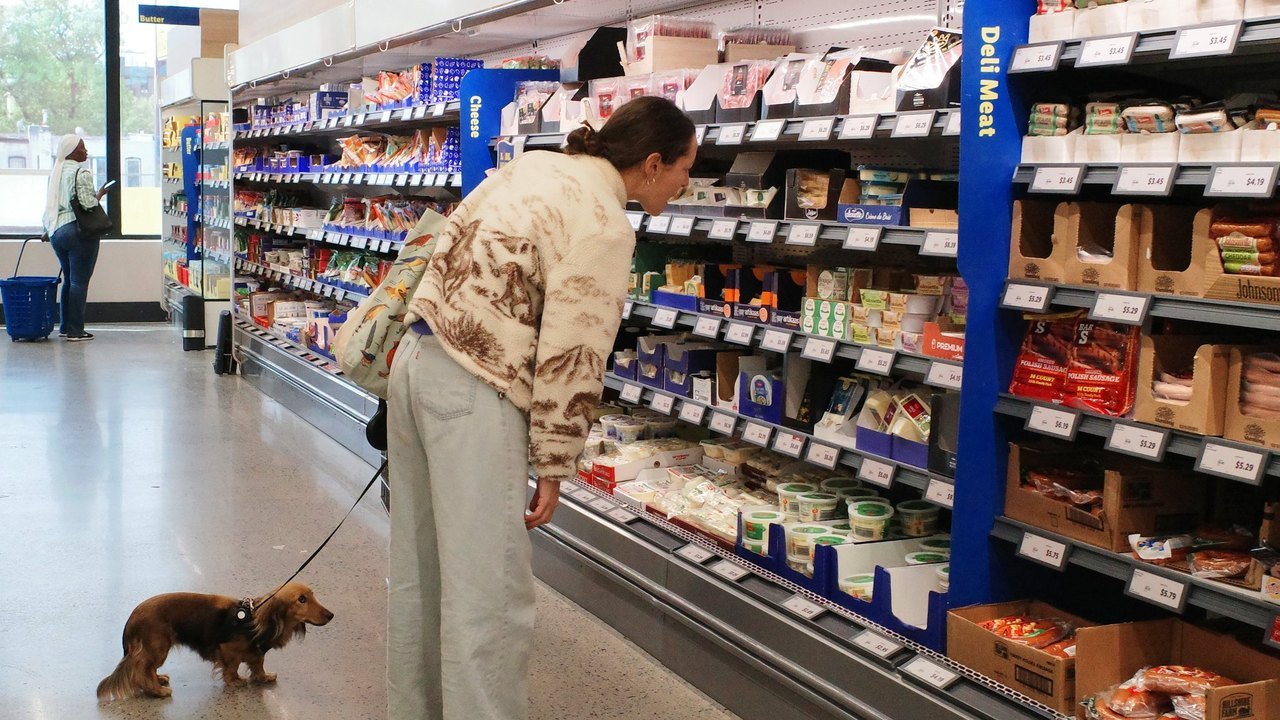
U.S. consumer prices rose 0.4% in October, a smaller rise than September’s 0.6% but larger than economists had forecast, the Bureau of Labor Statistics reported on Tuesday, Nov. 10. Core prices, which leave out food and energy, climbed 0.3% for a third straight month, the BLS says. Economists surveyed by Dow Jones had looked for a 0.3% headline gain and a 0.2% core gain, CNBC reports; Reuters says economists in its own poll had also forecast 0.3% for the headline index. Reuters calls October the third consecutive month of CPI gains of 0.4% or more, and the BLS tables show 0.4% in August, 0.6% in September and 0.4% in October.
Housing made up a large part of the rise. The shelter index rose 0.3%, “accounting for over thirty percent of the monthly all items increase,” according to the BLS release. Food rose 0.5% after holding flat in September, with groceries up 0.4% and restaurant meals up 0.5%; within groceries, the BLS lists snacks up 1.0%, beef up 0.9%, fruits and vegetables up 0.6% and dairy up 0.6%, and its detailed table shows eggs up 0.6%. Energy rose 0.7% after a 5.2% jump in September, as the seasonally adjusted gasoline index rose 1.0% and electricity 0.9%, while natural gas fell 0.8%. The BLS notes that before seasonal adjustment, gasoline prices fell 0.7% in October.
Other price moves in the release: recreation up 0.8%, motor vehicle insurance up 0.7%, hospital services up 0.8%, new vehicles up 0.2% and airline fares up 0.4%, while used cars and trucks fell 1.2% and communication fell 0.1%, according to the BLS. Reuters points to a 0.7% rebound in household furnishings and supplies, which the BLS table also shows, as a sign “that some pass-through from tariffs remained,” and reports that diesel rose 2.7% after an 11.9% rise in September. CNBC notes that apparel, which it calls tariff-sensitive, rose just 0.1%.
This report carries no headline annual inflation rate. The BLS collected no survey data for October 2025 during the lapse in appropriations, so it “cannot publish 12-month percent changes for October 2026 for indexes where October 2025 data are unavailable,” the release says. A few series kept their year-over-year figures: the gasoline index stood 37.4% above its October 2025 level before seasonal adjustment, new vehicles 0.7% higher and used cars and trucks 3.3% lower, the release’s tables show. For a reference point, Reuters puts annual consumer inflation at 3.7% in September and core inflation at 2.6%; the missing data have no effect on the personal consumption expenditures price index the Fed targets, Reuters adds.
The report landed a few hours after Fed Governor Christopher Waller spoke at the Bank of England Watchers Conference in London. “While I am hoping for an improvement over September, even if this occurs, I would still support a 25 basis point increase in the FOMC’s policy rate at our December meeting,” Waller said, according to the Fed’s published text. He went further. “But if the October CPI inflation data out later today are similar to the past two monthly readings—with core CPI inflation around 0.3 percent or even higher—then a stronger policy move may be needed,” he said. “In that case, I believe a 50 basis point hike in the policy rate should be considered at the December meeting.” He added: “Hiking only 25 basis points would put our credibility at risk, a risk I am not eager to take.” Core CPI then came in at 0.3%. The Fed next meets Dec. 8–9, CNBC reports, and its benchmark rate sits in a 3.75%–4% range after the October meeting, according to CNBC and Reuters.
Dallas Fed President Lorie Logan, speaking at an energy conference the Dallas and Kansas City Fed banks hosted on Tuesday, addressed the report directly. “The Consumer Price Index for October came out this morning. It was higher than expected. I am concerned that PCE inflation could rise when we receive those data for October in a couple of weeks,” she said, according to the Dallas Fed’s text. She said the FOMC “needs to implement at least two more 25-basis-point rate increases,” and that “it may be possible to move more rapidly this winter than the FOMC has moved so far this fall.” After two more increases, she said, “it would make sense in my view to pause and examine economic and financial developments.”
Markets moved toward a December hike, though outlets give different odds. CNBC says traders now fully price a quarter-point increase and put the odds of a half-point move at 13.6%, up from around zero before the report, citing CME Group’s FedWatch tool. Business Insider, also citing FedWatch, reports nearly 90% odds of a quarter-point hike and 10% odds of a half-point move, and Reuters puts the chance of a quarter-point hike at roughly 89%. Bond yields rose: Business Insider put the 10-year yield up 13 basis points at 4.99% and the 2-year up 19 basis points at 4.73%, and CNBC reported the 10-year at 5.004% and the 2-year at 4.755%. Stocks slipped; Yahoo Finance market data showed the S&P 500 down 0.79%, the Dow down 0.67% and the Nasdaq down 1.15% at about 8:46 a.m. PT, after what Yahoo Finance calls a sharp rally on Monday.
Watch: the October inflation report and the Fed on X
If an embed does not load, it shows as a plain link to the original post. The clips add pictures and sound to the reports above; they do not replace them, and this desk did not watch every second of each clip. Captions describe each post as its account labels it.
View the @ABC post on X
View the @BloombergTV post on X
View the @business post on X
View the @Reuters post on X
Analysts quoted by CNBC and Reuters described the report as pressure on the Fed. “This was the report the market could least afford to see,” Karen Manna of Federated Hermes told CNBC. “Consumers’ inflation nightmare continues with no relief in sight,” Christopher Rupkey, chief economist at FWDBONDS, told Reuters. Moody’s chief economist Mark Zandi called the reading “uncomfortably high” and said, “It certainly makes it more likely we get another rate increase in December,” CNBC reports; Zandi also told CNBC he does not expect the large shelter contribution to persist, because it does not fit the path of market rents.
Oil, which Reuters says the war with Iran pushed higher, kept falling on Tuesday, with Brent crude below $90 a barrel for the first time since August, CNBC reports, after President Donald Trump played down further strikes on Iran. Reuters ties the recent price pressure to that oil shock and to tariffs, and says high inflation contributed to the Republican Party’s heavy losses in last week’s midterm elections. The BLS plans to publish November’s CPI on Thursday, Dec. 10, at 8:30 a.m. ET, according to its release schedule, the day after the Fed’s December decision.